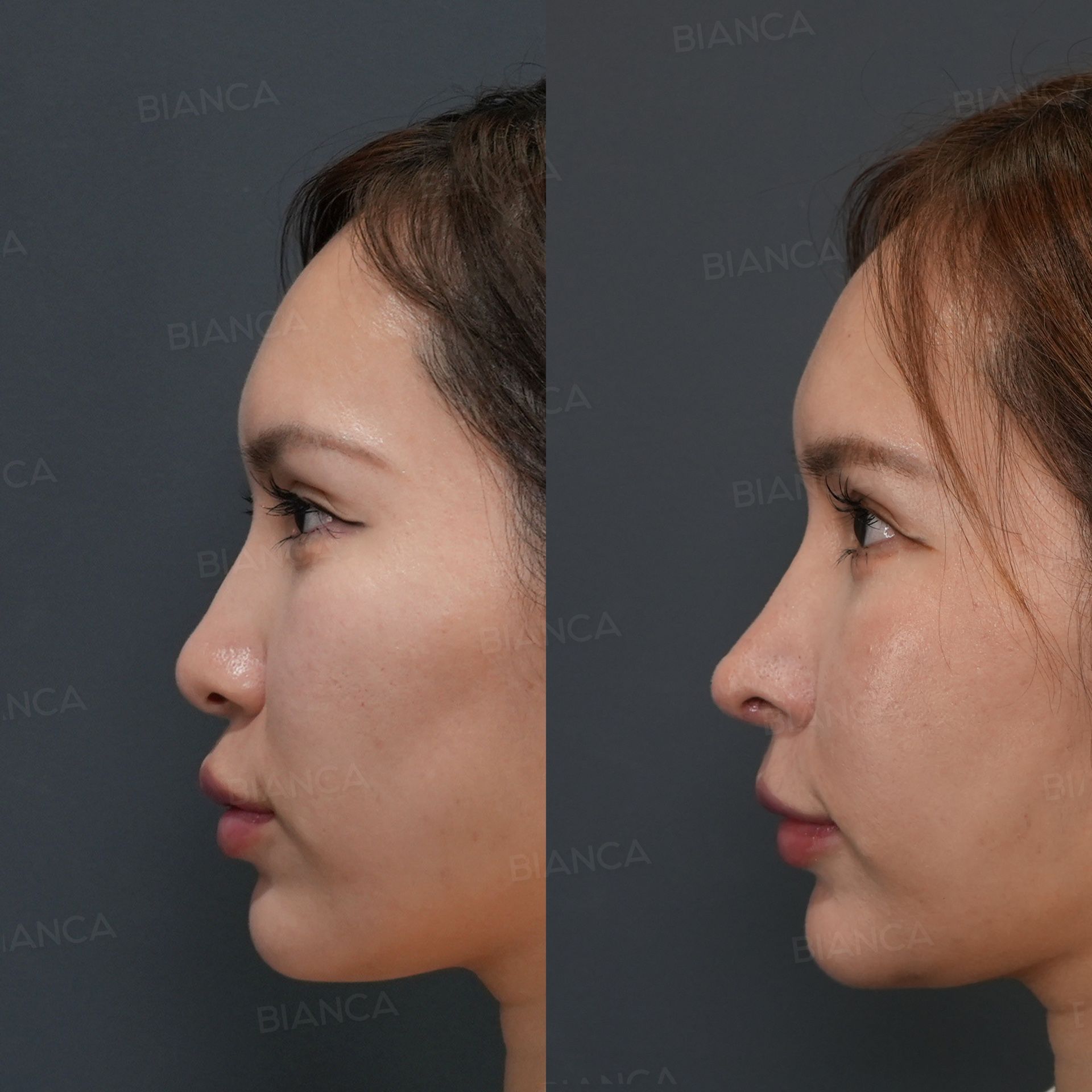
Extending the septum with rib cartilage makes the nose stiff and numb at the tip for several months, and a sense of the nose being tight or immobile is normal early on. Nasal obstruction, crooked healing as cartilage warps, or partial loss of the projection can occur and may call for revision after a year. Bleeding, infection, and displacement of the graft are uncommon. Swelling around the nose and eyes settles over about two weeks.
Grafted diced cartilage at the base of the nose feels firm and slightly irregular while it consolidates, and part of it is absorbed, so the height obtained is not fully predictable and the two sides may differ. The graft can become visible or palpable through thin skin. Harvesting rib leaves a chest scar and soreness that limits deep breathing and lifting for a couple of weeks, and injury to the lining of the lung is a rare complication.
Work on the tip produces the longest lasting swelling, with the shape continuing to refine for six to twelve months and thicker skin masking detail for longer. Sutures and grafts can shift, leaving asymmetry, visible edges, or a tip that sits higher or lower than intended. Skin over the tip is under tension, and vascular compromise showing as dusky skin is a rare but urgent problem. Sensation returns slowly, and revision is considered only after full settling.