



NOSE BUMP
- Point 1 : 01 A nose bump, often referred to as a dorsal hump, may involve bone, cartilage, or a combination of both along the nasal bridge. At BIANCA CLINIC, we assess the location and structure of the prominence as well as the nasal tip and overall facial profile before recommending treatment.
- Point 2 : 02 Treatment is selected according to what needs to change. RHINOPLASTY offers comprehensive nasal reshaping, PRESERVATION RHINOPLASTY focuses on reshaping while preserving important nasal structures, REDUCTION RHINOPLASTY reduces prominent or excessive structures, and FILLERS may visually smooth a mild bump without surgery.
- Point 3 : 03 BIANCA CLINIC’s rhinoplasty care is supported by a medical team that includes board-certified plastic surgeons. Treatment planning emphasizes detailed facial anatomy, structural balance, and natural-looking refinement that harmonizes with the patient’s overall features.
Recommended for
- Those concerned about a visible bump or dorsal hump along the nasal bridge
- Those who feel their nose bump is especially noticeable in the side profile or photographs
- Those seeking a treatment approach tailored to their nasal anatomy, desired degree of change, and overall facial proportions
Treatment Area
RHINOPLASTY

By addressing the structures that contribute to imbalance, the procedure can create a smoother nasal line and a more harmonious relationship between the nose and the rest of the face.
A visible bump along the nasal bridge may be caused by protruding nasal bone, cartilage, or a combination of both. This prominence is commonly referred to as a dorsal hump and is often most noticeable from the side profile.
Depending on the nasal structure, correction may involve reducing or reshaping the hump itself. However, the bridge does not exist in isolation. The nasal bones, tip position, width, and angle of the nose may also influence how prominent the bump appears and how the nose will look after correction.
For this reason, RHINOPLASTY is particularly useful when a nose bump needs to be considered as part of the overall nasal shape rather than as a single isolated feature.
At BIANCA CLINIC, the surgical plan is customized to refine the areas of concern while preserving features that contribute to a natural and balanced appearance.
Point 2: The nose is evaluated from the front, side, and oblique views and in relation to the forehead, lips, chin, and other facial features.
Point 3: Treatment is planned with careful attention to facial anatomy and proportion, with the aim of achieving refined change without creating an unnecessarily artificial or overcorrected appearance.
-Those concerned about a hooked or aquiline nasal profile
-Those whose nose bump is particularly noticeable from the side
-Those who also want the nasal tip, width, or overall shape evaluated
-Those who may require more than isolated hump reduction
-Those seeking comprehensive, individualized nasal reshaping
PRESERVATION RHINOPLASTY

For selected patients with a dorsal hump, it may create a smoother bridge and more balanced profile while retaining structural characteristics that support a natural-looking result.
Traditional hump correction may involve directly removing portions of protruding bone or cartilage. A preservation-based approach differs in that the surgical strategy may focus more on modifying the position and relationship of the existing structures rather than simply removing the dorsal contour from above.
This can be relevant for selected patients with a dorsal hump, bridge irregularity, or other structural concerns who are suitable candidates for a preservation technique.
At BIANCA CLINIC, the physician evaluates the nasal bones, cartilage, bridge, tip, skin characteristics, and overall facial proportions before determining whether PRESERVATION RHINOPLASTY is suitable. The technique is not appropriate for every nose. Its value lies in selecting it for patients whose anatomy may benefit from structural preservation while still achieving the desired refinement.
Point 2: Rather than treating the dorsal hump alone, the surgical plan considers how the bridge, nasal bones, cartilage, and tip work together as a structural unit.
Point 3: Detailed anatomical assessment is used to determine whether a preservation-based approach can provide the desired profile while maintaining appropriate support and a natural appearance.
-Those seeking natural-looking refinement while preserving appropriate elements of their existing nasal structure
-Those who want their nasal framework carefully evaluated before deciding on a surgical technique
-Those with bridge irregularities or structural concerns in addition to a nose bump
-Those who may be suitable candidates for repositioning and reshaping rather than conventional dorsal reduction
-Those seeking an individualized approach focused on both structure and facial harmony
REDUCTION RHINOPLASTY

For patients with a noticeable dorsal hump or a nose that appears large, wide, or prominent, precise reduction can refine the nose while preserving the patient’s natural facial identity.
For patients with a nose bump, dorsal hump reduction can directly reduce protruding bone and cartilage to create a smoother bridge line.
However, removing a hump can change the proportions of the surrounding nasal structures. In some cases, reducing the bridge alone may make the nose appear wider or may alter the apparent relationship between the bridge and nasal tip.
For this reason, hump reduction may be combined with nasal bone osteotomy, narrowing, or tip refinement when appropriate.
At BIANCA CLINIC, the amount and location of reduction are carefully planned according to the patient’s nasal anatomy and facial proportions. The aim is not simply to make the nose smaller, but to reduce the structures responsible for prominence while maintaining a refined and balanced result.
Point 2: When necessary, hump reduction can be combined with nasal bone narrowing, tip refinement, or other techniques so that correcting one area does not create imbalance elsewhere in the nose.
Point 3: BIANCA CLINIC uses precise, minimally invasive techniques intended to reduce unnecessary tissue trauma, helping to limit swelling and support a shorter downtime where appropriate.
-Those with a bony or cartilaginous bump along the nasal bridge
-Those seeking direct surgical reduction of a nose bump
-Those whose nose appears convex, aquiline, large, or overly prominent
-Those who may require bridge narrowing or tip refinement together with hump reduction
-Those who prefer a refined reduction rather than making the nose unnecessarily small
FILLERS
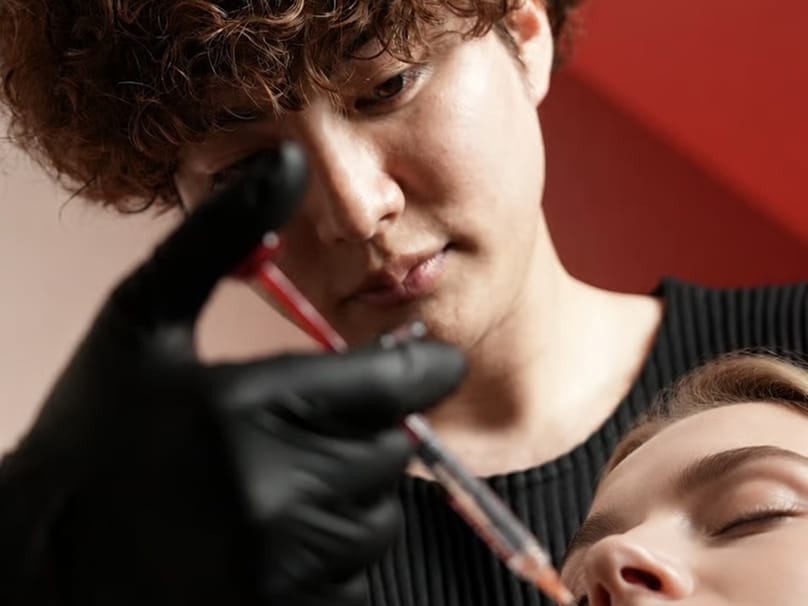
Carefully placed hyaluronic acid filler can improve the continuity of the nasal line with relatively little interruption to daily life.
For a mild nose bump, filler may be strategically placed above or around the prominence to create the appearance of a smoother nasal bridge.
Unlike surgical treatment, filler does not physically shave, remove, or reduce the bone or cartilage that forms a dorsal hump. Instead, it changes the surrounding contour so that the bump becomes less visually prominent.
At BIANCA CLINIC, nose filler treatment is planned according to the patient’s nasal anatomy, skin thickness, bone structure, and overall facial profile. The physician considers the relationship between the nose, forehead, lips, and chin when determining the product, injection depth, placement, and volume.
Because filler adds volume, it is not suitable for every type of nose bump. Patients with a large or structurally prominent dorsal hump may be better suited to surgical treatment.
Point 2: Injection placement and volume are individually designed according to the nasal structure and the balance of the entire facial profile rather than simply making the nose higher or sharper.
Point 3: As a non-surgical treatment, FILLERS may allow patients to return to their usual activities sooner, making them an option for those seeking subtle profile refinement with less interruption to daily life. Temporary swelling, redness, tenderness, or bruising may still occur.
-Those who want to visually smooth the nasal bridge without removing bone or cartilage
-Those seeking subtle improvement in the side profile
-Those who prefer a treatment with relatively little interruption to daily life
-Those who do not currently wish to undergo nose surgery
-Those whose nasal anatomy is suitable for filler-based contour refinement
Treatment Process
Consultation & Examination
Because similar-looking nose bumps may involve different underlying structures, treatment is selected according to the individual anatomy rather than appearance alone.
BIANCA CLINIC’s medical team includes board-certified plastic surgeons, and rhinoplasty planning is supported by detailed knowledge of facial anatomy, structural balance, and aesthetic surgery.
International patients can also discuss their concerns before traveling to Japan through an online consultation. English-speaking staff are available to support communication throughout the consultation and treatment process.
Treatment Planning
RHINOPLASTY may be selected when comprehensive nasal reshaping is required.
PRESERVATION RHINOPLASTY may be considered when the desired correction can be achieved while preserving important components of the existing nasal framework.
REDUCTION RHINOPLASTY may be appropriate when prominent bone, cartilage, width, or overall nasal volume needs to be directly reduced.
FILLERS may be considered for selected patients who want to camouflage a mild bump through non-surgical contour adjustment.
For surgical treatment, the physician determines which structures require reshaping and whether procedures such as osteotomy, narrowing, or tip refinement should be combined.
For filler treatment, the product, injection depth, placement, and amount are selected according to the individual nasal and facial anatomy.
Treatment
For surgical procedures, the operative technique and anesthesia vary depending on the structures being treated and the extent of correction.
For FILLERS, hyaluronic acid filler is injected in controlled amounts while the physician evaluates the nasal contour and overall facial balance.
Aftercare
After rhinoplasty, swelling and bruising may occur, and the recovery process varies depending on the procedure. Some surgical treatments may require an in-person follow-up or suture removal approximately one week after surgery.
For international patients, the recommended length of stay in Tokyo depends on the specific procedure and recovery plan. Your physician and international support team can advise you on an appropriate travel schedule before treatment.
Filler treatment generally involves less disruption to daily activities, although temporary swelling, redness, tenderness, or bruising may occur.
Online follow-up is also available for international patients after returning home if concerns arise.
FAQ
What is a nose bump?
A nose bump is a visible prominence along the nasal bridge and is often referred to as a dorsal hump.
A dorsal hump may involve bone, cartilage, or both and is usually most noticeable in the side profile.
What causes a dorsal hump nose?
A dorsal hump is often related to genetics and the natural development of the nasal bones and cartilage.
Its appearance may also be influenced by the shape and position of the nasal tip and surrounding facial structures.
Because the underlying anatomy varies from person to person, the appropriate treatment cannot be determined by the visible bump alone.
Is a nose bump made of bone or cartilage?
It may be made of bone, cartilage, or a combination of both.
The upper part of the nasal bridge is supported primarily by bone, while cartilage forms more of the lower bridge toward the nasal tip.
A dorsal hump may extend across both regions, which is why detailed anatomical assessment is important when planning nose bump correction.
How can I get rid of a nose bump?
The appropriate approach depends on the size, structure, and overall shape of the nose.
RHINOPLASTY may be used when the bump needs to be addressed together with other aspects of the nose.
PRESERVATION RHINOPLASTY may be suitable for selected patients when reshaping can be performed while preserving important nasal structures.
REDUCTION RHINOPLASTY can directly reduce prominent bone or cartilage.
For selected mild bumps, FILLERS may visually smooth the nasal profile without physically removing the hump.
What is the difference between RHINOPLASTY, PRESERVATION RHINOPLASTY, and REDUCTION RHINOPLASTY?
RHINOPLASTY is the broadest approach and may involve comprehensive reshaping of the nasal bridge, tip, bones, cartilage, and other structures according to the patient’s concerns.
PRESERVATION RHINOPLASTY emphasizes reshaping while preserving important parts of the existing nasal framework whenever appropriate.
REDUCTION RHINOPLASTY focuses on reducing prominent or excessive bone, cartilage, width, or nasal volume.
The most suitable approach depends on the individual anatomy and the type and degree of change required.
Can a nose bump be removed without surgery?
A true bony or cartilaginous dorsal hump cannot be physically removed with dermal filler.
However, selected mild bumps may be visually camouflaged by adding filler around the prominence to create a smoother-looking bridge.
Because filler adds volume rather than reducing the nose, it is not appropriate for every patient.
What is the difference between nose bump rhinoplasty and filler?
Rhinoplasty can directly reduce or reshape the bone and cartilage responsible for a dorsal hump.
Filler does not remove the bump. Instead, it adds carefully placed volume to create the appearance of a smoother nasal line.
Surgery may therefore be more appropriate for patients seeking true reduction, while filler may suit selected patients who want subtle non-surgical contour refinement with relatively little interruption to daily life.
Can rhinoplasty correct my nose bump without changing my entire nose?
In some patients, correction can focus primarily on the dorsal hump.
However, the bridge, nasal bones, and tip are closely related. Reducing one area may change the apparent width, length, or balance of another.
At BIANCA CLINIC, the entire nasal structure is assessed before surgery so that the correction remains balanced with the rest of the nose and face.
Can I have a consultation in English before traveling to Japan?
Yes.
BIANCA CLINIC offers online consultations before travel, and English-speaking staff are available to support international patients throughout the consultation and treatment process.
This allows you to discuss your concerns, potential treatment options, recovery considerations, and travel planning before coming to Tokyo.
How long should I stay in Tokyo after rhinoplasty?
The recommended stay depends on the procedure.
Some rhinoplasty procedures may require an in-person follow-up or suture removal approximately one week after surgery. Your physician and international support team can advise you on the appropriate length of stay based on your treatment plan and expected recovery.
Online follow-up is also available after returning home.