


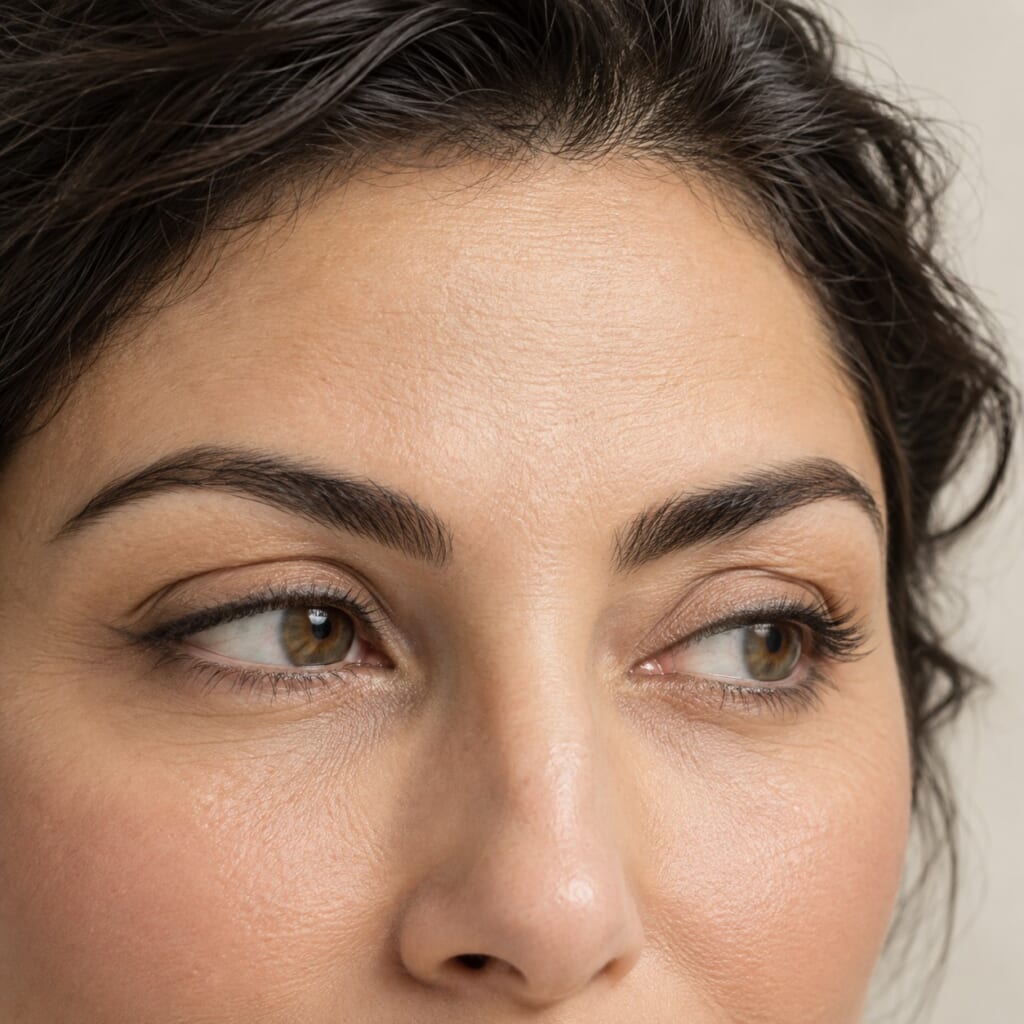
DROOPY EYELIDS
- Point 1 : 01 Droopy eyelids may result from excess upper eyelid skin, puffiness, changes in eyelid structure, or descent of the brows and forehead. At BIANCA CLINIC, we assess the upper eyelids together with the surrounding facial anatomy before recommending treatment.
- Point 2 : 02 Treatment is selected according to where the heaviness originates, whether from the upper eyelids, brows, forehead, or temples. Options may include UPPER EYELID SAGGING REMOVAL, UPPER BLEPHAROPLASTY, FOREHEAD LIFT & BROW LIFT, or TEMPORAL LIFT.
- Point 3 : 03 BIANCA CLINIC’s medical team includes board-certified plastic surgeons. Treatment planning considers eyelid anatomy, function, and facial balance, with the aim of creating a refreshed appearance while preserving the patient’s natural expression.
Recommended for
- Those concerned about droopy upper eyelids that make the eyes appear tired, heavy, or older
- Those whose upper eyelid sagging interferes with eye makeup, eyelid definition, or their field of vision
- Those seeking treatment based on whether the heaviness originates from the eyelids, brows, forehead, or temples
Treatment Area
UPPER EYELID SAGGING REMOVAL
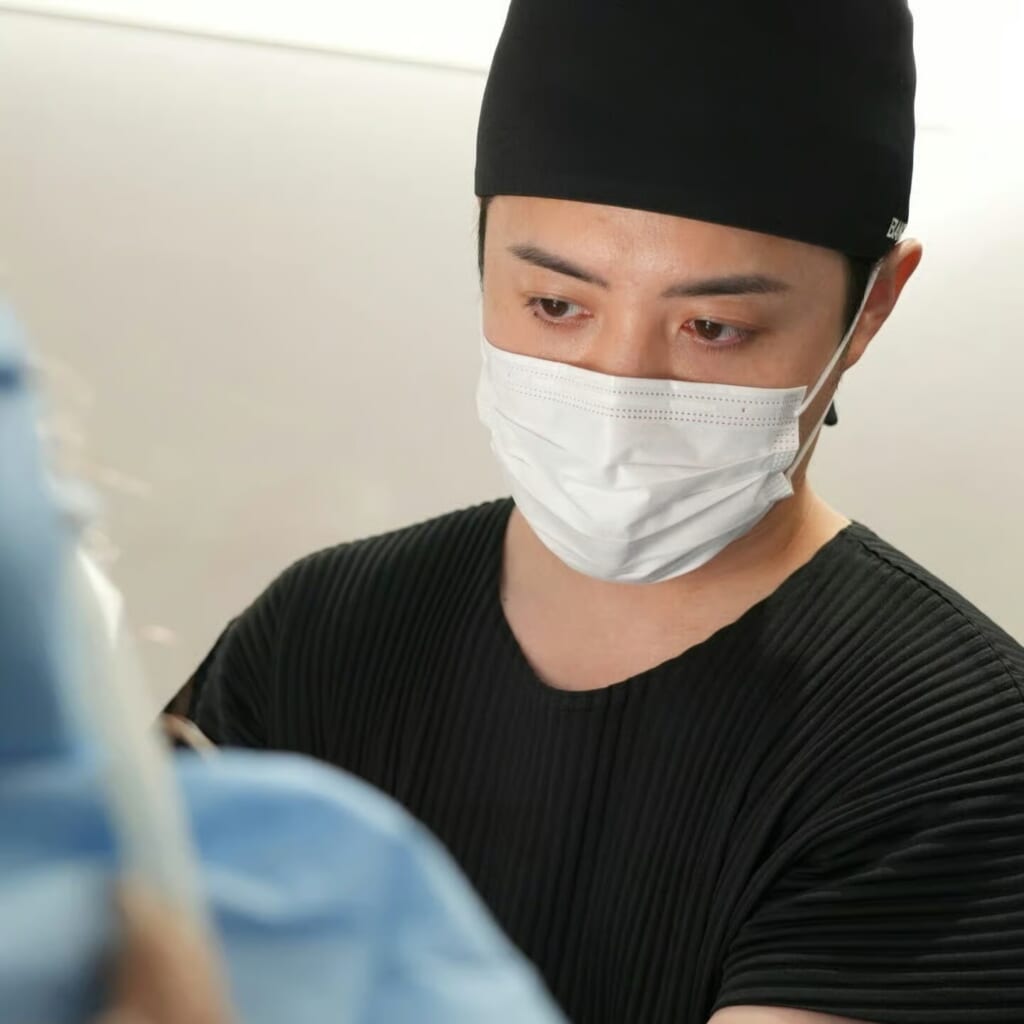
In suitable patients, reducing overhanging skin may also ease eyelid heaviness and improve visual obstruction while preserving a natural eyelid contour.
As skin elasticity decreases with age, excess tissue can accumulate along the upper eyelid, contributing to hooding, heaviness, and loss of definition. In some patients, overhanging skin may also interfere with the upper field of vision.
During the procedure, excess skin is carefully removed. Depending on the individual anatomy, the physician may also adjust underlying orbicularis oculi muscle tissue or orbital fat when clinically appropriate.
The incision is generally placed within the natural eyelid crease whenever possible to help minimize its visibility after healing.
At BIANCA CLINIC, the amount of correction is planned according to skin laxity, eyelid-opening function, tissue volume, and overall facial balance. The goal is to create a brighter, more open eye appearance without excessive removal or an unnatural change in expression.
Point 2: For patients whose overhanging skin affects the upper field of vision or leads to repeated eyebrow and forehead compensation, treatment may provide functional as well as aesthetic benefits.
Point 3: The incision is placed along the natural eyelid crease whenever possible, and the amount of skin removal is customized to the individual anatomy for a subtle, harmonious result.
-Those whose eyes appear tired or heavy because of excess eyelid skin
-Those whose upper eyelid skin obscures the natural eyelid crease
-Those who find eye makeup more difficult because of sagging skin
-Those whose overhanging eyelid skin affects their field of vision
-Those who frequently raise their eyebrows or tense the forehead to compensate for heavy eyelids

Depending on whether the main cause is excess skin, orbital fat, sub-brow sagging, or excess fat beneath the brow, the physician selects the most appropriate surgical approach to create a lighter, more defined, and naturally refreshed eye area.
The appearance of heavy or droopy upper eyelids is not always caused by excess skin alone. In some patients, orbital fat contributes to puffiness or thickness, while in others, sagging beneath the brow or deeper tissue volume may be the primary cause.
At BIANCA CLINIC, the physician evaluates the upper eyelid anatomy and selects the most appropriate treatment according to the underlying cause. Treatment options may include UPPER EYELID SAGGING REMOVAL, UPPER EYELID FAT REMOVAL, EYEBROW LIFT (SUB-BROW EXCISION), or BROW LIFT with ROOF REMOVAL.
This allows treatment to be tailored to the specific structure responsible for the heaviness rather than applying the same surgical method to every patient.
The goal is to reduce heaviness, improve eyelid definition, and create a brighter, more refreshed appearance while preserving the patient’s natural eye shape and facial balance.
Point 2: The physician evaluates the underlying cause of upper eyelid heaviness before recommending treatment, helping avoid unnecessary or mismatched procedures.
Point 3: Because both skin-related and fat-related concerns can be addressed, treatment can be customized for patients whose upper eyelid heaviness involves more than one anatomical factor.
-Those with puffy, thick, or heavy-looking upper eyelids
-Those whose upper eyelid heaviness may be related to excess orbital fat
-Those with sagging concentrated beneath the brow
-Those whose eyelid concerns appear to involve multiple anatomical factors
-Those seeking a treatment plan selected according to the underlying cause
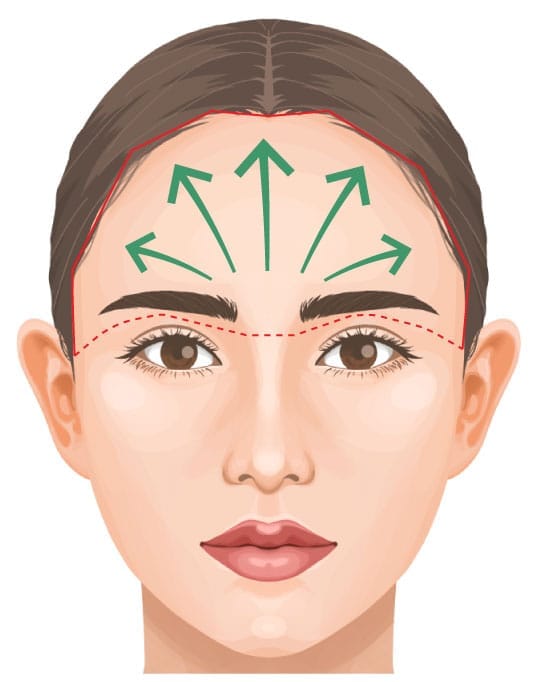
In suitable patients, repositioning the forehead and brows may also make the eyes easier to open and create a brighter overall expression.
As we age, the skin and supporting tissues around the forehead and brows gradually sag. When the brows descend, the upper eyelids may appear heavier, the visible eye area may become narrower, and the upper field of vision can be affected in some patients.
By lifting the forehead and brow area, the procedure can improve the distance between the brows and eyes, make the eyes easier to open, and refresh the appearance of the upper face.
Depending on the patient’s anatomy and desired degree of change, the incision may be placed along the hairline or within the hair.
At BIANCA CLINIC, the surgical method is selected according to factors such as the hairline, forehead shape, brow position, eyelid condition, and desired result. This makes the procedure particularly relevant when treating the eyelids alone would not fully address the source of the heaviness.
Point 2: Lifting the brows can create more space around the eyes, improve ease of eye opening, and give the upper face a brighter, more refreshed appearance.
Point 3: Incisions are placed along the hairline or within the hair depending on the selected technique, helping keep scars less noticeable. Swelling, bruising, redness, and discomfort generally improve within approximately 1–2 weeks, although recovery varies by individual.
-Those who feel heaviness around the brows and upper eyelids
-Those whose lowered brow position contributes to droopy-looking eyelids
-Those whose brow or eyelid sagging affects the upper field of vision
-Those who frequently raise their eyebrows to open their eyes
-Those who want to create more space between the brows and eyes while refreshing the upper face
TEMPORAL LIFT
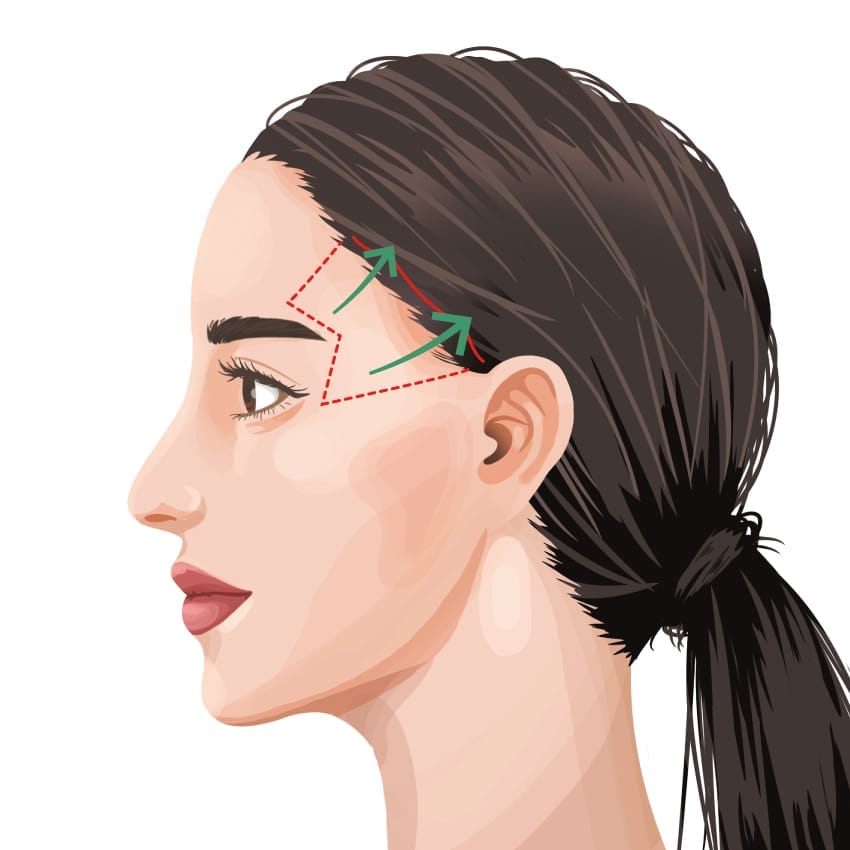
It is particularly suited to patients whose drooping is concentrated around the temples and outer eyelids rather than across the entire forehead.
With age, reduced skin elasticity and changes in deeper supporting tissues can cause the brow tails and outer corners of the eyes to descend. This may make the lateral upper eyelids appear heavier and contribute to a tired or downturned appearance.
By lifting the temple and outer eye area, the procedure can improve sagging around the brow tails and outer corners of the eyes while refining the lateral upper-face contour.
This differs from FOREHEAD LIFT & BROW LIFT, which addresses the forehead and brow area more broadly. TEMPORAL LIFT is particularly suited to concerns concentrated around the outer eye and temple region.
At BIANCA CLINIC, treatment is planned according to the location and degree of sagging, facial anatomy, and desired result.
Point 2: The treatment is focused on the outer upper face rather than the entire forehead, making it suitable for patients whose concerns are concentrated around the temples and outer eyelids.
Point 3: Downtime generally lasts approximately 1–2 weeks, although recovery varies by individual. Temporary pain, swelling, bruising, or tightness may occur and gradually improve over time.
-Those who want to improve drooping of the brow tails
-Those whose outer upper eyelids appear heavier with age
-Those concerned about a downturned appearance caused by sagging around the temples or eye corners
-Those seeking a lift focused on the outer eye area rather than the entire forehead
-Those whose main concern is concentrated around the temples and lateral upper face
Treatment Process
Consultation & Examination
The assessment may include skin laxity, eyelid-opening function, tissue volume, the natural eyelid crease, brow position, forehead descent, and temple sagging.
Because similar-looking droopy eyelids can have different underlying causes, BIANCA CLINIC does not rely on a single treatment for every patient.
BIANCA CLINIC’s medical team includes board-certified plastic surgeons, and treatment planning reflects detailed knowledge of eyelid anatomy, facial structure, and function.
Support for international patients is available, including online first consultations before traveling to Tokyo.
Treatment Planning
UPPER EYELID SAGGING REMOVAL may be appropriate when redundant upper eyelid skin is the primary concern.
UPPER BLEPHAROPLASTY may be selected when excess upper eyelid skin rests on the lashes or obscures the natural eyelid crease and a carefully measured skin excision is appropriate.
FOREHEAD LIFT & BROW LIFT may be considered when descended brows or forehead tissues are contributing to upper eyelid heaviness.
TEMPORAL LIFT may be suitable when sagging is concentrated around the brow tails, temples, and outer eye area.
The incision location, amount of correction, and direction of lift are customized to preserve natural expression and facial balance.
Treatment
The surgical technique and type of anesthesia vary depending on the selected procedure and extent of treatment.
Your physician will explain the treatment method, expected recovery process, potential risks, and realistic outcomes before surgery.
Aftercare
Some procedures require postoperative visits or suture removal approximately one week after surgery.
Detailed aftercare instructions will be provided for makeup, bathing, physical activity, wound care, and follow-up.
International patients should discuss their planned travel schedule during consultation so that any required postoperative appointments can be taken into account before returning home.
FAQ
What causes droopy eyelids?
Droopy eyelids can result from several factors, including age-related loss of skin elasticity, excess upper eyelid skin, changes in eyelid structure, and descent of the brows or forehead.
Because more than one factor may be involved, identifying where the heaviness originates is important when selecting treatment.
Are droopy eyelids the same as ptosis?
Not necessarily.
“Droopy eyelids” is a broad description of eyelids that appear heavy, sagging, or lower than before. Ptosis refers to a condition in which the upper eyelid itself sits abnormally low because of changes in the structures responsible for lifting it.
Some patients primarily have excess skin, while others may have true ptosis, brow descent, or a combination of factors. Eyelid-opening function is therefore assessed during consultation.
Why do eyelids become droopy with age?
With age, the skin loses elasticity and supporting tissues around the eyelids, brows, forehead, and temples may gradually descend.
This can cause excess skin to fold over the upper eyelid crease, make the brows sit lower, or create additional heaviness around the outer eye area.
The exact pattern varies between individuals, which is why treatment may focus on the eyelid itself or on the surrounding upper-face structures.
Can droopy eyelids affect vision?
Yes.
When excess eyelid skin or brow descent is significant, it may interfere with the upper field of vision.
Some patients compensate by repeatedly raising their eyebrows or using the forehead muscles to keep their eyes more open.
If your eyelids are affecting your vision, please mention this during consultation.
What is the difference between UPPER EYELID SAGGING REMOVAL and UPPER BLEPHAROPLASTY?
Both treatments can involve removal of redundant upper eyelid skin, and the terminology may overlap depending on the treatment context.
At BIANCA CLINIC, UPPER BLEPHAROPLASTY is also described as Upper Eyelid Skin Excision. The exact surgical plan depends on the amount and location of excess skin, the natural eyelid crease, eyelid function, and the desired result.
Your physician will determine the most appropriate approach after examining your eyelid anatomy.
When is a FOREHEAD LIFT & BROW LIFT more appropriate than eyelid surgery?
It may be more appropriate when the main source of the heaviness is descent of the forehead and brows rather than excess eyelid skin alone.
If the brows have moved downward, treating only the eyelid may not fully address the cause. Lifting the forehead and brows can restore the relationship between the brows and eyes and improve upper-face balance.
When is a TEMPORAL LIFT suitable for droopy eyelids?
A TEMPORAL LIFT may be suitable when sagging is concentrated around the temples, brow tails, and outer corners of the eyes.
It focuses on the lateral upper face rather than the entire forehead, making it particularly relevant for patients whose outer eyelids or brow tails appear to have descended with age.
Can droopy eyelids be treated without surgery?
It depends on the cause and degree of drooping.
Non-surgical treatments may help improve mild skin laxity or skin quality in selected patients, but they cannot directly remove significant excess upper eyelid skin or surgically reposition markedly descended brows or forehead tissues.
Your physician can explain whether surgical or non-surgical treatment is more appropriate after evaluating the source of the heaviness.
When can I wear makeup again after eyelid or lifting surgery?
The timing depends on the procedure and how the treated area is healing.
For procedures involving sutures, makeup around the incision should generally be avoided until the physician confirms that it is appropriate.
Your physician will provide instructions based on the specific procedure you receive and your healing progress.
Will I need suture removal before returning home?
Some eyelid and lifting procedures require suture removal approximately one week after surgery.
If you are traveling to Tokyo from overseas, it is important to discuss your departure date during consultation so that postoperative checks and any required suture removal can be incorporated into your treatment schedule.
The exact follow-up schedule varies depending on the procedure and individual recovery.