


What is stem cell treatment?
It’s one of the most common questions we hear from international clients researching regenerative medicine — and often, it’s just the starting point.
The search usually continues: Is stem cell therapy the same as exosome therapy?
Does it help with hair loss or just skin?
By the time clients reach BIANCA CLINIC, the terminology has often blurred more than it’s clarified.
This guide explains what stem cell treatment actually means in aesthetic medicine, how it relates to other regenerative approaches, and how we approach treatment selection with patients visiting us in Tokyo.
What Is Stem Cell Treatment, and What Does It Mean in Aesthetic Medicine?

What is stem cell treatment?
Stem cell treatment generally refers to medical approaches that use stem cells or materials derived from them as part of regenerative medicine.
It falls under the broader field of regenerative medicine, which focuses on helping the body’s own repair processes work more effectively, rather than masking a concern from the outside.
In practice, the term can refer to different approaches involving stem cells or materials derived from them.
These may include treatments using living stem cells and treatments using substances obtained duing cell culture.
Other regenerative approaches, such as exosome therapy and PRP, fall under the broader field of regenerative medicine but are not the same as stem cell treatment.
The point worth remembering: stem cell treatment is a category, not one standardized procedure, with options that differ in source, delivery, and intended outcome.
Are stem cells, exosomes, and PRP the same thing?
No — and this is where most confusion starts.
Each term describes a different biological material, even though all are loosely grouped under “regenerative treatment.”
| Approach | What is involved? | Common aesthetic interest |
|---|---|---|
| Stem cell-based treatment | Living stem cells, often from the patient’s own tissue | Systemic regeneration, cellular repair |
| Stem cell-derived treatment | Substances collected from cultured cells, without the cells themselves | Skin renewal, systemic wellness |
| Exosome therapy | Vesicles secreted by cells, used for cell signaling | Skin quality, hair, inflammation |
| PRP | Concentrated platelets from the patient’s own blood | Skin texture, scalp health |
| Fibroblast therapy | Cultured cells from the patient’s own skin | Firmness, deeper skin aging |
A client asking about “stem cell injection” might, after consultation, be better suited to an exosome-based approach, or vice versa — which is why the treatment name shouldn’t be the starting point.
The starting point should be the client’s concern.
What Regenerative Treatment Options Are Available at BIANCA CLINIC?
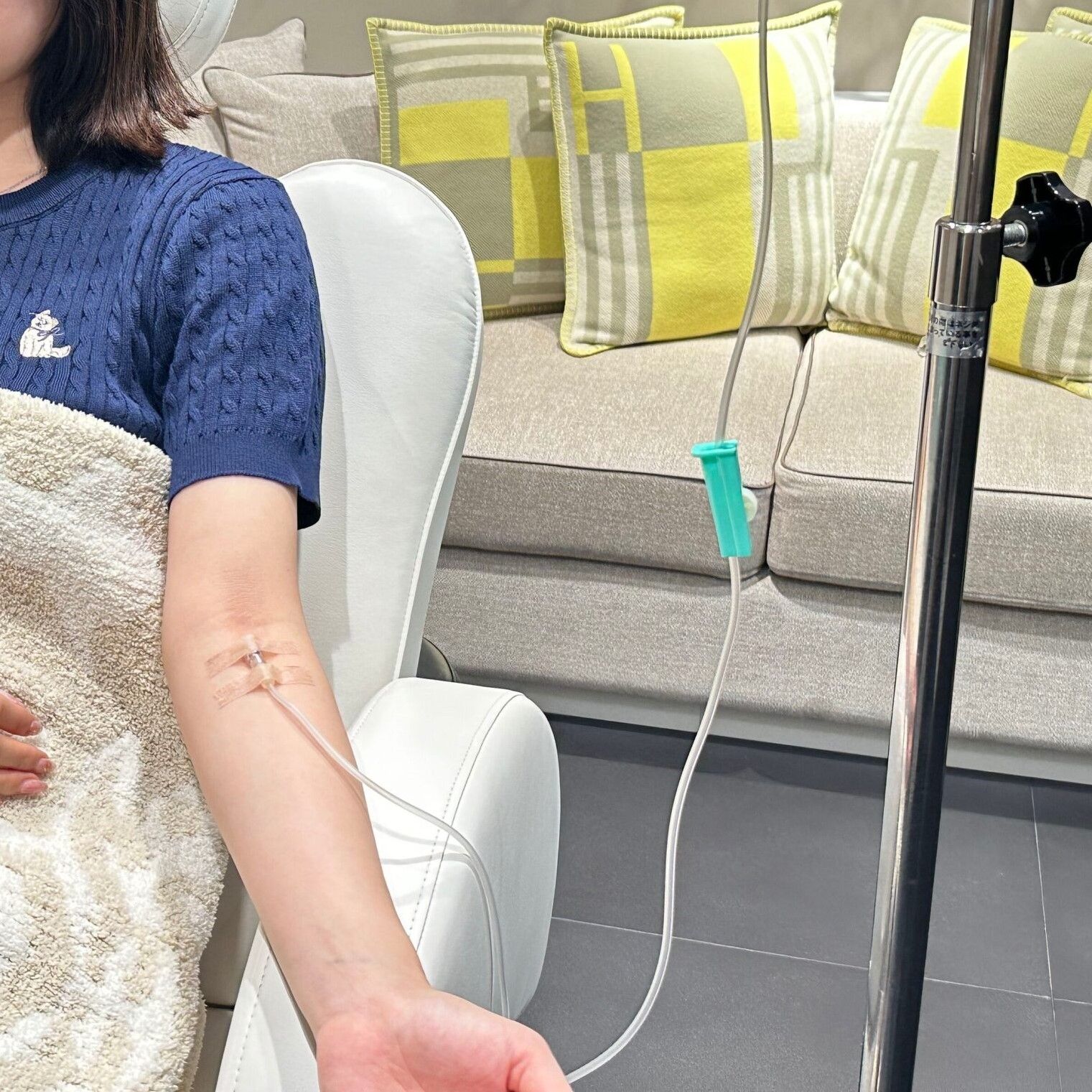
When clients ask about stem cell treatment, we don’t automatically point everyone toward the same procedure.
Regenerative medicine at BIANCA CLINIC is a set of related options, and part of consultation is identifying which one — if any — fits what a client is trying to address.
Stem Cell and Stem Cell-Derived Approaches
Two distinct approaches are worth separating here.
Autologous Adipose-Derived Stem Cell IV Therapy uses a patient’s own fat-derived stem cells, which are cultured and reintroduced intravenously.
This approach may be discussed with patients interested in broader regenerative or age-related concerns.
Separately, Purified Stem Cell Culture Supernatant IV Drips use the supernatant fluid collected during cultivation — rich in growth factors and peptides, but free of the stem cells themselves.
It’s a non-cellular option with gentler downtime, aimed at skin renewal rather than systemic repair.
These two are often confused because both involve the word “stem cell,” but the material and expected effect differ meaningfully.
Exosome Therapy
Exosomes are not stem cells — they’re vesicles secreted by cells, carrying signals that coordinate repair between cells.
At BIANCA CLINIC, exosome therapy is available as an injection, IV drip, or facial, and is typically considered for dullness, fine lines, or skin showing slower renewal.
Because exosomes act through signaling rather than replacing cells directly, they represent a different, signaling-based approach rather than a direct substitute for cell-based therapy.
PRP and Fibroblast Therapy
PRP uses concentrated platelets from the patient’s own blood and may be considered for concerns such as skin texture and acne scarring.
Dermal Fibroblast Cell Therapy works differently: fibroblasts — cells responsible for collagen and elastin — are harvested from a small skin sample, cultured, and reintroduced into areas of concern.
This approach may be discussed for more established signs of skin aging, depending on the patient’s assessment.
None of these approaches is inherently superior — they use different materials and suit different starting points.
Why Having Several Options Matters
The benefit of this range is that a client doesn’t need to arrive already knowing which treatment name applies to them.
It’s more useful to start from the concern, move through a medical assessment, and let the appropriate option emerge — rather than working backward from a name found in a search result.
▶Explore Regenerative Treatments
How Do We Decide Which Regenerative Treatment May Be Right for You?

Start With the Concern, Not the Treatment Name
The treatment name shouldn’t be the starting point.
The starting point should be the client’s concern.
Clients often ask us for “stem cell therapy” by name, but the consultation starts with what they’d actually like to see change.
We typically review:
- What specific concern brought you in — skin quality, hair thinning, or broader aging signs?
- Relevant medical history and current medications
- Previous aesthetic treatments and your response to them
- How much change you’re realistically hoping for
- How much recovery time you have during your stay
Stem Cell Treatment vs PRP vs Exosome Therapy
This comparison comes up constantly, and it’s rarely a matter of one being objectively superior.
| Consideration | Stem cell-based approaches | Exosome therapy | PRP |
|---|---|---|---|
| Source | Patient’s own or cultured cell material | Vesicles from cultured cells | Patient’s own blood |
| Typical focus | Depends on the treatment and patient’s goals | Skin/hair concerns | Skin texture and collagen-related concerns |
| Recovery | Varies by treatment | Generally minimal | Generally minimal |
| Suitability | Physician assessment | Physician assessment | Physician assessment |
There is no single regenerative treatment that works best for everyone, even for patients using the same search term.
What Makes a Physician Consultation Important?
This is where candidacy gets assessed properly — whether a treatment fits someone’s health background, what realistic outcomes look like, and whether combining approaches makes sense.
The goal isn’t steering someone toward the newest-sounding option; it’s determining what’s medically reasonable for their specific situation.
▶Explore Your Treatment Options
What Should International Patients Know Before Stem Cell Treatment in Tokyo?

Can Stem Cell Treatment Fit Into a Trip to Japan?
Whether treatment can fit into a trip to Japan depends on the specific treatment, preparation required, and follow-up plan.
Depending on the treatment, the process may include consultation, preparation, treatment, and follow-up.
Some can be completed in a single visit; others involving cell culturing may need more lead time.
It’s worth discussing your travel dates during consultation.
How Much Recovery Time Should You Plan?
This varies by treatment.
Some patients experience mild redness or swelling at an injection site resolving within hours to a few days; others notice little beyond the treatment day.
Since you’re likely combining treatment with sightseeing or a long flight home, ask your physician directly how your treatment plan may affect your schedule.
What Should You Ask Before Choosing a Clinic?
A few questions are worth raising during any consultation:
- What exactly will be administered, and where does it come from?
- Why is this approach recommended for my specific concern?
- What alternatives exist?
- What are the realistic limitations or risks?
- How much recovery time should I build into my trip?
- What follow-up will I need once I’m home?
Frequently Asked Questions
Q. What is stem cell treatment?
Stem cell treatment refers to the use of stem cells, or materials derived from them, to support tissue repair and regeneration.
It covers several distinct approaches rather than one procedure.
Q. Is stem cell therapy the same as PRP?
No.
PRP comes from a patient’s own blood and works through platelet-based growth factors, while stem cell therapies involve cells or cultured materials.
Q. What is stem cell exosome therapy?
It uses vesicles secreted by cells rather than the cells themselves.
Rather than directly administering stem cells, this approach focuses on cell signaling and is considered separately from cell-based treatment.
Q. Is stem cell therapy safe?
Safety depends on the specific treatment, the material used, and the patient’s health background.
At BIANCA CLINIC, treatments are performed under physician supervision, and suitability is assessed individually before treatment.
Q. How much does stem cell treatment in Japan cost?
Costs vary depending on the treatment selected and the plan involved.
Current pricing is available on our treatment and pricing pages, and specifics can be discussed during consultation.
The Right Regenerative Treatment Starts With the Right Question
The more useful question isn’t “what is stem cell treatment?” on its own — it’s “which regenerative approach, if any, makes sense for what I’m trying to address?”
Stem cell treatment isn’t one fixed procedure; it sits within a wider field of regenerative options, each with different sources and results.
Sorting through those differences is what a proper consultation is for, and for patients traveling from abroad, planning extends beyond the treatment itself to recovery time and how it fits your trip.
The right regenerative treatment starts with the right question.
If you’d like to explore which regenerative option may suit your goals, our Regenerative Medicine page outlines each treatment in detail, and our team is here to discuss your concerns during a consultation.