



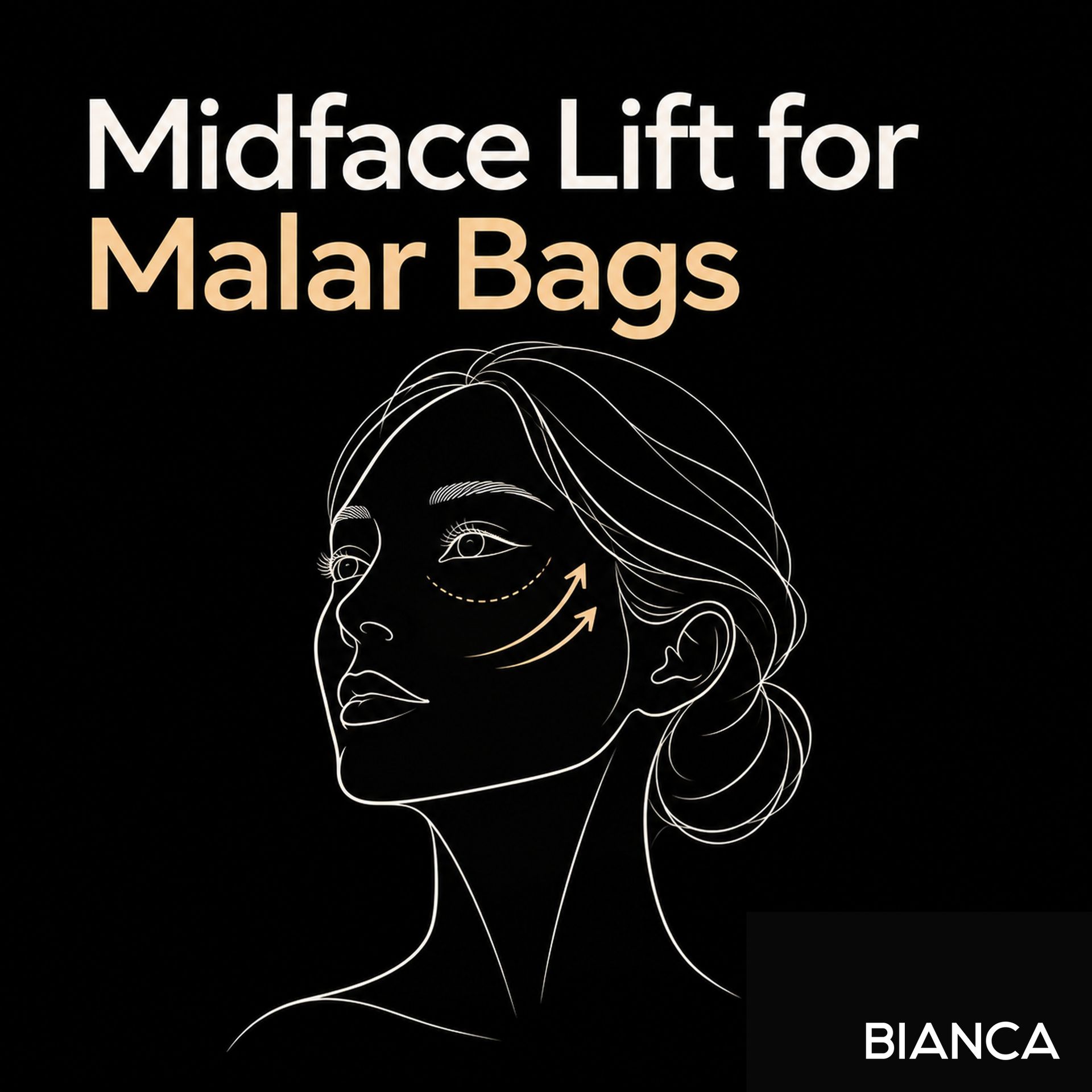
A midface lift for malar bags may help when descended cheek tissue is making the area beneath the eyes look heavy.
The operation raises and supports that tissue, but it cannot address every kind of swelling around the cheekbones.
Where is the fullness located: immediately beneath the lower eyelid or over the cheekbone?
Does it change during the day?
At BIANCA CLINIC in Tokyo, Japan, we assess whether fullness is related to descended cheek tissue, protruding orbital fat, or swelling before discussing treatment.
We offer both supraperiosteal and subperiosteal midface lift techniques, with the anterior Hamra method included in our midface lift approach to address suitable under-eye concerns at the same time.
Our priority is to determine whether surgery can meaningfully improve your particular concern—not simply to recommend a lift.
Can a Midface Lift Improve Malar Bags?

To understand when a lift might help, it is useful to know which tissues the operation actually moves.
How Does a Midface Lift Work for Malar Bags?
A midface lift raises soft tissue in the central face, particularly the cheek fat that has moved downward from its earlier position.
The lifted tissue is then secured to supporting structures near the bone.
As the cheek descends, a hollow may appear beneath the eyelid or a heavier ridge over the cheekbone.
Repositioning tissue can soften that contour.
The distinction is between moving tissue and treating swelling.
A malar pad lift can reposition descended cheek fat, but lifting the malar fat pad does not necessarily reduce fluid-related puffiness.
Who Is a Good Candidate for a Midface Lift?
You may want to discuss a midface lift if you:
- See sagging in the upper cheeks alongside malar fullness.
- Notice a deeper boundary between the lower eyelid and cheek.
- Have under-eye bags as well as midface sagging.
- Are concerned about nasolabial folds.
- Have tried non-surgical lifting treatments without achieving the change you wanted.
Skin elasticity, cheek volume, and lower eyelid position also affect what surgery can achieve.
▶See Who May Benefit From a Midface Lift
What Causes Malar Bags, and How Are They Different From Festoons?

At BIANCA CLINIC, we do not assume that every bulge over the cheekbone is a malar bag.
We assess its location, whether it fluctuates throughout the day, and the condition of the surrounding tissues before discussing treatment options.
What Are Malar Bags and What Causes Them?
Malar bags are areas of fullness over the upper cheekbones, linked to changes in supporting tissue, fluid accumulation, or skin and muscle laxity.
You might notice swelling that worsens in the morning and settles later.
Or the fullness may remain visible all day.
Neither pattern establishes the cause on its own.
What Is the Difference Between Malar Bags and Festoons?
These overlapping terms describe somewhat different appearances.
| Concern | Typical Appearance |
| Malar bags | Fullness or swelling over the upper cheekbones |
| Festoons | Hanging folds or pouch-like swelling involving skin and sometimes muscle |
| Under-eye bags | Bulging directly beneath the lower eyelids, often involving orbital fat |
Festoons may involve laxity and fluid accumulation.
A midface lift for festoons may help the descended tissue without resolving the entire pouch.
This is also why a photograph alone cannot always tell you which procedure is appropriate.
▶Explore Midface Lift Treatment for Under-Eye and Cheek Concerns
Which Midface Lift Technique Is Best for Malar Bags?

BIANCA offers techniques that lift the cheek at different depths, allowing the surgical plan to reflect the extent and position of tissue descent.
Supraperiosteal vs. Subperiosteal Midface Lift
The periosteum is the thin connective tissue covering bone.
Its position defines an important difference between these procedures.
In both approaches, the incision is placed along the lower eyelash line, where the resulting scar tends to become less noticeable as healing progresses.
However, scar visibility varies between individuals.
Supraperiosteal midface lift
In a supraperiosteal midface lift, we make an incision near the lower eyelashes, lift the cheek tissue above the periosteum, and secure it to supporting structures around the orbital rim.
Subperiosteal midface lift
In a subperiosteal midface lift, we release tissue beneath the periosteum over the cheekbone, allowing wider dissection and deeper repositioning of descended cheek tissue.
This approach is designed to provide firm support and may offer greater resistance to recurrent sagging over time.
At BIANCA CLINIC, we offer both supraperiosteal and subperiosteal techniques.
We consider the degree of cheek descent, tissue condition, and your treatment goals when discussing which approach may be appropriate.
How Does BIANCA Combine a Midface Lift With the Anterior Hamra Method?
One feature of our midface lift at BIANCA CLINIC is that the anterior Hamra method is included in the procedure.
This allows us to consider both under-eye bags and descended cheek tissue during the same operation when appropriate.
Why does this matter? An under-eye bulge and a hollow or sagging cheek can make the eyelid-to-cheek transition look uneven.
By repositioning orbital fat and lifting descended cheek tissue, we aim to create a smoother transition between the lower eyelid and cheek while addressing both areas together.
The anterior Hamra method uses an incision along the lower eyelash line, which can also provide access for the midface lift.
However, the surgical plan depends on your anatomy and the concerns identified during consultation.
▶Learn How BIANCA Combines Midface Lifting With the Anterior Hamra Method
Midface Lift Before and After: What Changes Can You Expect?

The following cases illustrate changes in the midface and the transition between the lower eyelid and cheek.
They do not necessarily represent patients treated specifically for malar bags, and individual results vary.
When reviewing the photographs, consider which procedures were performed and how much time has passed since surgery.
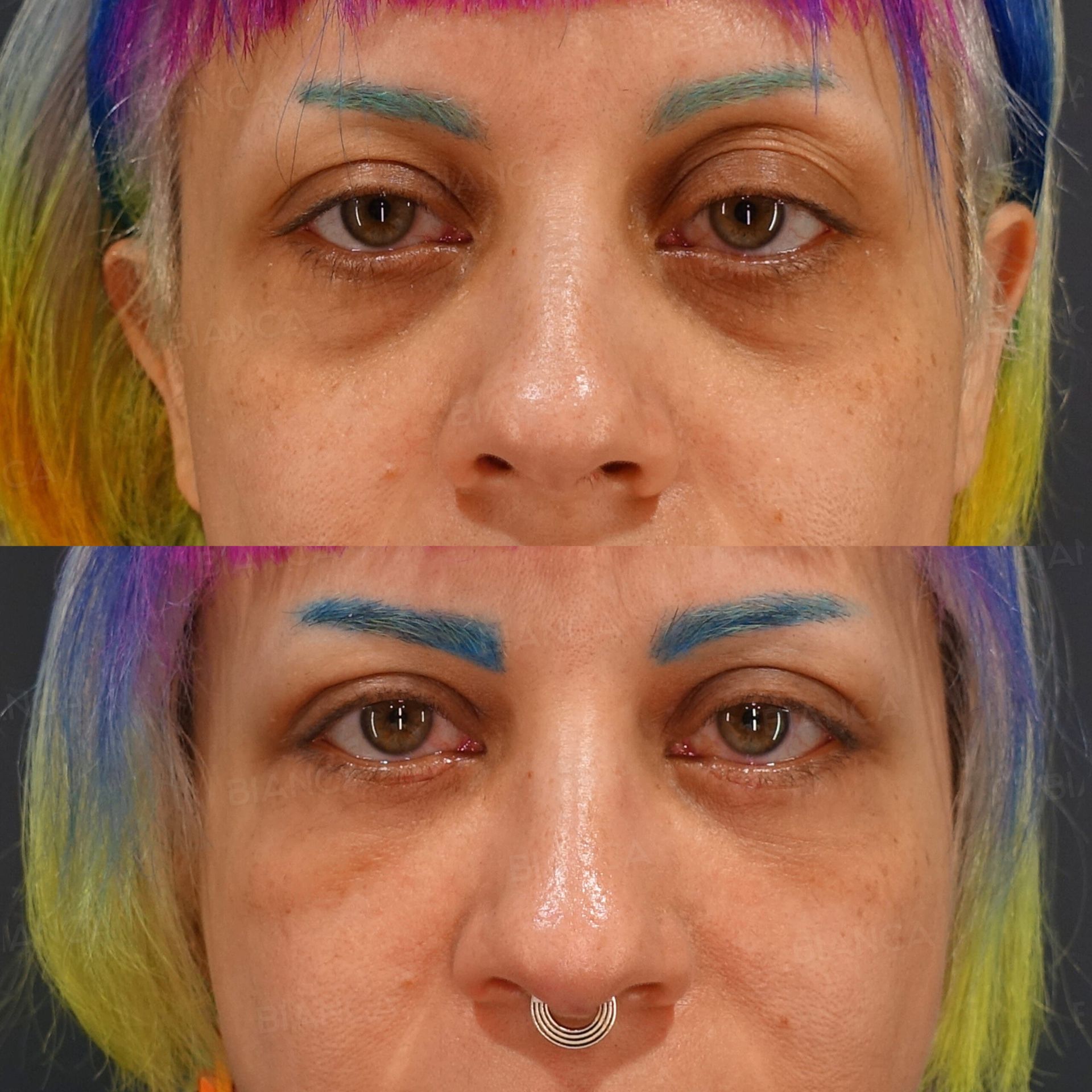
Case 1 | Changes in the Under-Eye and Cheek Area
View Details +
Treatment: Subperiosteal Midface Lift + Upper Eyelid Skin Excision (Upper Blepharoplasty)
Image: Top: Before treatment / Bottom: 1 month after treatment
Price: ¥1,368,700 (tax included; example price only)
Possible Side Effects and Risks: Swelling and bruising around the cheeks and lower eyelids, cheek numbness or reduced sensation, changes in lower eyelid shape or position, temporary hollows, firmness along incision lines, and hair thinning around the temples.
Upper eyelid skin excision may also cause uneven eyelid creases, dry eyes, difficulty fully closing the eyes during sleep, or visible incision marks.
Rare complications include bleeding, infection, and the need for revision surgery.
This case combines a subperiosteal midface lift with upper eyelid skin excision to address two concerns: descended cheek fat and excess upper eyelid skin extending over the eyelashes.
In this case, we focused on lifting the cheeks vertically rather than pulling the tissue toward the ears.
Our aim was to create a smoother transition between the lower eyelids and cheeks while reducing the appearance of an elongated midface.
We also took a conservative approach to upper eyelid skin removal, with the aim of preserving eyelid function.
At one month, some firmness over the cheekbones and swelling on one side remain.
These changes generally continue to settle over the following months, often improving by around the three-month mark.
When reviewing this case, we pay particular attention to the transition between the lower eyelid and upper cheek, rather than judging the result by cheek height alone.
Because upper eyelid skin excision was also performed, changes around the upper eyelids should not be attributed to the midface lift itself.
The one-month photograph also represents an intermediate stage of recovery, not necessarily the final result.
Case 2 | How Cheek Repositioning Changes the Midface
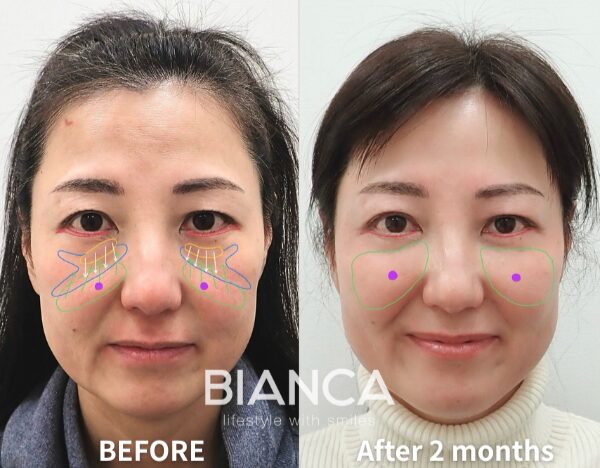
Treatment: Midface Lift
Image: Left: Before treatment / Right: 2 months after treatment
Price: Midface Lift: ¥808,500 / Midface Lift (Subperiosteal): ¥990,000 (tax included)
Possible Side Effects and Risks: Bruising, hematoma, infection, asymmetry, persistent skin wrinkles, orbital fat bulging or hollows, hollow-looking cheeks, peripheral nerve injury affecting the cheeks, lower eyelid ectropion (outward turning of the eyelid), redness along incision edges, hyperpigmentation, contour irregularities, and changes in the natural fullness beneath the lower eyelashes.
These photographs show the results two months after a midface lift.
Before surgery, shadows were visible along the lower eyelid-to-cheek junction, giving the cheeks a slightly lower appearance.
In the postoperative photograph, the upper cheeks appear fuller and more rounded, with a smoother transition from the lower eyelids.
The midface also appears less elongated, bringing the facial proportions into better balance without an exaggerated change in cheek volume.
What Should You Look for in Midface Lift Before and After Photos?
When comparing midface lift before-and-after photographs, look at:
- Eyelid-to-cheek transition: Is the line between the two areas softer?
- Cheek position: Does the upper cheek appear more supported?
- Facial proportions: Does the result suit the rest of the face?
- Nasolabial folds: What, if anything, has changed?
- Timing: How many weeks or months have passed?
One-month and six-month photographs may look quite different.
Lighting and facial expression also matter.
▶View Midface Lift Before-and-After Results at BIANCA
How Much Does a Midface Lift Cost, and What Is Recovery Like?

For visitors to Japan, the midface lift price and postoperative schedule both matter.
How Much Does a Midface Lift Cost at BIANCA CLINIC in Tokyo?
BIANCA CLINIC currently lists these prices:
| Procedure | Price (Tax Included) |
|---|---|
| Midface Lift | ¥808,500 |
| Midface Lift (Subperiosteal) | ¥990,000 |
| Dr. Nakao’s Dual Plane Midface Lift | ¥1,155,000 |
| Endoscopic Assistance (Option) | ¥231,000 |
At BIANCA CLINIC, additional anesthesia and touch-ups within two weeks are included in the published pricing, subject to the clinic’s stated conditions.
We will explain the applicable fees and treatment details during your consultation.
The cost of a midface lift depends on the technique chosen.
Prices may change. We can also provide approximate costs in other currencies upon request.
How Long Is Recovery After a Midface Lift?
Swelling and bruising often improve within approximately two weeks.
Other postoperative symptoms may take about one month to settle, while the midface contour generally continues to refine over the following two to three months.
Recovery varies between individuals.
At BIANCA CLINIC, we generally use gauze and bands to support the under-eye area for the first three days after surgery.
Depending on your recovery, additional taping may be needed for a week or longer.
Face washing and makeup outside the eye area and surgical site can generally resume the following day, while eye makeup and contact lenses should be avoided for one week.
Ointment and eye drops are also generally used for approximately one week.
Sutures are usually removed seven days after surgery.
During your consultation, we explain potential risks, including bleeding, infection, scarring, asymmetry, sensory changes, and changes in lower eyelid position.
If you are traveling to Tokyo for treatment, we recommend discussing your travel schedule before booking surgery.
We offer complimentary interpretation and counseling services, as well as online initial consultations to help international patients prepare.
Some doctors may require an additional selection fee.
Your stay should allow time for postoperative assessment, suture removal, and any necessary follow-up.
We can discuss your recovery needs and return-flight plans during your consultation.
▶Check Midface Lift Prices and Recovery Details
What Are the Limitations of a Midface Lift for Malar Bags, and What Are the Alternatives?

Before discussing surgery, we need to establish whether there is actually descended tissue to lift.
When Might a Midface Lift Alone Not Be Enough?
A lift changes the position of cheek tissue; it doesn’t treat every cause of fullness over the cheekbone.
If a bulge fluctuates markedly from day to day, fluid retention deserves attention.
Prominent festoons with excess skin or muscle laxity may need a different or combined approach.
And a bulge caused mainly by orbital fat calls for a closer look at the lower eyelid itself.
At BIANCA CLINIC, we use these findings to determine whether a midface lift alone is appropriate or whether another procedure, a combined approach, or further assessment would better address your concerns.
What Other Treatments May Be Considered for Malar Bags and Related Concerns?
Other treatments address different parts of the problem:
Anterior Hamra method: Repositions orbital fat to address under-eye bulges and hollows.
At BIANCA CLINIC, this method is included in our midface lift procedure, allowing us to address suitable under-eye and midface concerns together.
HIFU Skin Tightening and Volnewmer:May be considered for selected skin-laxity and firmness concerns.
Neither repositions cheek tissue in the way surgery does.
Morpheus8:May help with certain skin-quality concerns, but improving texture does not necessarily correct malar fullness.
Evaluation of persistent swelling:When fluid retention appears to be the main concern, investigating possible contributing factors may be more appropriate than starting with lifting surgery.
At BIANCA, we also consider whether an eyelid procedure should accompany the lift.
▶Explore BIANCA’s Midface Lift Techniques and Treatment Options
FAQ:Midface Lift for Malar Bags

Q. Can a midface lift completely eliminate malar bags?
Complete removal cannot be promised.
In cases involving descended cheek tissue, the operation may soften the contour; other contributors to fullness can remain.
Q. Can a midface lift improve festoons?
Sometimes, particularly when sagging tissue is part of the problem.
Significant swelling or excess skin may call for additional treatment.
Q. How long do midface lift results last?
The repositioned tissue can provide long-lasting improvement, although the face continues to age.
Results vary between individuals.
Q. Are there minimally invasive alternatives for malar bags?
HIFU Skin Tightening and radiofrequency treatments may help selected skin-laxity concerns, but they do not reproduce a surgical lift.
Q. Can international clients consult BIANCA CLINIC before traveling to Japan?
Yes.
BIANCA offers online initial consultations and interpreter support.
You can discuss your options and postoperative visit schedule before your trip.
Q. Will a Midface Lift Make My Facial Expressions Look Unnatural?
The risk of unnatural facial expressions after a midface lift is generally considered low.
However, you may experience a temporary pulling sensation as the tissues heal, which usually becomes less noticeable over time.
If you have previously undergone facelift surgery, you may be more likely to experience discomfort or an unusual sensation when making facial expressions.
At BIANCA CLINIC, we review your surgical history and assess your facial anatomy before recommending treatment.
Q. What Is the Difference Between a Midface Lift and a Facelift?
A midface lift focuses on the area beneath the eyes and the central cheeks.
At BIANCA CLINIC, we typically access this area through an incision along the lower eyelash line to reposition descended cheek tissue.
A facelift generally addresses sagging along the lower face and jawline, using incisions around the ears.
We consider which procedure is appropriate based on where the sagging occurs and what you hope to improve.
Find the Right Approach for Your Malar Bags at BIANCA CLINIC in Tokyo
If you are concerned about malar bags or fullness over the cheekbones, the first step is to understand what is causing the contour.
A midface lift may help when descended cheek tissue contributes to the appearance, but not every type of swelling can be corrected by lifting alone.
At BIANCA CLINIC in Tokyo, we offer both supraperiosteal and subperiosteal midface lift techniques, with the anterior Hamra method included in our approach to suitable under-eye concerns.
We assess your facial anatomy and treatment goals before recommending surgery.
If you are planning treatment in Japan, explore our Midface Lift procedure page for details about the techniques, before-and-after results, pricing, and recovery.
You can also arrange a consultation to discuss whether this approach is appropriate for you and how to plan your stay.
▶Explore Midface Lift Treatment and Consultation Options at BIANCA