



A chemical peel for pimple marks may help fade flat brown marks left after acne and improve surface roughness.
However, red marks and indented scars require a different assessment.
A superficial peel alone is unlikely to adequately address deep acne scars.
The first question is therefore not “Which peel is strongest?” but “What has the acne left behind?”
At BIANCA CLINIC in Tokyo, you don’t need to choose a peel before your consultation.
Our physicians assess your skin concerns and discuss the available options, including whether a peel is appropriate in the first place.
With several peel formulations and other acne-scar procedures listed on our treatment menu, the discussion can focus on the change you want to achieve rather than a single procedure.
Which Types of Pimple Marks Can a Chemical Peel Improve?
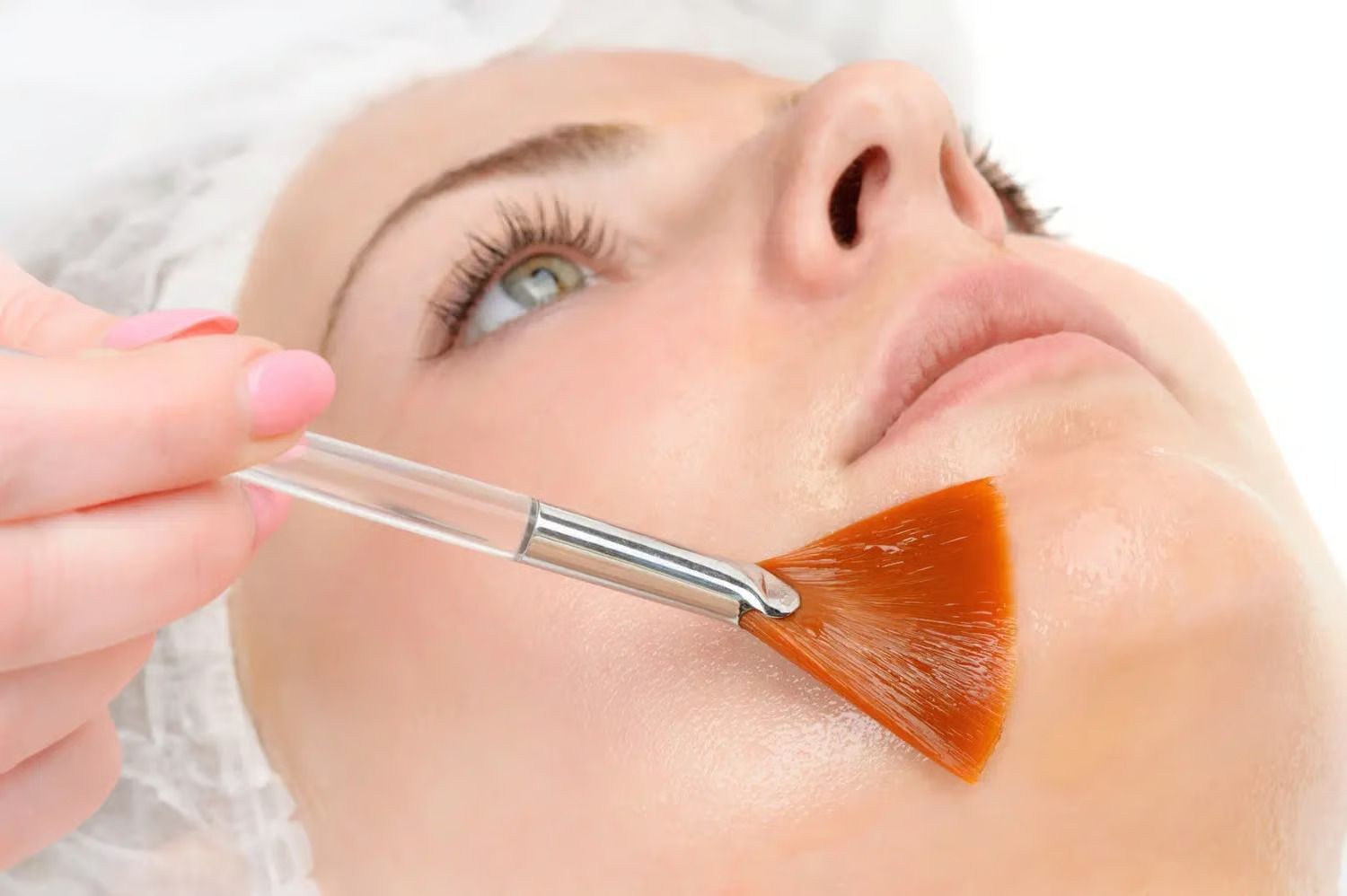
“Pimple marks” can describe several different conditions.
Although they may appear together on the same cheek, they do not necessarily respond to the same treatment.
Can a Chemical Peel Fade Brown Marks After Acne?
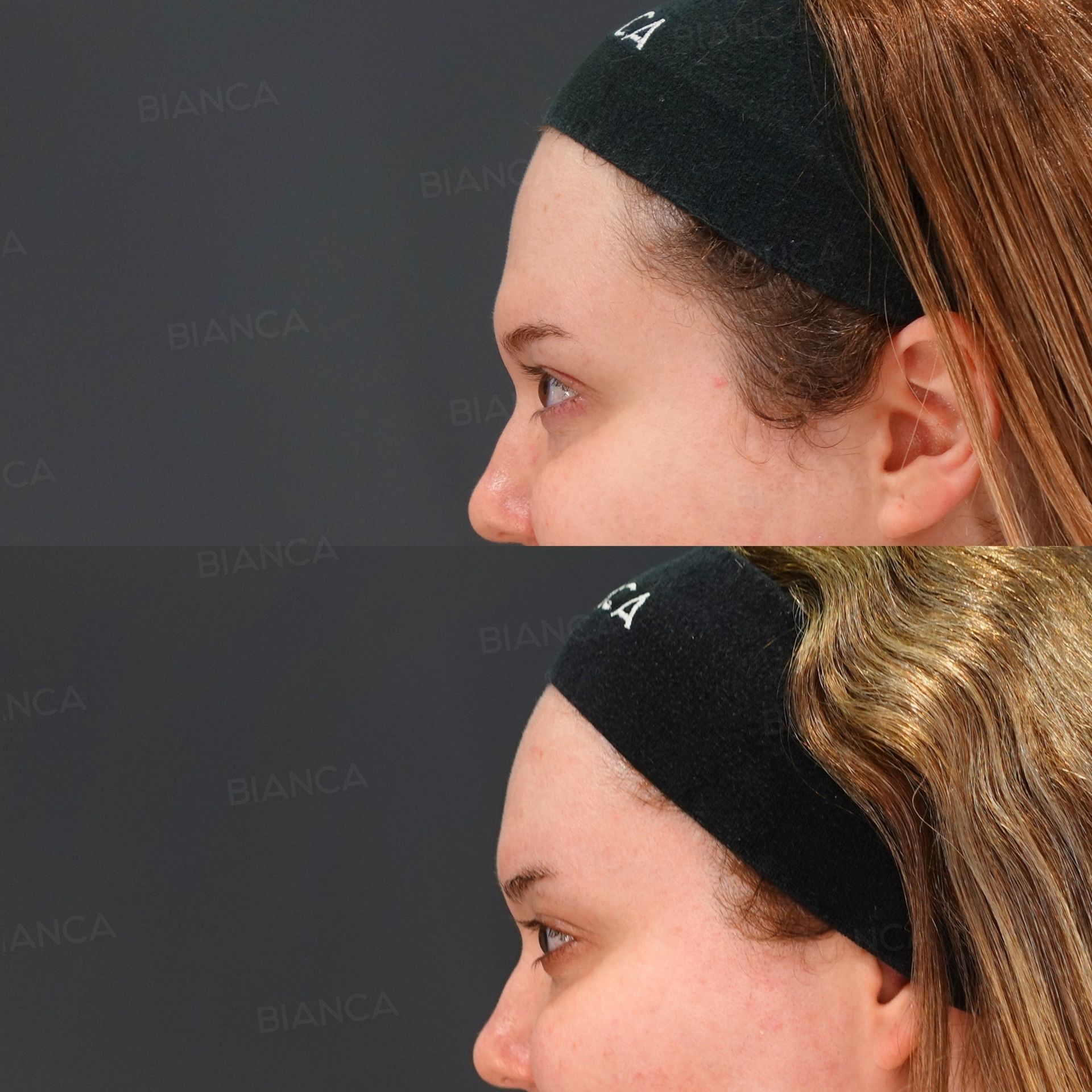
A superficial chemical peel may help fade flat brown marks after acne.
These marks are often post-inflammatory hyperpigmentation, or PIH: inflammation triggers increased pigment production, leaving discoloration after the pimple has settled.
A superficial chemical peel encourages exfoliation of the outer skin layers.
This may help improve the appearance of pigmentation near the surface, alongside appropriate skincare and sun protection.
However, will a chemical peel remove dark spots completely?
That cannot be promised. The depth of the pigment, the age of the marks, ongoing inflammation, and your skin’s response all affect the outcome.
Some marks also fade naturally.
The aim is to support improvement without introducing irritation that could create additional discoloration.
Will a Chemical Peel Help Red Acne Marks?
Flat pink or red marks may represent post-inflammatory erythema, or PIE, rather than excess melanin.
These marks involve vascular changes following inflammation.
This distinction matters because exfoliating pigmented surface cells does not directly address every cause of redness.
A peel may have a role when redness coexists with clogged pores or uneven texture, but persistent red marks should not automatically be treated as brown pigmentation.
We also need to distinguish a residual mark from a pimple that remains inflamed. Increasing peel strength before clarifying the cause may add irritation without addressing the main concern.
Can a Chemical Peel Improve Pockmarks or Indented Acne Scars?
A superficial peel alone is unlikely to adequately improve indented scars, because they involve changes in the skin’s structure.
They include narrow ice pick scars, sharply edged boxcar scars, and broader rolling scars.
A superficial chemical peel for pockmarks has limitations: improving the surface does not necessarily correct the depression beneath it.
Selected deeper chemical procedures may be considered for certain scars, but these differ from routine superficial peels.
Scar management may also require a combination of approaches.
| Your main concern | The role of a superficial peel | Important limitation |
|---|---|---|
| Flat brown marks | May improve surface pigmentation | Complete clearance is not guaranteed |
| Flat red marks | May address accompanying surface concerns | Does not directly target every vascular cause |
| Rough surface texture | May improve superficial smoothness | Roughness and structural scarring are different |
| Indented scars | May address accompanying discoloration | Usually insufficient for deeper depressions |
How Do We Choose a Chemical Peel for Acne Marks at BIANCA?

The right chemical peel for pimple marks depends on both the marks and the surrounding skin.
Someone with brown marks and oily, congested skin may need a different approach from someone with similar discoloration but dryness and frequent irritation.
Our treatment menu includes Professional Peel, LHALA PEEL, MANUKA PEEL, BIOREPEEL, and MASSAGE PEEL.
Having several formulations available allows us to discuss differences relevant to your skin, without expecting you to identify the right product yourself.
How Do BIANCA’s Chemical Peel Options Differ?
BIANCA offers five peel formulations with different ingredients and treatment priorities.
The table below outlines how they differ.
It isn’t a ranking of effectiveness for acne marks.
| Peel | Formulation and focus |
|---|---|
| Профессиональный пилинг | Combines glycolic, lactic, and salicylic acids for exfoliation and concerns such as uneven tone and surface texture |
| ЛХАЛА ПИЛ | An LHA-based formulation presented as an option emphasizing gentle surface renewal and hydration |
| MANUKA PEEL | Combines exfoliating acids with manuka honey, with an emphasis on hydration and skin-barrier care |
| BIOREPEEL | A TCA-based blend listed for concerns including uneven tone, pigmentation, and skin texture |
| МАССАЖНЫЙ ПИЛИНГ | Uses PRX-T33, combining TCA and hydrogen peroxide, with a focus on firmness, radiance, and uneven texture |
These differences matter when acne marks coexist with dryness, congestion, or other concerns.
However, a product’s general benefits do not establish how well it will improve your particular marks.
Your physician can explain which formulation, if any, suits your skin and treatment goal.
Is a Glycolic Acid Peel Suitable for Acne Marks?
Glycolic acid is an alpha hydroxy acid used for exfoliation and surface renewal.
It may be relevant when brown acne marks coexist with roughness or uneven tone.
At BIANCA, Professional Peel combines glycolic, lactic, and salicylic acids.
It is a blended formulation rather than a standalone glycolic peel.
If you are researching a glycolic peel for acne marks, bring that question to your consultation.
We can discuss the formulation in relation to your dryness, sensitivity, pore congestion, and previous reactions.
The presence of a particular ingredient does not, by itself, establish suitability.
Does a Stronger Chemical Peel Give Better Results?
Not necessarily. Peel effects depend on the formulation, concentration, application technique, exposure time, and skin condition.
More irritation is not a useful goal.
For someone prone to pigmentation after inflammation, an overly aggressive approach could work against the desired result.
Your consultation is an opportunity to connect these factors: what bothers you most, what your skin currently tolerates, and what recovery your schedule allows.
▶Explore our chemical peel treatments to review the available formulations.
How Many Chemical Peels Do I Need, and When Will I See Results?
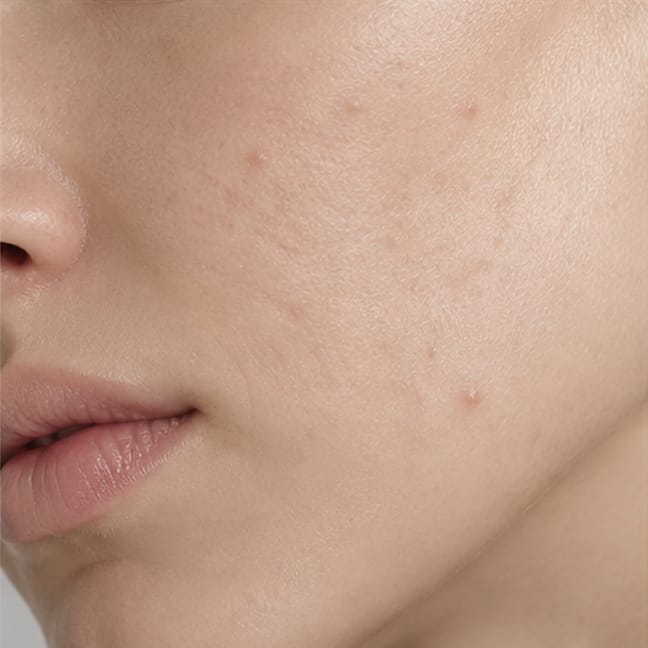
There is no universal number of sessions that removes pimple marks.
A schedule is a starting plan, not a guarantee of clearance.
How Soon Will My Pimple Marks Start to Fade?
Surface smoothness or brightness may change after your skin recovers from a peel.
Fading of individual brown marks can take longer and should be assessed separately from that initial refreshed appearance.
For superficial peels, expect to evaluate progress over several weeks and, when a series of treatments is appropriate, across multiple sessions rather than the first few days.
Some marks may require months of management, while others may respond poorly to peeling. There is no reliable clearance date that applies to everyone.
The American Academy of Dermatology notes that mild peels may require several sessions to achieve the desired result.
This is general guidance, not a specific timeline for acne pigmentation.
When reviewing your progress, compare photographs taken under similar lighting and from the same angle.
Look for lighter individual marks and distinguish those changes from temporary radiance or new marks caused by ongoing breakouts.
If discoloration persists, reassessment is more useful than assuming that more frequent peels will make it fade faster.
How Far Apart Should Chemical Peel Sessions Be?
Intervals depend on the formulation and your recovery.
Our treatment menu describes a five-session Professional Peel package, with sessions generally four weeks apart.
Treat this as a product-specific guide. Five sessions don’t guarantee that acne marks will clear.
Other formulations have different schedules.
The next appointment should account for residual dryness, redness, or sensitivity rather than follow the calendar automatically.
What If My Pimple Marks Are Not Improving?
Limited progress is a reason to reassess. The concern may involve deeper pigment, persistent redness, or structural scars.
New breakouts may also create marks while older ones fade.
Before increasing strength or adding sessions, we review the diagnosis, your skincare routine, sun exposure, and your original goal.
Sometimes a different procedure or better control of active acne is more appropriate.
Chemical Peel vs Laser for Pimple Marks: Which Is Right for Me?
Neither option is universally better.
A useful comparison starts with the problem being treated.
At BIANCA, the overseas menu includes procedures addressing different aspects of acne-related concerns.
This gives you an opportunity to discuss alternatives when exfoliation alone is unlikely to deliver the change you want.
For flat brown marks with surface roughness, a peel may be considered.
Persistent pigmentation may warrant assessment for other options, but not every dark mark is suitable for the same laser procedure.
When redness is the main concern, a vascular-targeted approach may be more relevant.
ADVATx Laser is one option that may be considered for selected redness and acne-related concerns.
For narrow, deep scars, TCA CROSS may be discussed.
This involves focal application to individual scars and differs from applying a routine peel across the face.
For scars tethered by fibrous tissue beneath the skin, subcision addresses the underlying attachment.
Surface exfoliation does not perform the same function.
You can find these procedures on our website.
If you have both brown marks and depressions, improving the color may leave some shadows visible.
Discussing which change matters most to you helps establish priorities and realistic expectations.
What Should I Know Before Having a Chemical Peel During a Visit to Tokyo?
A short visit may allow an assessment and, if appropriate, a procedure.
A short stay may not be enough to complete a full treatment plan or resolve longstanding marks.
What Downtime and Risks Should I Expect?
Depending on the peel, you may experience stinging, redness, dryness, or flaking.
Pigment changes, infection, and scarring are also possible complications, with risks varying by depth and individual factors.
Visible peeling is not inevitable, and recovery should not be assigned one fixed duration for every formulation.
Follow the instructions for your procedure, including moisturizing, sun protection, and avoiding picking or scratching.
People with darker skin can receive appropriate treatment, but pigment changes require particular attention during selection and aftercare.
How Should I Schedule a Peel Around My Travel Plans?
When contacting BIANCA, share your arrival and departure dates, outdoor activities, and important photography or events.
Avoid assuming your skin will be ready for an occasion immediately afterward.
Bring a list of medications and skincare products, including retinoids, exfoliating acids, and acne products.
Mention recent procedures, oral isotretinoin use, pregnancy or breastfeeding, eczema, and a history of cold sores.
These details help make the consultation useful for your actual circumstances.
Ask when makeup and exercise can resume, what a single visit could achieve, and how to seek advice if a reaction occurs after departure.
FAQs About Chemical Peels for Pimple Marks
Can I Have a Chemical Peel While I Still Have Active Acne?
Sometimes. Certain peels may form part of acne care, but suitability depends on inflammation and skin condition.
Painful deep breakouts, damaged skin, or significant irritation may require a different priority.
Preventing new marks is part of the overall plan.
Can a Chemical Peel Make Dark Acne Marks Worse?
Yes. Inflammation following treatment can cause additional pigmentation.
Appropriate selection, careful application, sun protection, and aftercare help reduce the risk, but cannot eliminate it.
Does a Chemical Peel Still Work If My Skin Does Not Flake?
Visible flaking is not required for every formulation. The amount of peeling does not reliably measure improvement.
Assess the target concern over time rather than trying to produce heavier shedding.
Can I Use Retinol or Acne-Mark Creams Before and After a Peel?
Your physician should review the actual products.
Some may need to be paused or restarted gradually, depending on the peel and recovery.
There is no single stopping schedule suitable for every product and procedure.
How Often Do I Need Chemical Peels to Maintain the Results?
Maintenance depends on what remains and whether new acne continues.
Addressing residual pigmentation differs from scheduling peels for general texture. Ongoing sessions should have a clear purpose.
You do not need to arrive at BIANCA CLINIC knowing which peel to request.
Start with what bothers you: lingering color, redness, roughness, or visible depressions.
Share your skincare routine and, if you are traveling, your available dates.
Our physician consultation provides a starting point for discussing whether a peel suits those concerns or whether another option deserves consideration.