


Mid face lift recovery photos can show how swelling, bruising, and cheek contours change during healing.
At BIANCA CLINIC, swelling and bruising generally improve over approximately two weeks, while other downtime symptoms may take around one month to settle.
The results typically become easier to assess after two to three months, although recovery varies.
If you are comparing recovery photos before traveling to Tokyo, pay attention to when each photograph was taken.
A photo from one week after surgery tells a different story from one taken three months later.
These timeframes are useful for planning, but they cannot predict exactly how you will look or feel on a particular day.
At BIANCA CLINIC, our midface lift incorporates the anterior Hamra technique, allowing us to address under-eye bags and cheek sagging within the same surgical approach.
We also offer supraperiosteal and subperiosteal techniques, with the surgical plan determined according to your anatomy and concerns.
For patients traveling to Tokyo, recovery planning is just as important as understanding the procedure.
In this guide, we explain how to interpret mid face lift recovery photos, what to expect during healing, and how to plan follow-up care before returning home.
What Should You Expect During Mid Face Lift Recovery?

Mid face lift recovery involves more than waiting for bruising to disappear.
You may feel well enough to work while your cheeks still look puffy, and suture removal does not mean the tissues have finished healing.
It helps to think about recovery in stages. The timeline below outlines what you may need to consider at each point.
Your surgeon will explain how the planned procedure and any combined treatments could affect your recovery.
| Stage | What to consider |
|---|---|
| First week | Swelling and bruising may be prominent. Dressings and follow-up appointments are part of early care. |
| Around two weeks | Visible bruising and swelling may have improved, but some puffiness can remain. |
| Around one month | Cheek contours may be easier to assess, although residual swelling or tightness can still affect your appearance. |
| Around two to three months and beyond | As swelling settles, the result becomes clearer. Some patients need more time before the outcome can be assessed. |
The First Week: Swelling, Bruising, and Follow-Up
During the first week, swelling and bruising can make it difficult to see the changes achieved by surgery.
Your cheeks may look fuller than expected, and the area beneath your eyes may appear puffy.
It is too early to judge the outcome from your reflection or compare it with photographs of patients several months into recovery.
In our standard aftercare guidance, we recommend compression beneath the eyes for approximately three days.
Depending on your condition, taping may be needed for a week or longer, and we generally schedule suture removal seven days after surgery.
We may adjust these instructions based on your postoperative examination.
Our standard postoperative care also includes ointment and eye drops for approximately one week.
We will explain how to use them and adjust your aftercare instructions if needed based on your recovery.
Photos taken during this period can help you understand what early downtime may involve, including visible bruising, swelling, or dressings.
They provide a record of healing at that moment; they do not show the finished result.
If you are traveling for treatment, allow time for these early appointments and ask what help you may need while staying in Tokyo.
Weeks Two to Four: Gradual Improvement With Some Swelling Remaining
During weeks two to four, bruising may become less noticeable, making changes around the cheeks easier to see.
Some swelling can remain beneath the eyes or over the cheekbones, however, and the contours may continue to change as healing progresses.
Looking better at this stage does not necessarily mean that all swelling has resolved.
When reviewing mid face lift recovery photos from this period, check the exact date and the full treatment details.
A photograph taken at two weeks may look different from one taken at four weeks.
Combined eyelid surgery can also affect the appearance of the eye area, so it is important to understand which procedures were performed before comparing cases.
Your schedule also matters. You may feel comfortable returning to desk work before you feel ready for an important meeting, family occasion, or close-up photographs.
Discuss those commitments with your surgeon before surgery, along with any physical demands at work.
This helps you plan time away with a realistic understanding of both your comfort and your appearance.
Two to Three Months and Beyond: Assessing the Result
Later photographs allow a more meaningful discussion of cheek elevation and the transition between the lower eyelid and cheek.
Even then, the calendar does not replace an examination.
If swelling, discomfort, or concerns about eyelid position remain, your surgeon should assess them rather than assuming that a particular month marks the end of recovery.
Mid Face Lift Recovery Photos: BIANCA CLINIC Patient Case
A useful mid face lift before and after comparison identifies the procedure and the postoperative interval.
When another operation was performed at the same time, that information belongs beside the photograph.
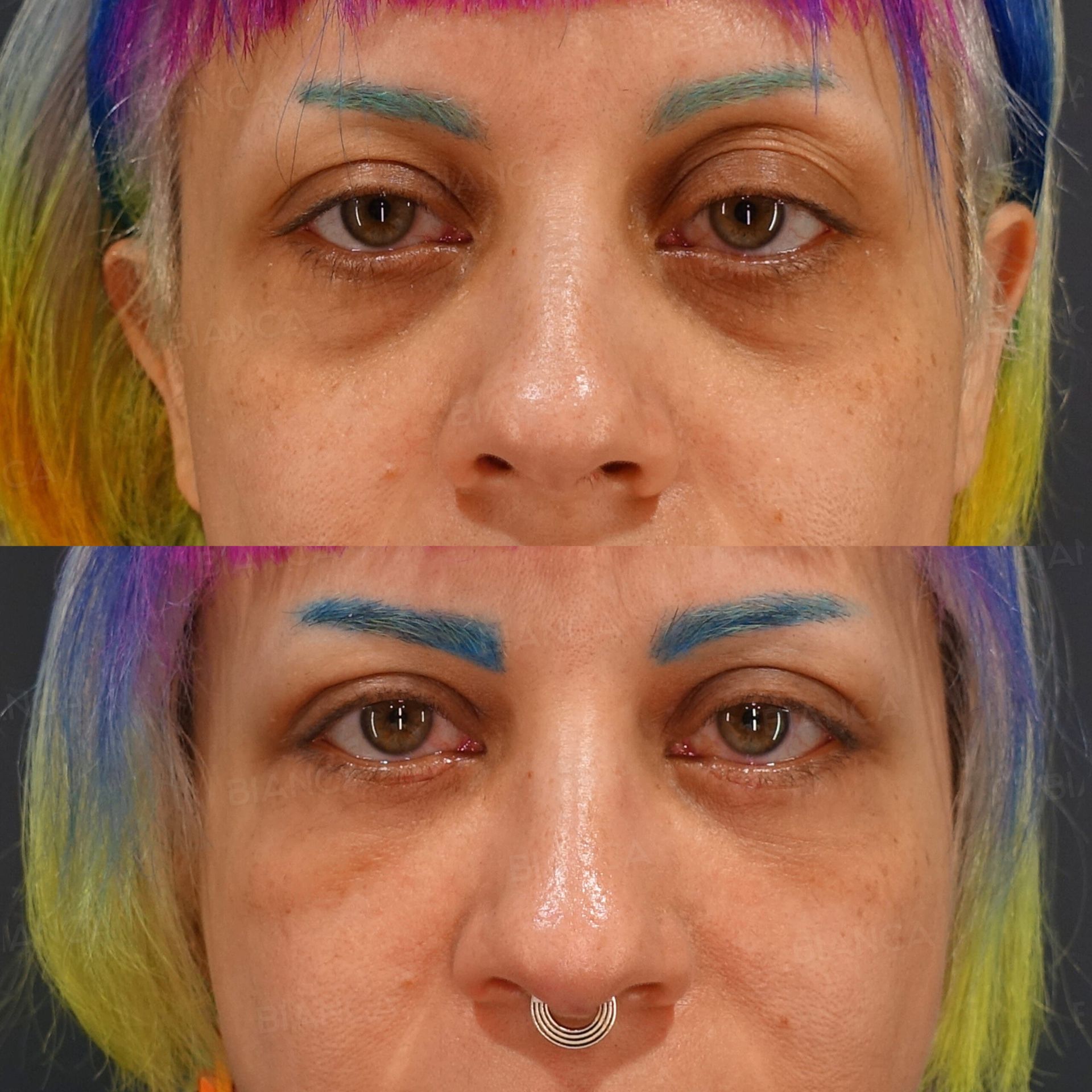
The published case below shows a combined procedure at one month.
It illustrates one recovery stage rather than a complete sequence from the first postoperative days.
Subperiosteal Midface Lift and Upper Blepharoplasty at One Month
Treatment and timing
Subperiosteal midface lift combined with upper eyelid skin excision. Comparison photographs show the appearance before treatment and one month afterward.
How to interpret this case
The treatment addressed both cheek descent and excess upper eyelid skin.
Changes in the upper eyelids therefore should not be attributed to the midface lift alone.
In our surgeon’s commentary on this case, we explain that one month is still an early stage of recovery following surgery at this depth.
Firmness and uneven swelling may remain at this point, so the photographs should not be interpreted as showing the final result.
Риски и побочные эффекты
Swelling, bruising, numbness, asymmetry, changes in lower eyelid position, scarring, dry eyes, difficulty closing the eyes, bleeding, infection, and possible revision surgery.
Published treatment costs
Subperiosteal midface lift: ¥990,000.
Upper eyelid skin excision: ¥378,700.
Combined total: ¥1,368,700, including tax.
The case page describes this pricing as an example; the final quotation is determined during consultation.
These cases show why the timing of recovery photographs and the procedures performed matter when interpreting results.
To learn more about our surgical approaches, treatment process, and pricing, explore our Midface Lift treatment page.
▶Explore Midface Lift Treatment at BIANCA CLINIC
How Should You Interpret Mid Face Lift Recovery Photos?

When comparing photographs, start with three questions: When was each image taken?
What surgery was performed? Were the photographs taken under similar conditions?
These details often explain more than the number of photographs in a gallery.
Check the Date, Angle, and Combined Procedures
A one-week photograph and a three-month photograph serve different purposes.
The first may help you prepare for visible downtime; the second may help you discuss the intended contour change.
Lighting, head position, facial expression, and makeup can also change the appearance of shadows beneath the eyes.
Compare photographs taken from similar angles, and read the accompanying explanation before drawing conclusions.
At consultation, identify the particular feature you want to discuss—for example, a lower cheek position or the transition beneath the lower eyelid.
This gives your surgeon a clearer starting point than asking to reproduce another person’s entire result.
Because our midface lift involves an incision along the lower lash line, you may also want to examine how the incision area appears in recovery photographs.
Scars generally become less noticeable over time, but their appearance and healing vary between patients.
How Does the Surgical Technique Affect Recovery?
At BIANCA CLINIC, we offer surgical approaches that work above or beneath the periosteum, the tissue covering the bone.
The subperiosteal approach involves a wider area of dissection, which is one factor we consider when discussing recovery with our patients.
Nevertheless, photographs of different patients cannot reliably prove that one technique always heals faster.
Treatment extent and combined procedures also need to be considered.
Ask which approach is proposed for you, why it suits your anatomy, and how it affects the recovery plan.
A technique name alone does not answer those questions.
To learn more about the differences between our midface lift techniques, including the surgical approaches and available treatment options, explore our Midface Lift treatment page.
▶Compare BIANCA’s Midface Lift Techniques
What Can a Photograph Tell You About Swelling?
A photograph can record visible puffiness or bruising at a particular moment.
It cannot assess tenderness, vision, eye closure, or the condition of deeper tissues.
Small differences between the two sides may occur during recovery, but an online photograph should never be used to dismiss a new or worsening symptom.
If something changes unexpectedly, please contact us or your surgical team.
How Can You Care for Yourself During Recovery?

Your discharge instructions should guide home care. Keep them somewhere easy to access, especially if you are recovering in a hotel.
Before leaving the clinic, make sure you understand how to use prescribed medication, care for the incision area, and contact the team with questions.
Keep Aftercare Simple and Specific
Use only the wound care and products approved by your surgeon.
Ask before applying skincare near an incision, using skincare products with active ingredients, or massaging the cheeks.
In our standard aftercare guidance, we generally allow face washing and makeup away from the operated area from the day after surgery.
We advise patients to avoid eye makeup and contact lenses for at least the first week.
The timing for resuming these activities depends on your individual recovery and postoperative instructions.
Instructions about activity also matter. Strenuous exercise, heavy lifting, and bending can interfere with early recovery; ask your surgeon when to resume them.
Avoid planning a busy sightseeing itinerary immediately after surgery.
Which Symptoms Need Medical Attention?
Possible surgical complications include bleeding or hematoma, infection, eyelid position changes, and visual disturbance.
Contact your surgeon promptly for rapidly increasing swelling, worsening pain, fever, or concerning discharge.
Sudden vision changes require urgent medical assessment. If the clinic cannot be reached, seek urgent local care.
Do not wait for the next photograph or routine appointment when symptoms are worsening.
How Can International Patients Plan Treatment at BIANCA CLINIC?

For someone traveling to Tokyo, a recovery plan needs to cover the period after leaving the operating room: accommodation, appointments, daily support, and arrangements after returning home.
At BIANCA CLINIC, midface lift surgery typically takes approximately three hours.
However, the time needed for preparation, anesthesia, postoperative observation, and follow-up appointments should also be considered when planning your stay in Tokyo.
Bring your proposed travel dates to the consultation before making a final schedule.
Discuss the Lower Eyelids and Cheeks Together
At BIANCA CLINIC, our midface lift incorporates the anterior Hamra technique, allowing us to address under-eye bags and midface sagging within the same surgical approach.
By considering the lower eyelids and cheeks together, we can assess how the proposed procedure may improve the transition between these areas.
The surgical plan is tailored to your anatomy, concerns, and desired outcome.
Ask which features are contributing to your concern, what the proposed surgery can change, and which features may remain.
The aim is a treatment plan based on your examination and priorities, with clear limits and realistic expectations.
Leave Room for Follow-Up and Changes to Your Plans
A planned suture-removal appointment does not automatically establish that you are ready to fly.
Your surgeon should advise on departure according to the procedure, recovery findings, and journey.
Before booking, confirm:
- Which appointments require attendance in person.
- How much time to allow in Tokyo.
- What to do if your departure needs to be postponed.
- How to raise concerns after returning home.
- Where to seek care if an urgent problem develops abroad.
At BIANCA CLINIC, we offer online initial consultations and concierge support for international patients.
Interpretation and counseling services are complimentary, although an additional doctor-selection fee may apply for some doctors.
When discussing treatment, we consider both your surgical needs and the practical requirements of recovery.
Explore our Midface Lift treatment page for procedure details, pricing, and consultation information before planning your visit to Tokyo.
▶View Midface Lift Details and Consultation Information
FAQs About Mid Face Lift Recovery
The questions below address common uncertainties when interpreting photographs and planning time away from home.
How Long Does Swelling Last After a Mid Face Lift?
At BIANCA CLINIC, we generally advise that swelling and bruising may take approximately two weeks to improve, while other downtime symptoms may take around one month to settle.
Recovery can take longer depending on the extent of surgery and your individual healing process.
Follow your surgeon’s assessment rather than expecting every symptom to disappear on a set date.
Can I Judge My Final Result From a One-Month Photo?
A one-month photograph can show progress, but residual swelling or firmness may still affect the appearance.
Ask how the photograph fits into that patient’s recovery and whether later images are available.
When Can I Return to Work?
This depends on your recovery and the demands of your job. Returning to desk work may require less recovery time than returning to physically demanding work, depending on your condition. Tell your surgeon whether you need to appear on camera, meet clients, lift objects, or travel for work.
Do Younger Patients or Men Recover Faster?
Age or sex alone cannot predict your recovery. Health, surgical extent, previous procedures, and individual healing also matter.
A photograph of someone your age may be a useful discussion point, but it cannot provide a personal recovery forecast.
How Long Should I Stay in Japan?
Confirm the required stay with your surgeon before finalizing travel.
Allow for examinations and any necessary treatment, and leave flexibility if recovery takes longer than expected.
Mid face lift recovery photos can help you understand the healing process, but they cannot predict your individual recovery.
At BIANCA CLINIC, we encourage you to bring your questions and travel plans to your consultation so we can discuss an approach suited to your anatomy, goals, and schedule.