



“I like the idea of filler, but what if it moves?”
We hear this concern most often from clients considering lip or under-eye filler.
Online photographs of ridges above the lip or puffiness beneath the eyes can make migration seem almost inevitable.
It is not.
Filler can move or spread beyond the intended area, but this does not happen to everyone.
What looks like migration may also be swelling, excess volume, product spread, or the way the filler was originally placed.
At BIANCA CLINIC, we think about these possibilities before the first injection.
The product, injection layer, and amount are planned together after we have examined the face—not decided from the name of the treatment alone.
If a patient comes to us with concerns about filler placed elsewhere, we use the same approach: first work out what has changed, then decide whether to wait, dissolve, or redesign.
Can Fillers Migrate After Injection?
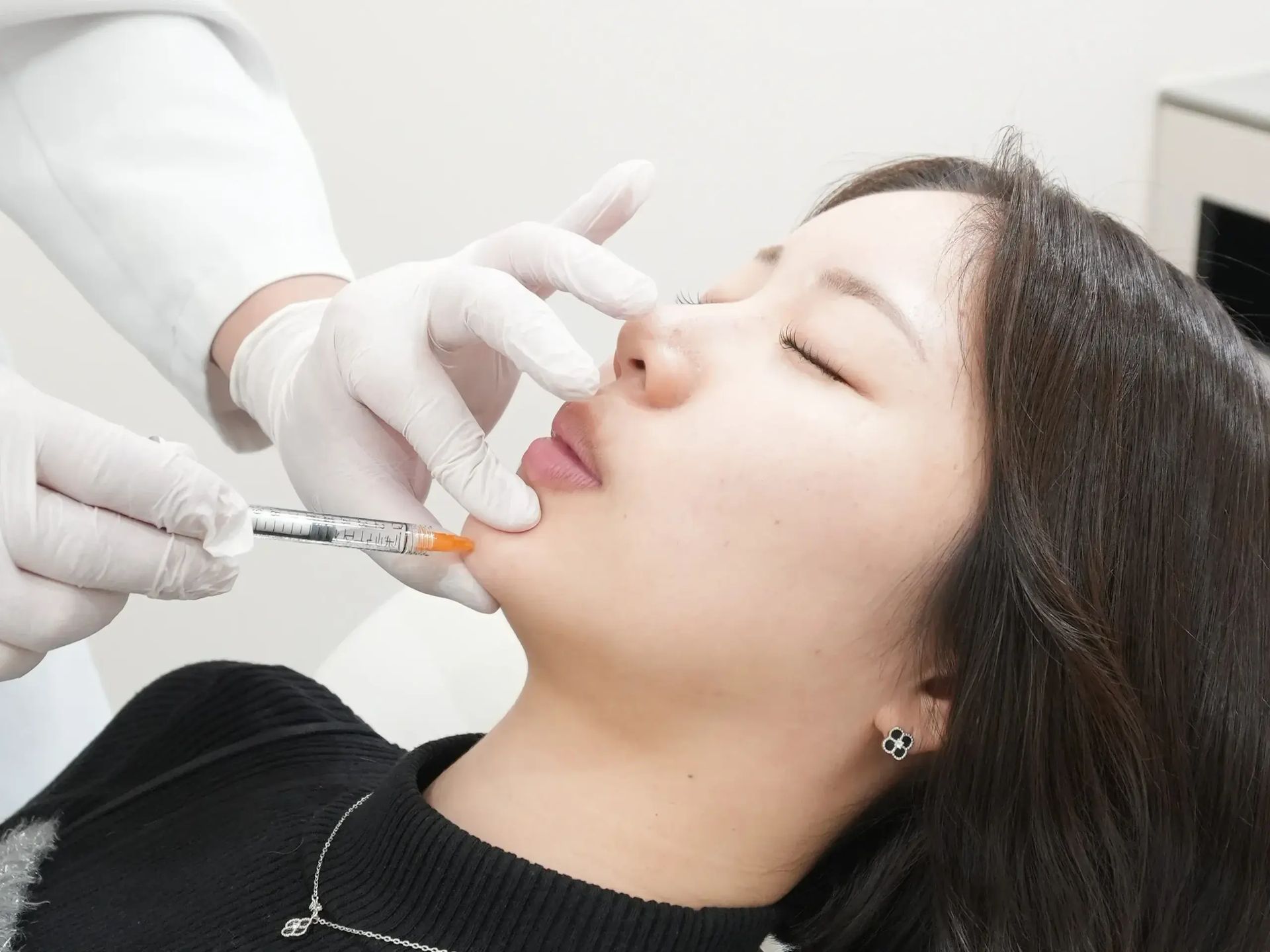
Fillers can move or spread beyond the intended treatment area after injection.
However, this does not happen to everyone, and a lump, ridge, or area of puffiness does not necessarily mean that the filler has migrated.
The word “migration” is also used rather broadly online.
It is often applied to any lump, ridge, puffiness, or loss of definition seen after filler.
These changes may look similar in a photograph, but they do not always have the same cause.
| What may be happening | What it can look like |
|---|---|
| Swelling or edema | Temporary puffiness in or around the injected area |
| Excess volume | A feature that looks heavier or more projected than intended |
| Product spread | Filler distributed over a wider area than expected |
| Placement irregularity | A localized bump, ridge, or uneven contour |
| Filler migration | Product that may have moved beyond the intended treatment area |
The difference matters.
Early swelling may settle without further treatment.
A heavily filled area may need a different approach from a small placement irregularity.
Occasionally, the filler itself is not the main issue: the treated area simply no longer sits in balance with the features around it.
This is why choosing a product marketed as less likely to migrate is not enough.
Product selection matters, but so do the injection layer, amount, facial anatomy, previous treatment history, and movement of the area.
Why Can Filler Move or Spread?

There is rarely one simple explanation.
In many cases, several factors overlap.
Too Much Filler in a Limited Area
A small amount added at each visit may not seem excessive.
After several top-up treatments, however, the total volume can become difficult to judge—especially if some of the previous filler remains.
A result can look as though it has faded while the product is still present.
Adding more filler without considering earlier injections may make the lips, under-eyes, or cheeks look gradually heavier.
Volume also changes how filler behaves within the tissue.
When more product is placed than the area can accommodate naturally, the edges may become less defined or the material may spread beyond the intended contour.
This is one reason we do not use a fixed amount simply because a client requests a particular area.
“One syringe for the lips” is not a treatment plan by itself.
Placement That Does Not Suit the Treatment Goal
The face is made up of several layers, including skin, fat, muscle, fascia, and deeper structural tissues.
Filler placed at one depth can behave differently from filler placed at another.
In certain areas, superficial placement may make the product or its edges more visible.
It may also allow unwanted spreading to become more noticeable.
This does not mean that superficial injection is always inappropriate.
Some concerns are treated in relatively shallow layers.
The point is that the depth must suit the anatomy, product, and intended result.
Deeper is not automatically better either.
Each area has blood vessels and other structures that need to be considered.
The choice of injection layer requires anatomical knowledge rather than a single rule applied across the face.
Product Choice and Facial Movement
Fillers vary in firmness, elasticity, cohesivity, and how readily they adapt to movement.
A product used to provide structural support in the chin may not be the product selected for the lips or tear troughs.
The treatment area also matters.
The lips move when we speak, eat, and make expressions.
The tissues around the eyes move whenever we blink, squint, or smile.
Repeated movement may affect how a product sits over time.
A softer filler is not automatically more natural, just as a firmer filler is not automatically less likely to move.
Product, placement, and volume need to make sense together.
Why We Do Not Decide the Amount Before Seeing the Face

A client may arrive with a clear request: one syringe in the lips, filler under both eyes, or another top-up in the chin.
The request is useful, but it is not where treatment planning ends.
Before recommending an amount, we need to see what is already there.
Before recommending an amount, we examine the face from the front, at an angle, and from the side.
We look at the requested area as well as the features around it.
Lip treatment, for example, may be considered in relation to the nose, chin, dental projection, and profile.
For the under-eyes, we also look at the cheeks and the transition between the lower eyelid and midface.
We ask about previous filler too.
If product may still be present, adding the amount normally used for a first treatment may not be appropriate.
There are consultations in which the right decision is to use less than the patient expected.
There are also times when we suggest waiting or not adding filler at all.
The aim is not to use a certain number of syringes.
It is to decide whether additional volume contributes to the face.
Product, Depth, and Volume Are Planned Together

BIANCA CLINIC offers several ranges of hyaluronic acid filler, each with different properties.
This gives the doctor options when planning treatment for areas such as the lips, forehead, cheeks, nose, chin, temples, and tear troughs.
The product name alone does not determine the result.
Through the BIANCA METHOD, the doctor considers three connected questions:
- What type of support or movement does this area require?
- In which anatomical layer should the product be placed?
- How much volume is appropriate for this face?
These decisions are also influenced by the desired change.
A client seeking a subtle adjustment may need a different plan from someone hoping for a more defined result.
Even then, a larger change does not necessarily mean placing a large amount into one small area.
In some cases, a staged approach is more appropriate.
An initial amount can be allowed to settle before deciding whether anything more is needed.
This can make it easier to judge the developing balance without committing to unnecessary volume at the first appointment.
No filler technique can guarantee that migration, asymmetry, lumps, or other complications will never occur.
Careful product selection and conservative planning are ways of taking those risks into account—not eliminating them completely.
For details on the products we offer, treatment areas, case examples, and current fees, see our hyaluronic acid filler treatment page.
Why the Lips and Tear Troughs Need Particular Care

Changes around the lips and eyes often become noticeable quickly.
These areas are mobile, and small differences in contour can stand out.
Lip Filler Migration and the Ridge Above the Lip
Lip filler migration is commonly associated with fullness above the upper lip.
The border may look blurred, or a shelf-like ridge may appear between the lip and nose.
Some patients first notice it from the side or when smiling.
That appearance does not always mean the filler has migrated.
Early swelling, excess volume, product spread, injection placement, and the natural anatomy of the lip can produce a similar look.
A natural double lip line may also be mistaken for migrated filler.
During consultation, we look at the lips at rest and in motion.
We consider the shape of both lips, their relationship to the rest of the profile, and whether previous product may still be present.
The answer is not always to dissolve.
Nor is it always to add more along the border.
The appropriate option depends on what is actually creating the ridge.
Tear Trough and Under-Eye Filler Concerns
The tissue beneath the eyes is thin, so even a small amount of volume can be visible.
Puffiness may be related to previous filler, but it can also be influenced by edema, under-eye fat, bone structure, skin quality, or the relationship between a hollow and the fuller area beside it.
For this reason, an under-eye hollow does not automatically mean that more filler is needed.
Adding volume to the wrong face—or to an area where product is already present—may make the under-eyes look heavier.
We assess the tear trough together with the cheeks and midface.
Depending on the findings, the discussion may involve filler, observation, dissolving previous hyaluronic acid filler, or an option that does not involve adding volume under the eyes.
What Does Possible Filler Migration Look Like?

Possible signs include a new ridge outside the treated area, fullness that remains after the expected swelling has settled, or a contour that gradually becomes less defined.
Some patients notice a lump, new asymmetry, or fullness next to the original injection site.
These changes are reasons to arrange an assessment.
They are not proof of migration on their own.
Timing provides useful clues.
A puffy lip two days after treatment is different from a ridge that becomes apparent several months later.
We also want to know whether the appearance changes during the day or when the patient smiles, speaks, or closes their eyes.
Contact the treating clinic or seek prompt medical care if you develop increasing or severe pain, pale or discolored skin, rapidly worsening swelling, heat or discharge, or any change in vision.
These symptoms should not be treated as a routine cosmetic concern.
Avoid pressing hard on the area or trying to move the filler yourself.
Massage is not an appropriate solution for every lump or irregularity and should only be performed when specifically advised by a clinician who has assessed the area.
What We Do When a Client Is Concerned About Previous Filler

BIANCA CLINIC also sees patients concerned about filler placed at another clinic.
We begin with reassessment rather than assuming that the area should immediately be dissolved or filled again.
If possible, we ask for:
- The date of treatment
- The product name
- The amount injected
- The areas treated
- The number of previous treatments
- Before-and-after photographs
- Details of any previous dissolving treatment
It is still possible to attend a consultation if some of this information is unavailable. Tell us what you know and when the change first became noticeable.
Observation May Be the First Step
If treatment was recent and there are no signs of an urgent complication, swelling may need time to settle.
A minor difference may also be better observed than immediately treated.
Coming for a consultation does not mean that another procedure will necessarily be recommended.
Hyaluronidase May Be Considered
Hyaluronidase is an enzyme used to break down hyaluronic acid filler.
It may be considered when unwanted volume, irregularity, or suspected migration is related to an HA product.
Dissolving is not perfectly predictable.
The amount of correction can vary, and more than one appointment may sometimes be considered.
Swelling and bruising can occur, and allergic reactions are possible.
Hyaluronidase does not dissolve non-hyaluronic acid fillers.
The decision therefore depends on the likely product, the treatment area, the clinical findings, and what the patient wants to change.
Reinjecting Means Redesigning
After dissolving, we do not automatically repeat the previous treatment in the same way.
Once swelling has settled, the face is assessed again.
We look at what should remain untouched, whether any volume is still needed, and how the treated area relates to the rest of the face.
If reinjection is appropriate, the product, layer, and amount may differ from the earlier treatment.
In some cases, less filler is needed than expected.
In others, we may advise against reinjection.
Planning Treatment or Revision During Your Stay in Tokyo
International clients should allow for the possibility that consultation, dissolving, and reinjection will take place on different days.
At BIANCA CLINIC, reinjection after dissolving may generally be considered from around 72 hours later, while the nose may require an interval of approximately two weeks.
These are reference points rather than guaranteed timelines.
Swelling and the condition of the tissue may change the plan.
When booking, tell us whether you are considering your first filler treatment or seeking revision of previous work.
If you have already had filler, share any available treatment records and your dates in Tokyo.
Whenever possible, avoid scheduling revision immediately before departure.
Часто задаваемые вопросы
Can Lip Fillers Migrate?
Lip filler can move or spread beyond the intended area, but this does not happen in every case.
Facial anatomy, product choice, injection depth, volume, lip movement, and previous treatments may all affect how the filler settles.
Do Nose Fillers Migrate?
Nose filler may spread or produce a contour that changes over time, but not every change is migration.
Because the nose contains important blood vessels, concerns after treatment should be assessed by a qualified doctor rather than managed at home.
Can Filler Migrate Immediately?
Filler may spread beyond the intended placement, but fullness seen immediately after injection is often affected by swelling and the initial volume of the product.
Severe pain, skin color changes, or visual symptoms require prompt medical attention.
Can Filler Migrate Years Later?
Some patients notice a change months or years after treatment.
Previous filler may still be relevant, particularly when the same area has been injected several times.
Can Filler Migration Be Prevented?
It cannot be guaranteed that migration will never occur.
Selecting a product suited to the area, choosing an appropriate injection layer, avoiding unnecessary volume, and reviewing previous filler can help the doctor plan with this risk in mind.
Can BIANCA CLINIC Assess Filler Performed Elsewhere?
Да.
We accept consultations for concerns related to filler performed at another clinic.
Bring the product name, treatment date, injected amount, and photographs if available.
Recommendations are made after an examination.
Filler Treatment Begins With Deciding What Not to Add
Good filler planning is not only about where to inject.
It also involves deciding where not to inject, how much is enough, and whether existing product needs to be considered first.
At BIANCA CLINIC, we assess the whole face before selecting the product, injection layer, and amount.
If previous filler is causing concern, we first determine whether the appearance may be related to swelling, excess volume, placement, or migration.
Observation, dissolving, and reinjection are discussed as separate options rather than automatic steps.
If you are considering filler in Tokyo—or would like us to assess filler placed elsewhere—share your concerns and previous treatment details when booking your consultation.
▷ Explore our filler treatment option
▷Заказать консультацию