


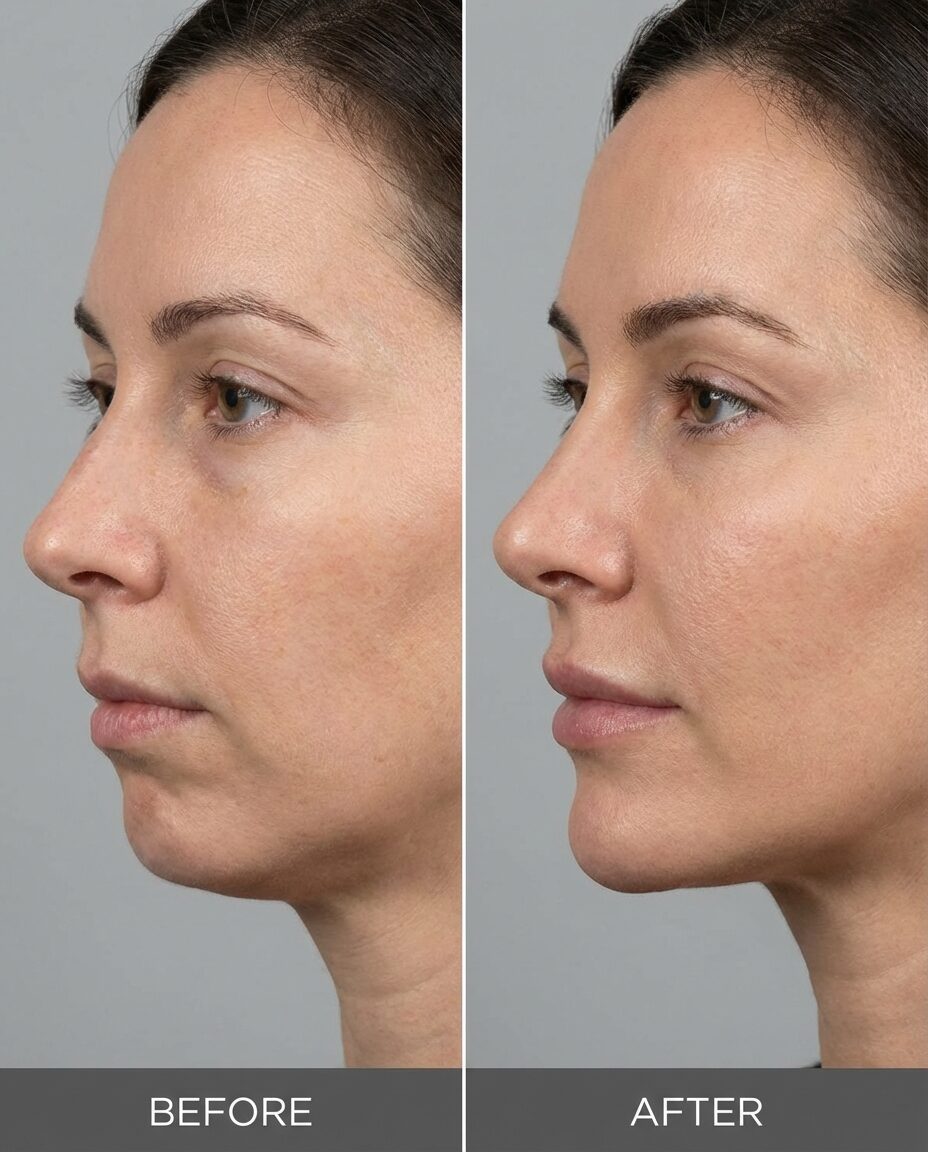
Chin and jaw augmentation at BIANCA CLINIC has become a popular treatment for patients interested in refining projection, definition and creating harmony between the nose, lips, and neck, often elevating confidence as much as appearance. At our well-known treatment center in Tokyo, we are particularly adept at creating facial balance, given the impact that chin and jaw augmentation can have on the lower part of a patient’s face. What’s more, in Japan precision planning, advanced devices, and meticulous sterility converge to deliver natural-looking results with a strong safety record.
That is why this expert-reviewed guide by BIANCA CLINIC explains chin and jaw augmentation options, surgical workflow, evidence-based outcomes, and the calm, practical aftercare you need in order to maintain results comfortably.
What Is Chin and Jaw Augmentation?
Chin and jaw augmentation enhances both areas separately, but at the same, ensures overall facial balance. The chin is augmented in two notable ways, through genioplasty or with implants. The jawline (mandibular angle contour) is also corrected to improve your chin line when you talk, eat and rest.
There are also several different ways to achieve success procedurally with chin and jaw augmentation too, but they depend heavily on patient anatomy and your surgeon’s choice of procedure. The first more common method involves using silicone or porous polyethylene implants inserted into a pocket around/under the chin. The second most common technique is to break or “advance” the chin bone for increased projection.
Non-surgical techniques are also available when considering chin and jaw augmentation, for example the use of injectable fillers. The key though is knowing what degree of invasiveness you are content with and going to a reputable medical center that provides careful assessment that distinguishes aesthetic microgenia, from bite or skeletal issues, that may require orthodontic or orthognathic care.
A Deep Dive into The World of Chin and Jaw Augmentation: Surgical Options
Chin Implants (Alloplastic Augmentation)
As previously mentioned, chin and jaw augmentation must be broken down into several subdivisions, given the wide area of treatment it is targeting. Starting with the most common, surgical chin implants (which are usually silicone or porous polyethylene) provided by experienced clinics (after a deep facial analysis during consultation) will shape a prosthesis to be placed onto the front of the chin bone. It is specifically designed to increase projection and width. In Japan, PMDA-cleared materials, 3D preoperative planning, and precise pocket creation help ensure an accurate fit and the utmost stability.
A Step-By-Step Run Through on the Day
- Consultation and Planning: During your consultation for chin and jaw augmentation, a surgeon will take photographs, perform cephalometric analysis, and often render a 3D simulation to define target projection and symmetry. It is at this point, if the patient agrees on an implant, that smoking cessation is advised and oral hygiene optimization for a clean recovery.
- Anesthesia: Once you go into the operating theater, local anesthesia with light sedation or general anesthesia (if chosen) are administered, then monitored by a board-certified anesthesiologist. Antibiotics are also administered as a preventative measure.
- Incision: When it comes down to the procedure, your surgeon will begin with either a hidden submental skin crease or an intraoral incision. The submental route is by far the more widely used and favored in Japan due to its lower infection risk.
- Pocket Creation: A snug, midline pocket is prepared over the bone, protecting the mental nerves.
- Implant Placement and Fixation: The implant is then trimmed if needed, irrigated with antibiotic solution, and secured (often with sutures or micro-screws) to prevent shifting.
- Closure: Lastly, layered sutures, sterile dressing, and a light compression strap complete the procedure.
Outcomes and safety
For complete transparency, BIANCA CLINIC also publishes city-wide and nation-wide reports on adverse outcomes and safety concerns. We do so in the hope that it can give readers a better understanding of the risks around chin and jaw augmentation. In our latest published series, we are proud to report infection rates were around 1–2% with careful technique for a submental approach in Tokyo. Temporary lower-lip or chin numbness occurs in roughly 5–10% and typically resolves within the following weeks post operation. Malposition requiring revision is reported in about 1–5% nationwide, which should give prospective patients more belief in Japan’s chin and jaw augmentation surgical ability.
Sliding Genioplasty (Bony Advancement/Reduction)
This is less commonly prescribed but is chosen when larger or more tailored changes are needed, since surgeons can mobilize the chin bone itself. After a precise osteotomy, the segment is advanced, set back, lengthened, or shortened, then fixed with low-profile titanium plates and screws. The two most important parts of this surgery are:
- Planning with CT and 3D guides to ensure controlled movement and preservation of the dental root / nerve pathways.
- Recognizing that it is the patient’s own bone, meaning results are highly stable, and width/asymmetry can be corrected concurrently, but any degenerative bone diseases or preexisting bone issues can pose future risk, so sharing a full medical history (during consultation) is a must.
The evidence on outcome and results for this form of chin and jaw augmentation suggests that there are incredibly low infection rates, predictable stability, and similar temporary numbness profiles to implants, with bone healing consolidating over the 6–8 week period.
Jawline (Mandibular Angle) Augmentation
If your surgeon has assessed your facial balance in terms of chin and jaw augmentation, they may recommend sharpening the posterior jawline. This involves a surgeon using angle implants or contouring for definition. Careful dissection will avoid the masseter and key nerve systems, so it’s important to select experienced jawline augmentation physicians. Some patients combine this with buccal fat modulation or neck refinement for a continuous, sculpted line with better long-term results.
Non-surgical Options for Chin and Jaw Augmentation
When it comes to chin and jaw augmentation, hyaluronic acid or calcium hydroxyapatite fillers can be a good way of testing out the contour changes you are after, offering 12–18 months of improvement with minimal downtime. Hyaluronic acid can also be reversed if necessary, giving you an added layer of reliability. While subtle, these methods help patients visualize goals before a definitive procedure.
In terms of aftercare, most swelling peaks at around 48–72 hours and eases over the following 2–4 weeks of recovery. Refined definition continues to emerge right up until the 3 month point as tissue begins to settle. Thoughtful aftercare speeds up comfort and reduces risks in the long-term, so we recommend the following if you have non-surgical chin and jaw augmentation:
- Cold compresses for 48 hours and head elevation during sleep for about one week.
- Soft food diet for 5–7 days and avoid tough chewing, straws, and very hot or spicy foods initially.
- Oral care should be strictly maintained with gentle saline rinses. If your procedure involved intraoral injections, a chlorhexidine rinse should be used as directed by your doctor or surgical team.
- In terms of pain relief and medication, take prescribed antibiotics and pain relievers exactly as directed. We would also advise against NSAIDs (unless specified otherwise by your surgeon).
- Walking is fine the same day but delay the gym and heavy lifting for 2 weeks just to be sure. Contact sports are typically avoided for up to 6 weeks as well, to protect visual integrity and any unwanted accidents.
- Attend scheduled reviews for suture removal (if external) around day 5–7 to confirm implant or bone position.
- Lastly you should call your clinic promptly if you develop a fever over 38 degrees centigrade, sudden asymmetry, foul drainage, worsening numbness, or a bite that seems to change.
Overall Chin and Jaw Augmentation Results
It goes without saying that chin and jaw augmentation results depend on the type of treatment you have undergone. Chin implants are long-lasting with sliding genioplasty offering a permanent structural change. Non-surgical options for chin and jaw augmentation, such as fillers, require maintenance with results lasting about a year or more.
Chin and Jaw Augmentation is Here to Stay in Japan
When chin and jaw augmentation is performed in Tokyo, you should expect all the hallmark precision and hygiene that has made Japanese aesthetic surgery so renowned around the world. At BIANCA CLINIC, we have a great deal of experience harmonizing facial profiles and we do so while always prioritizing safety-first. With our rigorous planning, clear communication, and attentive aftercare, most patients experience a smooth recovery and refined, natural contours that support their original augmentation goals. Through our specialized in-depth consultation process and procedural techniques, we are sure that we can align your facial proportions and provide you with exceptionally authentic-looking results. For more information please contact us directly via our website or by telephone, and book now for a free consultation with board-certified surgeons.
Biography

| Cosmetic Surgeon/ Dermatologist Dr. Airi Yokoyama, M.D.She aspired to become a doctor since her early years and she studied at Hiroshima University, Faculty of Medicine. She began her career in general medical care and eventually chose to pursue aesthetic medicine, aiming to enrich patients life through beauty. She has always focused on natural beauty through cosmetic dermatology, but in order to address specific concerns around the eye area she began to perform surgical procedures as well. Previously, she was involved in establishing a clinic and worked as a director for three years as a cosmetic dermatologist, examining the skin and faces of approximately 20,000 patients and contributing to the clinic’s growth. Having experience as a clinic director and three overseas study programs, her goal is to provide beauty care to international patients with safe and high quality treatments. Dr. Airi is fluent in Japanese and English language. Her speciality in aesthetic medicine includes: Anti-aging care, Injection, Sagging face treatments, Skin rejuvenating boosters, Skin treatments. |
Book a Consultation Today
📲 Follow us for updates! BIANCA international Instagram
🔹 How to Book Your Appointment
Click the link below and fill the form with your concerns, referral code if you have any and day/time preferred.
Walk-ins are welcome!
📝 Note: All consultations, treatments, and follow-up visits include free translation services —no extra fees!
Clinic Locations
📍 Ginza Clinic
12F Ginza ONE, 1-8-19 Ginza, Chuo-ku, Tokyo, Japan
☎ 050-3196-4834
📍 Omotesando Clinic
Minami-Aoyama 511 Building 2F, 5-11-10 Minami-Aoyama, Minato-ku, Tokyo, Japan
☎ 050-1807-1593
Consultation Hours: 10:00–19:00 Closed: Irregular holidays
About BIANCA Clinic
At BIANCA, we redefine beauty care by offering a holistic approach that transcends traditional cosmetic surgery and dermatology. 20 specialized doctors in different fields including plastic surgery, dermatology, internal medicine, regenerative medicine, gynecology will carefully listen to your needs and help you to enhance your beauty and wellness from the inside out. We are committed to creating personalized treatment plans with precision and care, and ensuring you experience the true spirit of Japanese omotenashi and hospitality.