

Why do you suppose Radiesse vs hyaluronic acid is trending online in Tokyo and across Japan these days?
Well by comparing these two medical spa treatments you may instead be wondering if these minimally invasive fillers can truly refresh tired features, soften lines, and contour cheeks or jawlines with little downtime.
The answer is unequivocally yes, but with a few caveats, which will be discussed in this article sponsored by BIANCA CLINIC in Tokyo today.
That said, if you are comparing Radiesse vs hyaluronic acid, you are likely also searching for a medical spa “near me” in Tokyo that performs both procedures and suits busy residents or travelers alike.
Rest assured, you have come to the right place since BIANCA CLINIC is a Tokyo aesthetic clinic with an English-speaking beauty clinic team that can help you decide which filler aligns with your goals.
Below, we explain what each product is, how they work, and how to make a choice with total confidence.
Lastly, we have created this article for international patients who value safety, clarity, and natural-looking results but if you have any specific questions, feel free to message us directly and receive a response no later than 24hrs.
Anyway, let’s start from the top, so keep reading to find the answers to Radiesse vs hyaluronic acid.
Radiesse vs Hyaluronic Acid : Radiesse Explained
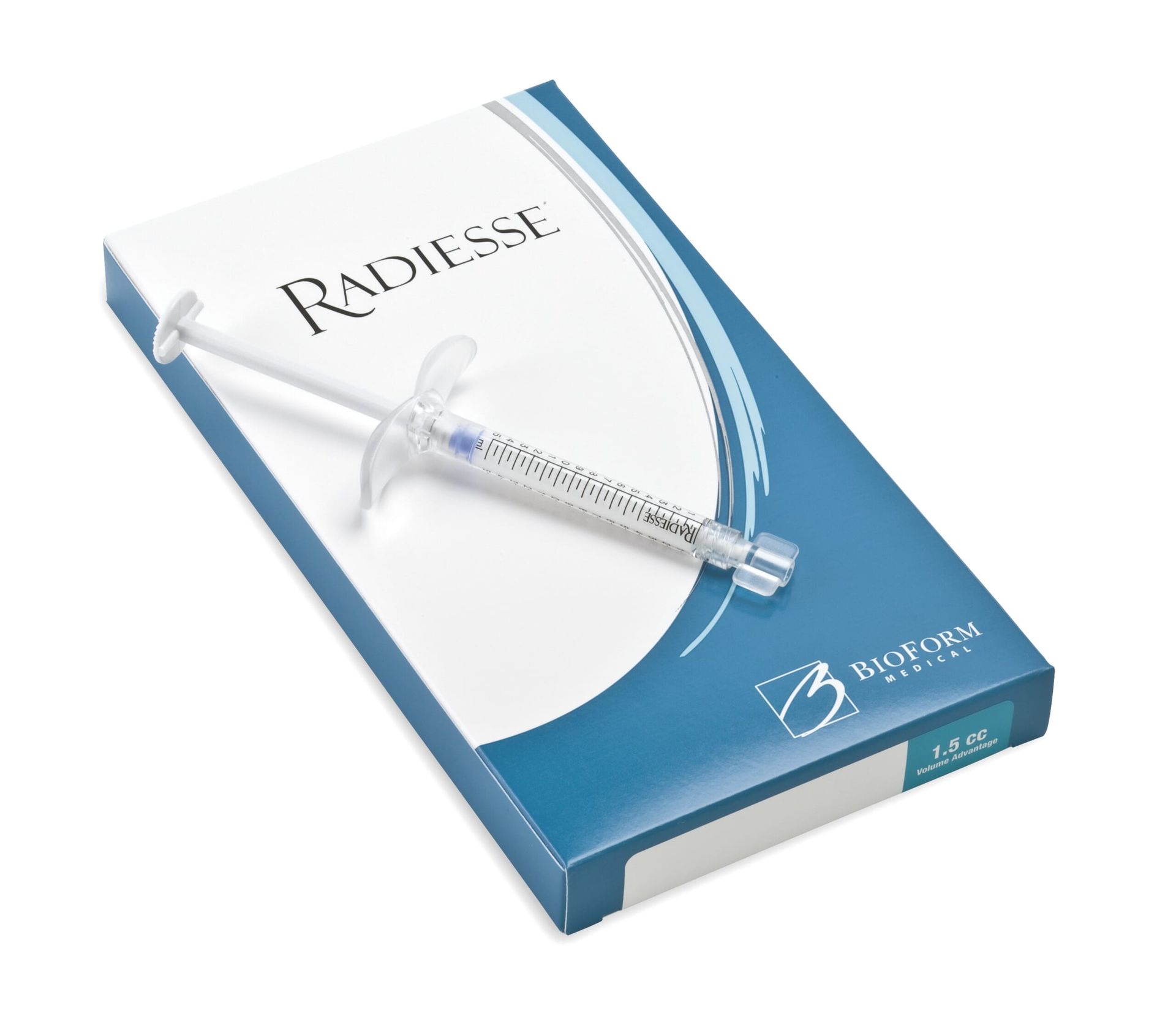
Radiesse is a collagen-stimulating filler made of calcium hydroxylapatite (CaHA) microspheres suspended in gel.
It provides patients with immediate lift and gradually encourages their body to build its own collagen, improving firmness over the following weeks.
Typical treatment areas would include the cheeks, the chin, the jawline, marionette lines, and the hands.
Radiesse vs Hyaluronic Acid: Hyaluronic Acid Fillers Explained
Hyaluronic acid (HA) is a water-attracting molecule that your skin naturally contains.
HA fillers add soft, flexible volume and hydration.
They are extremely versatile and can be used for almost anywhere including the lips, tear troughs, nasolabial folds, and for overall contouring purposes.
A key advantage of HA is that it can be dissolved or customized later on with an enzyme (if necessary).
Radiesse vs Hyaluronic Acid: A Quick Comparison at a Tokyo Medical Spa
The long-short of this battle between Radiesse vs hyaluronic acid (and possibly why this topic is trending) is that both are injectable fillers used to restore volume and improve skin texture.
Their differences however would be the ingredients used, the longevity provided, and whether or not the treatment is reversible, all of which will inevitably sway your opinion one way or the other.
Let’s start with simple definitions, then features, then benefits of this Radiesse vs hyaluronic acid conundrum.
Radiesse vs hyaluronic acid : Effects and Best Uses in Japan
Radiesse is used for firm structural support and is great for (as previously mentioned) the cheeks, the jawline, the chin, and the hands, where lift and definition matter the most.
Hyaluronic acid is used for soft, adaptable volume, ideally for the lips, under-eye, fine lines, and for subtle contouring.
Radiesse vs hyaluronic acid : Longevity and Reversibility in Japan
Radiesse longevity is often considered to be roughly 12 to 18 months, with collagen benefits that may outlast the initial gel.
However, it is not easily reversible like hyaluronic acid fillers.
Hyaluronic acid has a shorter longevity of 6 to 12 months, depending on product density and treatment area.
That said, it is easily reversible with hyaluronidase.
Radiesse vs hyaluronic acid : Cost and Downtime in Japan
Cost in Japan typically varies for both procedures but as an approximation, HA fillers are between ¥40,000 to ¥100,000 per syringe and Radiesse, ¥60,000 to ¥120,000 per syringe.
Downtime is mild for both and quite often just swelling or bruising for 1 to 3 days.
Most patients resume their regular routines within 24 hours.
Radiesse vs hyaluronic acid : Risks and Safety
Both fillers cause some temporary swelling and bruising, with less common side effects being asymmetry, or nodules ( that usually settle in a few days’ time).
Vascular events are rare but do happen if you have gone to a medical spa or aesthetic clinic without skilled injectors.
That is in fact our greatest tip, to decide carefully who will perform your procedure and to choose an experienced injector at a regulated medical spa in Tokyo or elsewhere in Japan, not just a “near me” clinic that doesn’t have many reviews.
Radiesse vs hyaluronic acid : Which Should You Choose?
Pick Radiesse if you want a firmer lift, jawline or chin definition, or if you are interested in hand rejuvenation, and you are comfortable with a longer-lasting, non-reversible option.
Pick hyaluronic acid if you want soft, natural volume in delicate areas such as the lips or tear troughs, or if you desire a trial-first approach and value reversibility.
FAQs: How to Find a Medical Spa Near Me in Tokyo
Q. Do results appear right away?
Sí.
Both show immediate improvement with Radiesse continuing to boost collagen over several weeks.
Q. Which lasts longer?
Radiesse often lasts longer, with an average duration of 12 to 18 months.
Many HA fillers only last about 6 to 12 months in comparison.
Longevity varies by area, product, and metabolism though.
P. ¿Es reversible?
Hyaluronic acid can be dissolved with hyaluronidase, but Radiesse is not easily reversible, so expert planning is always essential when getting this treatment.
¿Y qué hay del tiempo de inactividad y el dolor?
Numbing is available for both and most patients feel minimal discomfort.
Expect mild swelling or bruising for 1 to 3 days afterwards, then a natural finish as the swelling settles.
Q. How do I choose a clinic near me?
Look for a licensed medical spa with an English-speaking beauty clinic team, clear before and after examples, and strong safety procedures which are common in Tokyo and across Japan.
Radiesse vs Hyaluronic Acid: Choosing with Confidence
In summary, Radiesse offers firm lift and collagen stimulation while hyaluronic acid provides soft, customizable volume with the added bonus of reversibility.
However, the right choice depends on your anatomy, goals, and comfort level.
So if you are searching near me for an expert, BIANCA CLINIC’s Tokyo team welcomes residents and visitors to Japan with thoughtful guidance and dependable follow-up.
Ready to talk it through?
Contact BIANCA CLINIC in Tokyo for a free consultation or inquiry at our medical spa.
Our English-speaking beauty clinic staff will tailor a plan, share clear before and after expectations, and help you look refreshed with maximum confidence.
Cirujano estético/ Dermatólogo
Dra. Airi Yokoyama, M.D.

| Aspiraba a ser médico desde muy joven y estudió en la Facultad de Medicina de la Universidad de Hiroshima. Comenzó su carrera en medicina general y finalmente optó por la medicina estética, con el objetivo de enriquecer la vida de los pacientes a través de la belleza. Siempre se ha centrado en la belleza natural a través de la dermatología cosmética, pero para tratar problemas específicos de la zona ocular empezó a realizar también intervenciones quirúrgicas. Anteriormente, participó en la creación de una clínica y trabajó como directora durante tres años como dermatóloga estética, examinando la piel y el rostro de aproximadamente 20.000 pacientes y contribuyendo al crecimiento de la clínica. Con experiencia como directora de clínica y tres programas de estudios en el extranjero, su objetivo es proporcionar cuidados de belleza a pacientes internacionales con tratamientos seguros y de alta calidad. La Dra. Airi habla japonés e inglés con fluidez. Su especialidad en medicina estética incluye: Cuidados antienvejecimiento, Inyecciones, Tratamientos de la flacidez facial, Rejuvenecimiento cutáneo, Tratamientos de la piel. |
Reserve una consulta hoy mismo
📲 ¡Síguenos para estar al día! BIANCA internacional Instagram
🔹 Cómo reservar su cita
Haz clic en el siguiente enlace y rellena el formulario con tus inquietudes, el código de referencia si lo tienes y el día y la hora que prefieres.
- se ruega reservar con antelación. Para disponibilidad en el mismo día, por favor DM nosotros en Instagram @bianca_clinic_tokyo.
📝 Nota: Todas las consultas, tratamientos y visitas de seguimiento incluyen servicios de traducción gratuitos -sin gastos adicionales
Clínicas
📍 Clínica Ginza
12F Ginza ONE, 1-8-19 Ginza, Chuo-ku, Tokio, Japón
📍 Clínica Omotesando
Minami-Aoyama 511 Building 2F, 5-11-10 Minami-Aoyama, Minato-ku, Tokio, Japón
Horario de consulta: 10:00-19:00 Cerrado: Vacaciones irregulares
Acerca de la Clínica BIANCA
En BIANCA, redefinimos el cuidado de la belleza ofreciendo un enfoque holístico que trasciende la cirugía estética y la dermatología tradicionales. 20 médicos especializados en distintos campos, como cirugía plástica, dermatología, medicina interna, medicina regenerativa y ginecología, escucharán atentamente sus necesidades y le ayudarán a potenciar su belleza y bienestar desde el interior. Nos comprometemos a crear planes de tratamiento personalizados con precisión y cuidado, y a garantizar que experimente el verdadero espíritu del omotenashi y la hospitalidad japoneses.