



The main advantages of a chemical peel are its potential to improve surface roughness, uneven tone, and certain acne-related concerns, with different formulations available for different skin needs.
The disadvantages include irritation, recovery time, aftercare requirements, and the possibility of needing several sessions.
Pigmentation changes, infection, and scarring are also possible complications.
When weighing the pros and cons of chemical peels, whether the benefits outweigh the drawbacks depends on what you want to change.
A peel that helps surface discoloration may do little for a deep acne scar, and a procedure with limited downtime may still be unsuitable immediately before an important event.
At BIANCA CLINIC in Tokyo, you do not need to choose a peel on your own.
With several peel formulations available, our physicians assess your skin condition, concerns, and goals to discuss the option that best fits your needs.
What Are the Main Pros and Cons of a Chemical Peel?
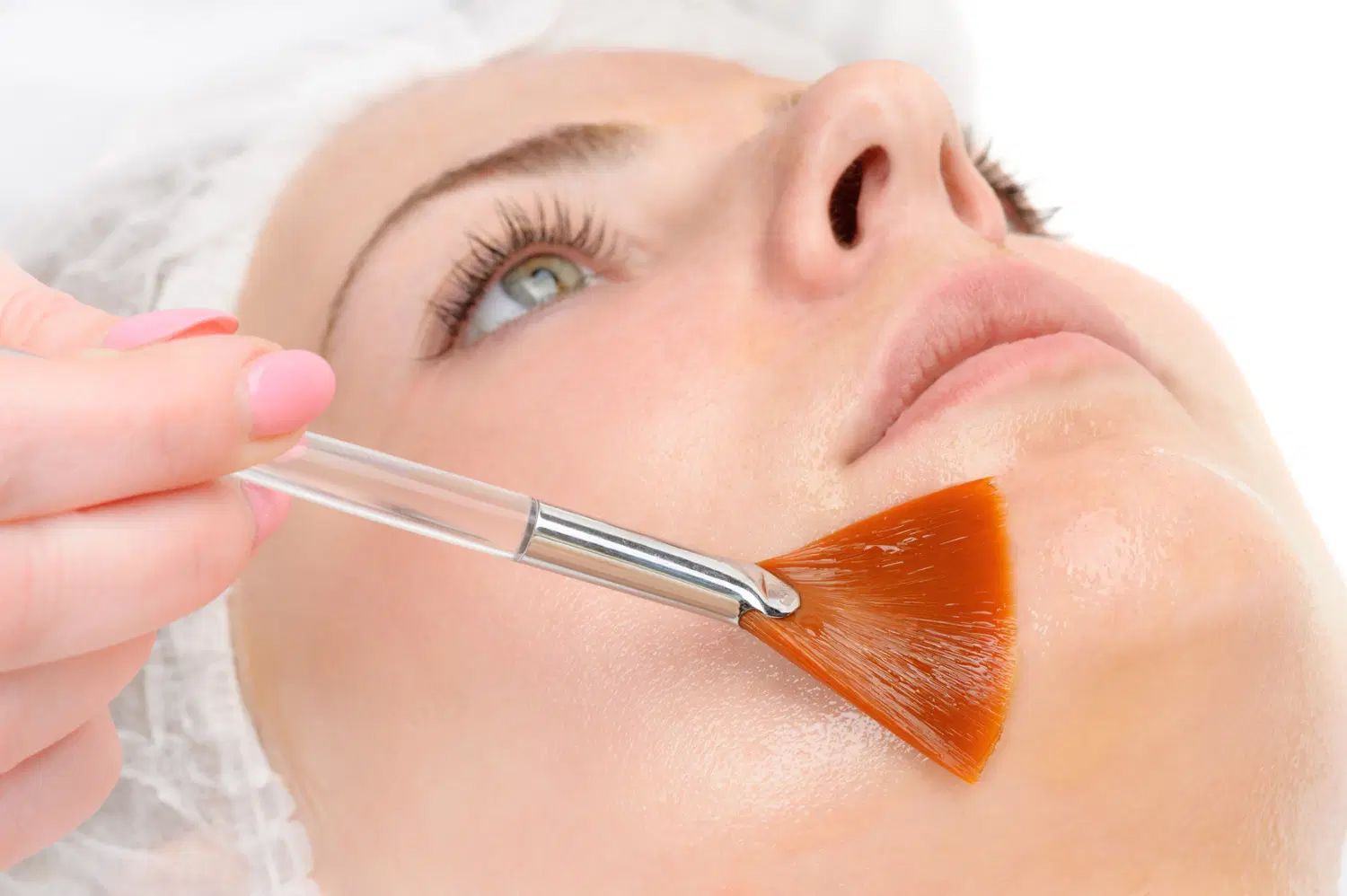
At BIANCA CLINIC, different peel formulations are available for different skin needs, including concerns such as dullness, dryness, clogged pores, sensitivity, and loss of radiance.
Rather than choosing a peel based on strength alone, you can discuss which formulation best matches your skin and goals.
A chemical peel uses a formulation to produce controlled changes in the skin.
Its effects depend on the ingredients, application, treatment depth, and your skin’s response.
What Benefits Can a Chemical Peel Offer?
Depending on the formulation and indication, a peel may improve rough surface texture, uneven tone, some pigmentation concerns, and clogged pores.
Certain peels may also form part of acne care or address fine surface lines.
Another advantage is the range of approaches available.
A procedure can be selected according to the concern being assessed, rather than assuming everyone needs the same peel.
However, an early improvement in brightness is not the same as clearance of pigmentation or correction of a scar.
The benefit should be measured against the specific problem you wanted to improve.
What Are the Disadvantages of a Chemical Peel?

The disadvantages of chemical peels include temporary redness, dryness, stinging, sensitivity, and possible flaking.
Less common complications include persistent pigmentation changes, infection, and scarring.
However, downtime varies depending on the type of peel.
Many of the gentler peels offered at BIANCA CLINIC are designed to involve minimal visible peeling or downtime.
Furthermore, “chemical peel” does not describe one uniform treatment.
Recovery and risks vary with the formulation, application technique, treatment depth, and your skin’s response.
A superficial treatment and a deeper resurfacing procedure should not be expected to offer the same results or involve the same recovery.
The ingredient percentage alone does not tell you how a formulation will behave.
A stronger acid concentration—or more visible peeling—does not automatically mean a better treatment for your concern.
You may also need several appointments, changes to your skincare routine, and time for recovery.
These practical commitments matter when deciding whether the potential improvement is worthwhile.
These trade-offs are also why choosing the right peel matters.
At BIANCA CLINIC, several peel formulations are available, including gentler options designed to minimize irritation and visible peeling.
Your physician can assess your skin condition and concerns to discuss which option may be appropriate for you.
| Consideración | Potential advantage | Trade-off to consider |
| Surface texture and tone | May improve roughness and selected pigmentation concerns | Deeper scars and significant sagging may need another approach |
| Choice of formulation | Different options can address different priorities | Each has its own suitability, aftercare, and recovery considerations |
| Treatment intensity | Some procedures can address concerns beyond the surface | Greater intensity may involve more recovery and additional risks |
| A course of treatment | Progress can be assessed across appointments | Repeat visits increase the time and total cost involved |
▶Compare BIANCA’s Chemical Peel Options
How Effective Is a Chemical Peel for My Skin Concern?

A chemical peel can be useful when its effects match the problem you want to improve.
Roughness, brown marks, redness, and indented scars may appear together, but they do not necessarily respond to the same treatment.
The first step is to distinguish a surface concern from a problem involving deeper skin structures.
This helps set realistic expectations and identify when another treatment deserves consideration.
| Skin concern | Where a peel may help | Important limitation |
| Roughness and dullness | Selected formulations may improve surface smoothness and uneven tone | Dryness or irritation may need attention before exfoliation |
| Clogged pores and acne-prone skin | Certain formulations may help manage congestion as part of acne care | A peel alone may not adequately control ongoing inflammatory acne |
| Brown marks after acne | A suitable peel may help improve selected superficial discoloration | Results depend on pigment depth, continuing breakouts, and skin response |
| Persistent redness | A peel may address accompanying roughness or congestion | Redness itself may require a different approach |
| Indented acne scars | Surface changes may improve the overall appearance of the skin | Routine superficial peeling does not release tethered scars or adequately correct deep depressions |
Which Chemical Peel Is Best for Hyperpigmentation?
There is no single best chemical peel for every type of hyperpigmentation.
Brown marks after acne, sun-related spots, and other patches of pigmentation can have different causes and treatment needs.
Choosing a peel requires consideration of the diagnosis, pigment depth, current irritation, and any history of darkening after inflammation.
Excessive irritation can worsen discoloration, so selecting the strongest option is not a reliable shortcut.
BIANCA CLINIC offers multiple peel formulations with different ingredients and treatment priorities.
Rather than selecting a peel based only on its strength or popularity, your physician can discuss which option is appropriate for your pigmentation concerns and current skin condition.
Can a Chemical Peel Correct Deep Acne Scars or Significant Sagging?
A routine superficial peel is unlikely to adequately correct deep acne scars or significant sagging.
Improving skin tone and surface smoothness may make the complexion look more even while leaving depressions or laxity visible.
For acne scars, the shape and depth of each depression matter.
Narrow, deep scars and scars tethered beneath the skin may require different procedures rather than repeated full-face peeling.
This is an important distinction when weighing the pros and cons of a chemical peel: a procedure can produce some improvement without being the most suitable way to achieve your main goal.
Who Should Not Get a Chemical Peel—or Should Wait?
Suitability can change with your current skin condition, recent treatments, and ability to follow aftercare.
An appointment date alone does not establish that your skin is ready.
Which Skin Conditions or Medical Details Need Assessment?
Tell your physician about active infections, cold sores, eczema, open wounds, recent sunburn, and previous abnormal scarring.
Share information about any medications you are taking, including oral isotretinoin, and mention pregnancy or breastfeeding.
These details may affect whether a particular peel is appropriate, whether preparation is needed, or whether treatment should be postponed.
They do not all create the same restriction for every formulation.
Sensitive skin or darker skin tones also require individual consideration.
Previous reactions and pigmentation after irritation provide useful information alongside skin tone.
What If I Cannot Allow Recovery Time or Avoid Sun Exposure?
The timing may be unsuitable even if a peel could address your concern.
Outdoor sightseeing, swimming, onsen visits, or an important photoshoot may make recovery and aftercare difficult.
Explain those plans before deciding.
If you are unwilling or unable to follow the recommended care, the expected benefit may not justify proceeding at that time.
Waiting can be part of an appropriate plan.
When Might Another Treatment Be Better Than a Chemical Peel?

“What is better than a chemical peel?” depends on the problem being treated.
Another procedure may offer a more relevant mechanism rather than being better in every respect.
How Does a Professional Chemical Peel Differ From Everyday Skincare?
A professional chemical peel involves a selected formulation and application protocol, with assessment of suitability and recovery requirements.
It differs from adding an exfoliating product to your daily routine.
That distinction does not mean that a stronger in-clinic treatment is automatically preferable.
Consistent skincare may be sufficient for some concerns, while irritation from an existing routine may need attention before a procedure.
A peel also does not replace daily skincare.
Sun protection and an appropriate routine remain part of maintaining skin health.
When Might HydraFacial, Laser, or Scar Treatment Be More Relevant?
A chemical peel is not always the best option for every skin concern.
Depending on your skin condition and goals, other treatments available at BIANCA CLINIC, such as HydraFacial, ADVATx Laser, TCA CROSS, or subcision, may also be considered.
Your physician can assess your skin and discuss whether a chemical peel or another treatment is more appropriate for your needs.
How Does BIANCA Choose a Peel That Fits Your Skin and Goals?

BIANCA offers several peel formulations, giving you the opportunity to discuss options without deciding on a product beforehand.
Selection starts with your desired improvement and current skin condition, and the physician determines the appropriate peel type and treatment intensity.
Do Dryness, Sensitivity, and Congestion Change the Choice?
Sí.
Two people concerned about uneven tone may have different needs if one experiences dryness and irritation while the other has oily skin and clogged pores.
At BIANCA, options include Professional Peel, LHALA PEEL, MANUKA PEEL, BIOREPEEL, and MASSAGE PEEL.
Each formulation has different characteristics and treatment priorities, allowing the treatment to be considered according to your skin condition and concerns.
| Peel | Características principales |
| Peeling profesional | Combines glycolic, lactic, and salicylic acids to improve skin texture, brightness, and radiance with minimal irritation and downtime. |
| LHALA PEEL | Provides gentle exfoliation while supporting hydration, skin renewal, and a smoother, more radiant appearance. |
| Corteza de Manuka | Combines exfoliation with hydration, antibacterial care, and skin barrier support, may be considered for patients concerned about sensitivity or skin barrier support. |
| BIOREPEEL | Uses a TCA-based formulation with amino acids and vitamins to support skin renewal, brightness, and collagen production. |
| PEELING DE MASAJE | Combines TCA and hydrogen peroxide (H₂O₂) to support collagen production and improve skin smoothness and firmness. |
LHALA PEEL focuses on gentle exfoliation, hydration, and skin renewal, while MANUKA PEEL combines exfoliation with hydration and skin barrier support.
BIOREPEEL and MASSAGE PEEL use TCA-based formulations to support skin renewal and collagen production.
Having several options does not mean each is suitable for you.
It provides a basis for discussing relevant differences with a physician.
Following assessment, the selected peel is applied under medical supervision, with aftercare guidance.
Explore the formulations on our chemical peel treatment page.
▶Compare BIANCA’s Chemical Peel Options
How Should I Weigh Results Against Sessions and Total Cost?
Compare the expected benefit with the whole treatment plan, rather than judging value by the price of one appointment.
Recommended treatment intervals and the number of sessions vary depending on the type of peel.
Ask what one session may realistically achieve, whether several treatments are recommended, and when progress will be reviewed.
Clarify the proposed intervals, recovery requirements, and expected total fees before committing to a course.
For international visitors, the treatment schedule also needs to fit the length of their stay.
A plan that requires several visits may be practical for someone living in Tokyo but difficult for a traveler visiting briefly.
At BIANCA, discussing these details alongside the formulation helps you weigh the potential improvement against the time, cost, and care involved.
If your response is limited or irritation develops, reassessment may be more useful than continuing the same plan unchanged.
Can I Plan Treatment Around My Visit to Japan?
Sí.
Share your arrival and departure dates, outdoor activities, and important events when discussing a chemical peel in Japan.
A single visit may allow assessment and, if appropriate, a procedure.
It should not be confused with completing a course or resolving a longstanding concern during a short stay.
Your skincare products and previous reactions are relevant too.
Bring the product names or photographs of the labels, and ask about recovery, product adjustments, and how to seek advice after departure.
FAQs About the Pros and Cons of Chemical Peels
These questions can help clarify remaining uncertainties before you decide.
Are Chemical Peels Safe?
They can be appropriate when matched to the patient and performed with suitable care, but they are not risk-free.
“Safe” should not mean that reactions or complications are impossible.
Ask about risks relevant to your skin and chosen formulation.
Does a Peel Have Benefits If My Skin Does Not Flake?
Visible shedding is not required for every formulation.
Judge results by the concern being addressed rather than the amount of peeling.
Do not add exfoliants to produce a stronger reaction.
Some of the gentler peels offered at BIANCA CLINIC are designed to provide treatment benefits with minimal visible peeling.
Can a Stronger Peel Reduce the Number of Sessions?
Not necessarily.
A stronger peel may involve greater recovery and additional risks without being more suitable for your concern.
Acid concentration alone also does not determine treatment depth or results.
Choose a formulation and schedule according to your skin’s needs, rather than aiming for the strongest reaction or the fewest appointments.
Will I Need Peels Indefinitely to Maintain Results?
Not automatically.
Maintenance depends on your remaining concerns, response, and ongoing skin changes.
Regular appointments should have a clear purpose and be reconsidered if benefits are limited or irritation continues.
Understanding the pros and cons of a chemical peel means comparing the improvement you may achieve with the recovery, care, time, and spending involved.
Is a Chemical Peel Worth It?
A chemical peel may be worth considering if your main concerns involve skin texture, uneven tone, clogged pores, or selected pigmentation concerns and you are comfortable with the expected recovery and aftercare.
It may be less worthwhile if your primary concern is a deep acne scar, significant sagging, or another condition that a peel is unlikely to adequately address.
The value of treatment depends on matching the peel to the problem you actually want to improve.
With several peel formulations available at BIANCA CLINIC, you do not need to decide which treatment is right for you on your own.
Explore our Chemical Peels page to compare the available options, or book a consultation to discuss which approach may best fit your skin concerns, recovery preferences, and travel schedule.
If you are planning cosmetic treatment during your visit to Tokyo, share your travel dates and priorities with our team so we can discuss a treatment plan that fits your stay.