For roughly two weeks after the threads are placed, tightness when opening the mouth, swelling along the entry points, and bruising in front of the ear are usual. Skin can pucker or dimple where a thread is anchored, which generally releases as the tissue relaxes, though adjustment is sometimes needed. Threads may stay palpable, sit unevenly on the two sides, or, rarely, become exposed or infected and need removal. The lift fades as the material absorbs over about a year.
Filler in the nasolabial folds and hollow cheeks causes swelling and tenderness for several days, and bruising lasts longer where the needle passes near vessels. Product may sit unevenly, feel firm, or shift slightly with facial movement, and a small correction is sometimes required. Nodules and infection are uncommon. Vascular occlusion, in which filler blocks a vessel and damages the skin above it, is rare but needs immediate treatment with hyaluronidase.
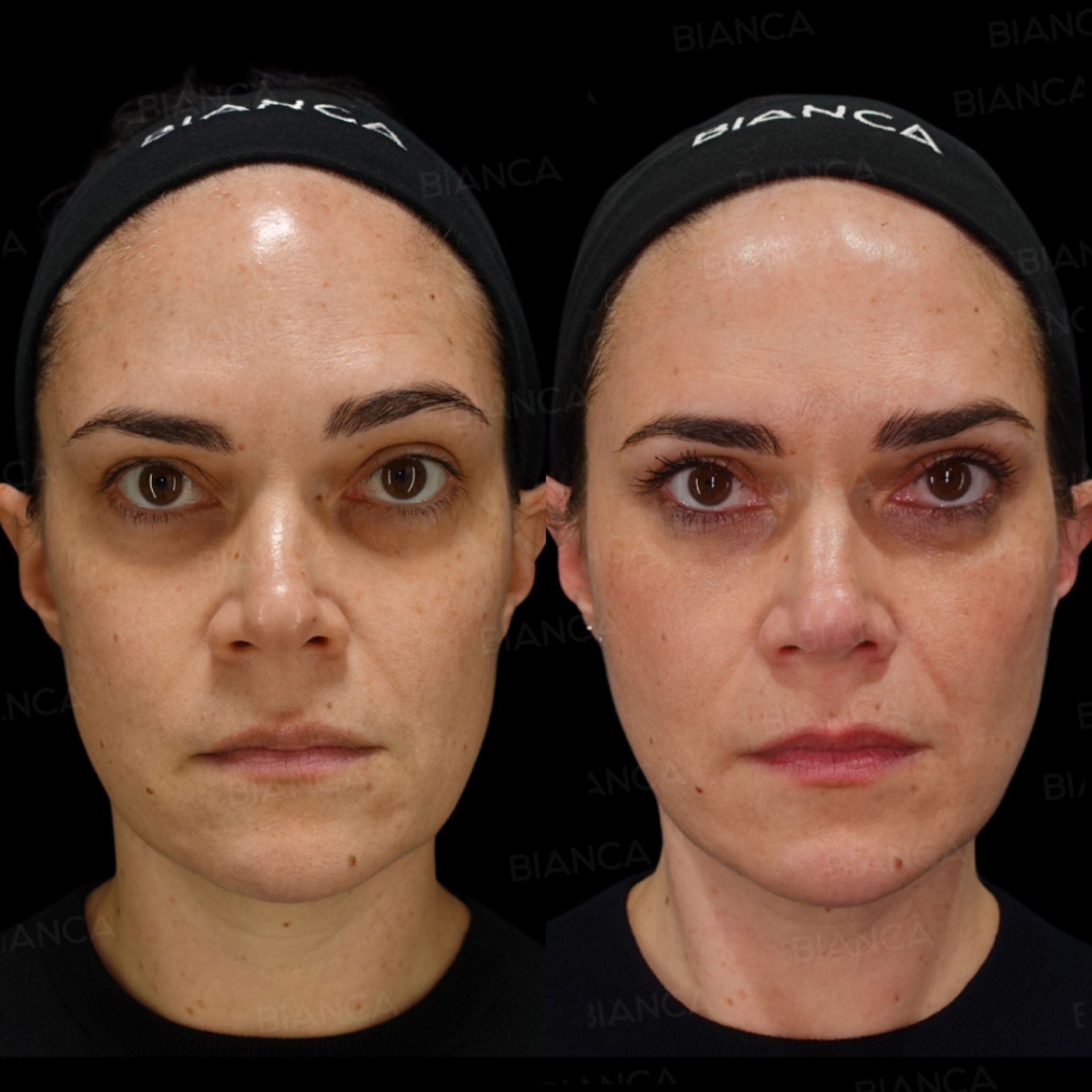
Injections beneath the eye bruise readily and can stay swollen for one to two weeks because the skin there is thin. Small lumps or a visible ridge may be felt while the material integrates, and a Tyndall type bluish discoloration, more typical of hyaluronic acid in this position, is possible if placement is too superficial. The two sides may differ slightly. The material absorbs over months, so sessions are repeated to hold the result.