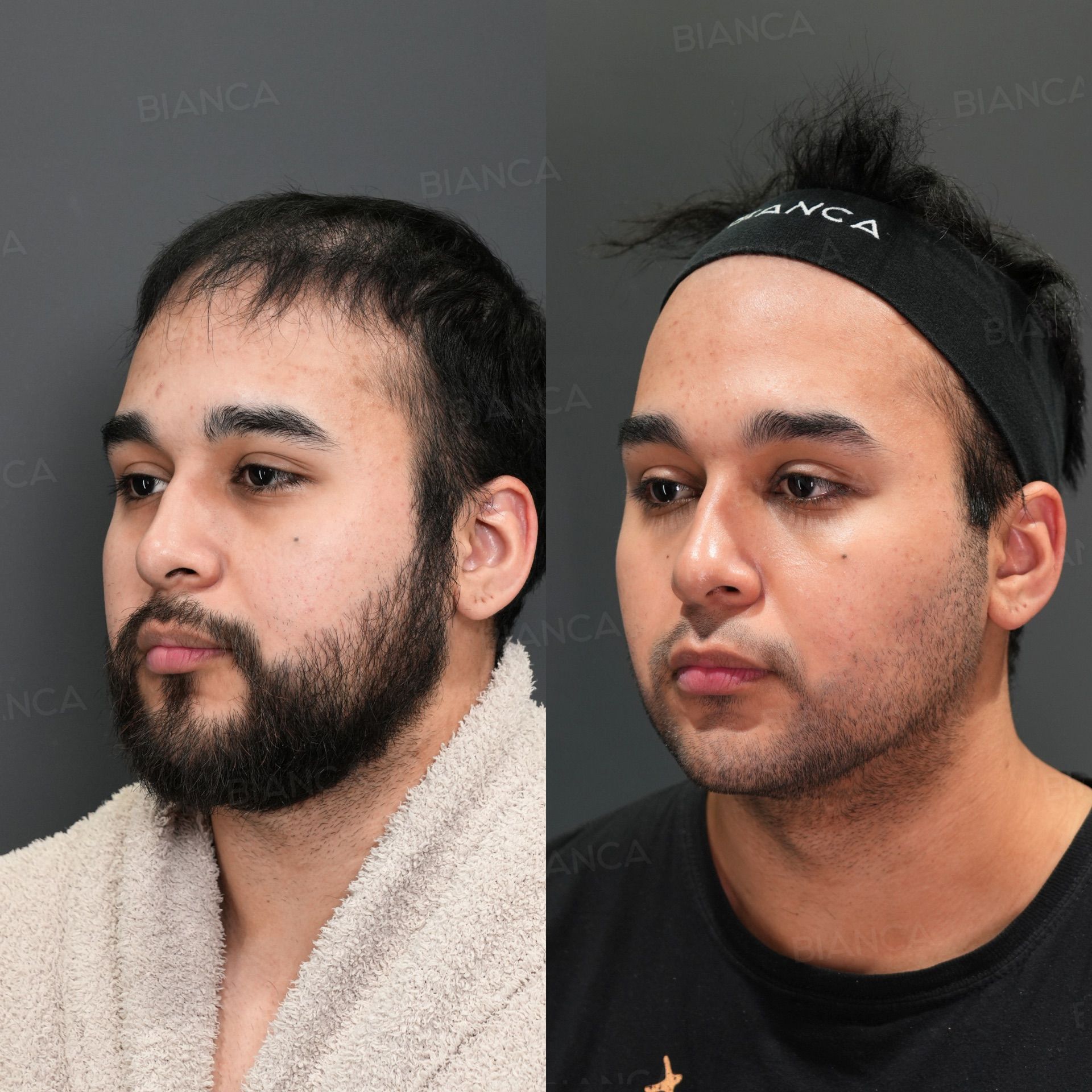
In the cheeks and below the chin, liposuction leaves swelling and bruising through the early weeks, and the skin can stay numb or tender for longer. Firm areas under the skin and small irregularities in the contour can take months to soften, and a difference between the sides occasionally needs correction. Infection and pockets of fluid or blood under the skin are uncommon. Rarely, the small nerve branch that controls the lower lip is affected, which can make the smile uneven, usually for a limited time. How well the skin adapts to the smaller volume differs between individuals, and later changes in body weight can affect the contour.
Placing the six threads causes swelling and bruising, and for some days the cheeks can feel tight when the mouth opens wide or during chewing. Dimpling or puckering of the skin near the entry points can appear and generally settles as the tissue relaxes. Less commonly, a thread can be felt under the skin or come out at an entry point, and infection can occur; in these cases the thread may need to be removed. The lift can be uneven between the sides. The threads are absorbable, so their lifting effect fades over time; how long it lasts varies between patients, and further threads are sometimes placed later.
The cheeks swell after buccal fat removal, and the incision inside the cheek makes eating uncomfortable while it heals, so soft food is easier at this stage. Bleeding and infection are uncommon. If the amount removed differs between the sides, the cheeks can look uneven. Injury to the salivary duct that opens into the cheek, or to the facial nerve branches nearby, is rare. The fat that is taken out cannot be put back, and as facial fat decreases with age the cheeks may look hollower over the years.