La grasa transferida a los glúteos y las zonas de las que fue extraída permanecen hinchadas y con hematomas durante alrededor de dos semanas. Está prohibido sentarse directamente sobre los glúteos en el período inicial y se utiliza un cojín. Una parte del injerto se reabsorbe en el transcurso de tres meses, por lo que el volumen se estabiliza por debajo del resultado inmediato. Pueden aparecer bultos firmes, quistes de grasa, irregularidades en el contorno y asimetrías en los lados. La infección es poco común. La embolia grasa es un evento raro pero grave.
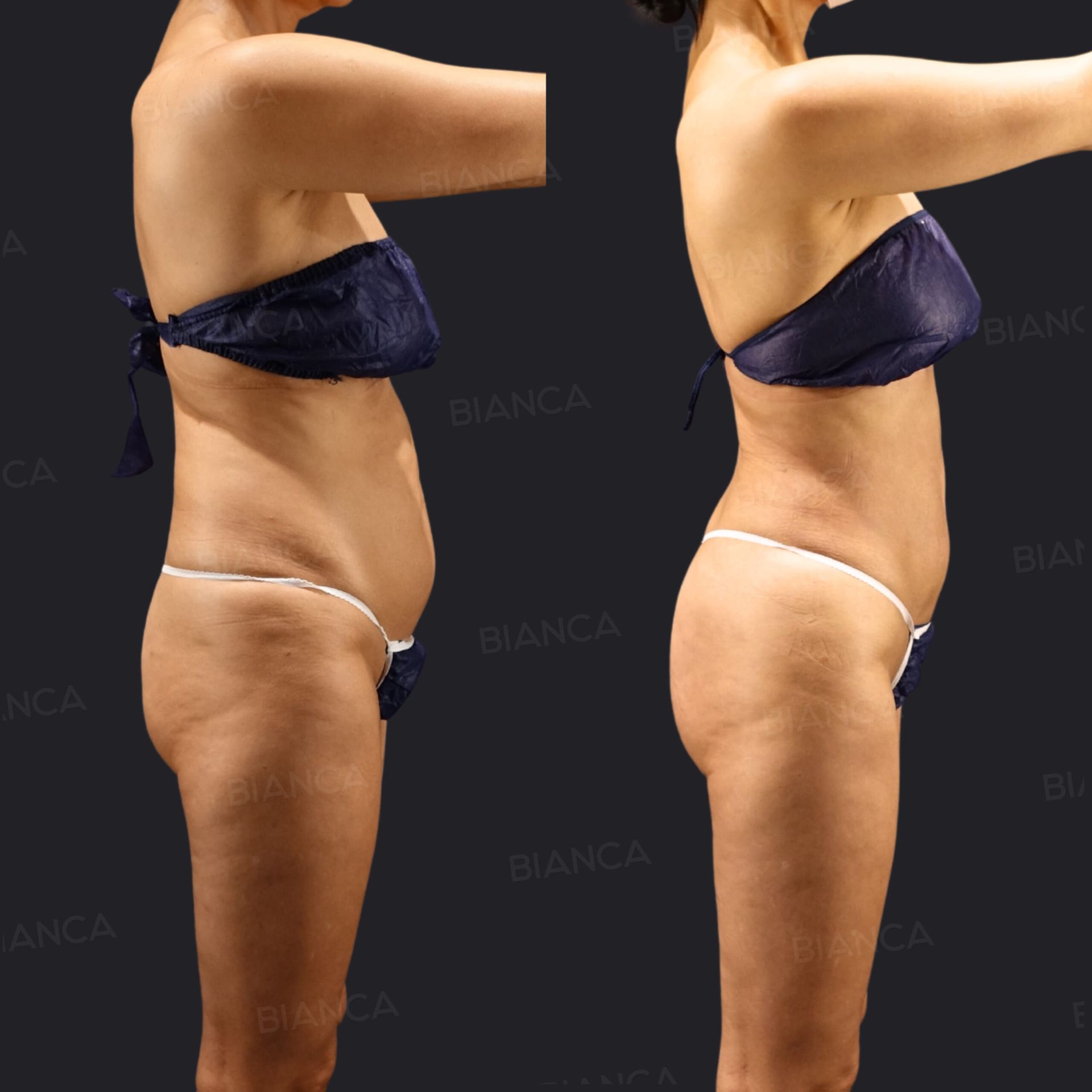
Los flancos y la cintura duelen como si se hubiera hecho un entrenamiento intenso durante una o dos semanas, y los hematomas con manchas marrones en la piel pueden persistir durante un mes. La hinchazón se desplaza hacia abajo antes de drenar. Las prendas de compresión se usan continuamente según las indicaciones. El entumecimiento, las bandas firmes bajo la piel, las abolladuras o el contorno asimétrico pueden permanecer durante meses y, en ocasiones, necesitan corrección. El seroma, la quemadura y la infección son poco comunes. Los coágulos de sangre y la embolia grasa son raros pero graves.
La radiofrecuencia aplicada debajo de la piel de las zonas corporales tratadas deja hinchazón, hematomas y sensibilidad durante aproximadamente dos semanas, y firmeza bajo la superficie que se suaviza con los meses. Debido a que el calor se administra internamente, es posible que se produzca una quemadura, una zona que se sienta atada o un contorno irregular si la energía es desigual. El entumecimiento puede durar varias semanas. La tensión se desarrolla en aproximadamente tres meses y el grado de retracción de la piel difiere según la edad y la elasticidad.
La radiofrecuencia con microagujas en el cuerpo deja un patrón de marcas puntiformes, rojez e hinchazón leve durante dos a cuatro días, a veces con pequeñas costras. Los cambios de pigmentación posteriores son más probables en tonos de piel más oscuros y se aconseja la protección solar. La rojez prolongada, los pequeños nódulos o una quemadura superficial son poco frecuentes. La piel del cuerpo cicatriza más lentamente que la de la cara. Lo habitual es una serie de sesiones separadas por semanas, cuyos cambios se aprecian al cabo de unos tres meses.