


Explore the wonderful world of Japanese plastic surgery at BIANCA CLINIC in Tokyo. With our natural-looking results, strict safety protocols, and English-speaking beauty clinicians it’s no wonder that people flock from around the globe come to get treatment with us. Read on to find out the steps, costs, downtime, and aftercare involved.
The Incredible Japanese Plastic Surgery Quality That’s Available in Tokyo Today
Modern Japanese plastic surgery has come a long way from being a “global follower of trends” to now being, “one of the world’s leading plastic surgery providers.” A great deal of effort has been made by Japanese plastic surgery teams and clinics to create a service that has several trusted options for residents and visitors in Tokyo who want refined, natural-looking beauty without dramatic change.
In fact, many people seek plastic surgery solutions for relatively “ordinary” aspects of their anatomy, such as droopy eyelids, a flatter nose bridge, facial contouring, or age-related laxity which in the past would require the rigamarole of traditional plastic surgery. Yet nowadays in Tokyo, the epitome of Japanese plastic surgery, there is such a tremendously high standard of aesthetic clinics available that treatments can enhance anatomical harmony remarkably well, while keeping one’s original identity, and with minimal downtime. Furthermore, Japanese plastic surgery clinics do so in a measured approach that resonates exceptionally well with professionals, travelers, and expats alike. So if you prefer subtle improvements, clear communication, and reliable follow-up, Japanese plastic surgery in Tokyo is the right place to get started.
Delivering a Balanced Path to Confidence: Definition, Features, and Benefits
Japanese plastic surgery is an aesthetics-first based approach. That means plastic surgery that prioritizes facial balance, discreet scarring, and longevity over any kind of major overhaul. The goal that is unique to Japanese plastic surgery is to allow you to look refreshed rather than obviously altered or “fixed”. This translates to Japanese plastic surgery teams in Tokyo combining minimal-incision techniques with careful suture design and conservative volume adjustments for a refined outcome.
The Key Features of Japanese Plastic Surgery
- Natural-looking planning that utilizes digital imaging and proportion analysis to guide a personalized plan.
- Micro-precision incisions that are small, well-concealed and have delicate suture technique to reduce downtime whenever possible.
- Measured enhancements such as implants, cartilage grafts, or fillers that are used conservatively to suit your anatomy and comfort levels.
- Safety-first culture with rigorous sterilization, safety checklists, and anesthesia protocols that are commonplace in leading Japanese plastic surgery centers in Tokyo.
The 3 Advantages of Japanese Plastic Surgery
- Subtle results that fit diverse face types and professional lifestyles.
- Shorter visible recovery in most modern procedures, with thoughtful aftercare.
- Predictable and reviewable outcomes that are supported by photo-based planning with a clear before and after awareness of results.
Choosing a Tokyo Aesthetic Clinic for Plastic Surgery: Safety, Cleanliness, and Hospitality
With unbeatable infection control, single-use disposables where appropriate, and transparent consent forms, getting Japanese plastic surgery has never quite been so stress free and reliable. In addition, many reputable clinics in Tokyo pair board-certified surgeons with nurses who can speak multiple languages, making it much easier for international patients to clarify goals and understand each step of their journey to rejuvenation. Especially in recent years, where English-speaking plastic surgery clinics have become the norm, you should now be looking for ones that provide translated documents, interpretation during visits, and clear post-op instructions so that you can follow instructions at home or in a hotel, for the best possible results.
Comparing Options in Tokyo: Japanese Plastic Surgery vs. Non-Surgical Treatments
Double-eyelid surgery vs. a non-incisional suture method
Eyelid plastic surgery is much better for patients who suffer from excess skin issues, whereas non-incisional suture methods are designed to be a lot more subtle for less pronounced problems. In terms of longevity, incisional plastic surgery is long-lasting whereas the suture method can loosen gradually over time. The cost for plastic surgery in this case will be higher, and pain/downtime is considered moderate (with swelling likely afterwards). On the other hand, the suture method is a lot milder. Risks are mainly for plastic surgery and would be infection or potential asymmetry, though this is reduced with careful planning.
Rhinoplasty (plastic surgery) vs. nose fillers (hyaluronic acid)
Rhinoplasty is far more invasive than nose fillers and reshapes your nose structure. Fillers on the other hand refine lines and the bridge of your nose only. Rhinoplasty is permanent but fillers only last months to a year at best. Of course, plastic surgery is higher in cost with fillers designed for prolonged fees with a lower upfront cost. Plastic surgery will definitely require more downtime, with fillers having almost none. The risk of rhinoplasty is bleeding and scar related. Fillers have no real risk but do require expert injector technique to avoid any potential vascular accidents.
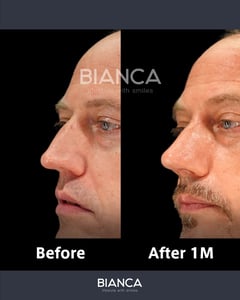
Left: before, Right: 6 months after surgery
Cost: Nasal Tip Reduction Surgery ¥330,000 (tax incl.) /
Hump Reduction Surgery ¥330,000 (tax incl.) /
Nasal Bone Osteotomy ¥440,000 (tax incl.)
/ Nasal Tip Formation/Reduction – Columella Strut Method ¥110,000 (tax incl.) /
Total ¥1,210,000 (tax incl.)
Risks: Bleeding may last for up to 48 hours after surgery / Swelling and bruising typically subside within 1 to 2 weeks. / Your nose may temporarily look “too high” or “too thick” until the swelling goes down. It takes approximately 6 months to see the final outcome / Scars from the incisions will not disappear completely. / You may experience a foreign body sensation from the implant. / A feeling of stuffiness (nasal obstruction) may occur. / In rare cases, the surgical site can become infected, causing prolonged pain and swelling, which can lead to nasal deformity. / A hematoma (a collection of blood under the skin) can form, which may cause deformity or breathing difficulties.
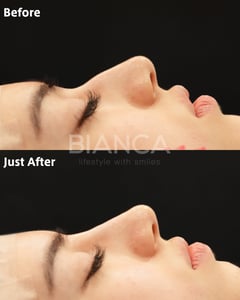
【Photo Description】Top: Before treatment / Bottom: Immediately after treatment
【Risks / Side Effects】Swelling, bruising, allergic reactions, vascular compromise, irregularities, etc.
【Cost】
Juvederm / Restylane: ¥84,700
Procedure Fee: ¥24,200
Needle Fee: ¥2,420
Facelift/necklift vs. HIFU or threads
Plastic surgery lifts address laxity decisively. HIFU/threads produce a slight lift effect. Plastic surgery lifts can last several years unlike HIFU/threads which vary from months to a year (depending on patient metabolism). Plastic surgery lift costs are higher and nonsurgical lower (for obvious reasons). Lastly, just like rhinoplasty, plastic surgery lifts include risks of scarring and nerve damage, whereas nonsurgical threads may cause temporary swelling or mild tenderness.
As a side note, for precise fee estimates in Tokyo, contact Japanese plastic surgery clinics directly, as surgeon expertise and experience will cause fluctuations in cost. Also during consultation request a written quote, timelines, and a personalized recovery plan for a transparent plastic surgery roadmap.

op: Before treatment
Bottom: Immediately after treatment
Side Effects / Risks: Pain, swelling, bruising, infection, nerve damage, rare allergic reactions…
Cost: Teosyal RHA 1–4, each 1cc: ¥84,700 / BIANCALIFT, 4 threads: ¥198,000
FAQs: Planning Japanese Plastic Surgery in Tokyo
Q. How long should I stay in Tokyo after plastic surgery?
For minor eyelid or filler work, many return to routine within a few days. For rhinoplasty or facelifts, plan for at least 7–14 days in Tokyo (for checks on your healing process).
Q. Is English support available?
Yes. Choose an English-speaking beauty clinic with bilingual coordinators, translated instructions, and easy messaging for follow-up questions.
Q. Can I preview results?
Digital imaging and curated before and after references should help you and your surgeon align realistic goals before committing to a plastic surgery procedure.
Q. How painful is it?
Most discomfort is well controlled with local anesthesia, sedation if suitable, cold compresses, and prescribed medication. Your plastic surgery team in Tokyo will always tailor your plan so let them know if you are in any sort of pain.
Q. How should I estimate costs?
Request a detailed quote after your consultation because transparent clinics in Tokyo itemize surgeon fees, facility costs, anesthesia, and follow-ups, to make your Japanese plastic surgery journey as smooth and as easy to understand as possible.
Thoughtful Japanese Plastic Surgery with Long-Term Support in Tokyo
Japanese plastic surgery prioritizes harmony, safety, and sincerity. These are indispensable values you can feel from the second you sit down for your consultation through to your at-home aftercare. If you are comparing options, a reputable Tokyo plastic surgery clinic with multilingual staff will make every step that much clearer, all the way from planning to follow-up. So if you are ready to talk through goals at your own pace, contact BIANCA CLINIC in Tokyo for a free consultation or send us an inquiry today, because a careful conversation is the best first step you can take toward a confident result that is both radiant and natural-looking.
Biography

| Dr. Alice Hatade, M.D. Board-Certified Plastic and Reconstructive Surgeon / Aesthetic Surgery SpecialistDr. Alice Hatade is a board-certified plastic and reconstructive surgeon renowned for her refined aesthetic sensibility and dedication to natural, graceful results. A graduate of Kyushu University School of Medicine, one of Japan’s leading medical institutions, she built her career in plastic and aesthetic surgery across top university hospitals and affiliated centers. With extensive experience spanning from complex facial and body reconstructive surgery to advanced cosmetic procedures, Dr. Hatade combines deep anatomical knowledge with an artistic eye for balance and harmony. Her signature approach focuses on achieving beauty that looks effortless—enhancing each patient’s natural features while maintaining individuality. Before embarking on her medical career, Dr. Hatade performed as a Japanese idol during her student years. This rare background gives her a unique understanding of both the “beauty that captivates others” and the “beauty born from natural elegance.” Dr. Hatade is admired by her patients for her calm professionalism, refined aesthetic judgment, and ability to create a warm, discreet environment where women can feel completely at ease. Each consultation is a personalized experience, tailored to reflect the patient’s lifestyle, aspirations, and inner confidence. Beyond her practice, she finds inspiration in travel, fine dining, and art, and shares thoughtful perspectives on beauty and wellness through her social media presence. |
Book a Consultation Today
📲 Follow us for updates! BIANCA international Instagram
🔹 How to Book Your Appointment
Click the link below and fill the form with your concerns, referral code if you have any and day/time preferred.
📌Click for bookings
Walk-ins are welcome!
📝 Note: All consultations, treatments, and follow-up visits include free translation services —no extra fees!
Clinic Locations
📍 Ginza Clinic
12F Ginza ONE, 1-8-19 Ginza, Chuo-ku, Tokyo, Japan
☎ 050-3196-4834
🚇 Access:
🚶♀️ A 4-minute walk from Ginza Station on the Tokyo Metro Ginza Line.
🚶♀️ A 1-minute walk from Exit 7 of Ginza-itchome Station on the Tokyo Metro Yurakucho Line.
🚶♀️ A 3-minute walk from Exit 3 of Kyobashi Station on the Tokyo Metro Ginza Line.
🚶♀️ An 8-minute walk from the Kyobashi Exit of JR Yurakucho Station .
📍 Omotesando Clinic
Minami-Aoyama 511 Building 2F, 5-11-10 Minami-Aoyama, Minato-ku, Tokyo, Japan
☎ 050-1807-1593
🚇 Access:
🚶♀️ A 5-minute walk from Exit B1 of Omotesando Station on the Tokyo Metro Ginza Line, Hanzomon Line, and Chiyoda Line.
Consultation Hours: 10:00–19:00 Closed: Irregular holidays
About BIANCA Clinic
At BIANCA, we redefine beauty care by offering a holistic approach that transcends traditional cosmetic surgery and dermatology. 20 specialized doctors in different fields including plastic surgery, dermatology, internal medicine, regenerative medicine, gynecology will carefully listen to your needs and help you to enhance your beauty and wellness from the inside out. We are committed to creating personalized treatment plans with precision and care, and ensuring you experience the true spirit of Japanese omotenashi and hospitality.