



Hi, this is Dr. Yuki. Today’s topic is ADM, one kinds of brown spots.
ADM, or Acquired Dermal Melanocytosis, is a skin condition characterized by the appearance of brown or grayish-blue spots on the skin. These spots are usually found on the face, particularly on the cheeks, temples, and forehead, but they can also appear on other parts of the body.
Pathology of ADM
ADM is caused by the presence of melanocytes, the cells responsible for producing pigment, in the dermis (the deeper layer of the skin). Normally, melanocytes are located in the epidermis (the outer layer of the skin), but in ADM, these cells are found deeper in the skin. The condition is believed to be influenced by genetic factors, sun exposure, and hormonal changes, particularly in individuals with darker skin tones.
ADM is typically benign and does not pose a health risk, but the appearance of the spots can be a cosmetic concern for many.
Treatment of ADM
Treatment for ADM focuses on reducing the appearance of the pigmentation. One of the most effective treatments is the use of a PICO laser, also known as a picosecond laser.
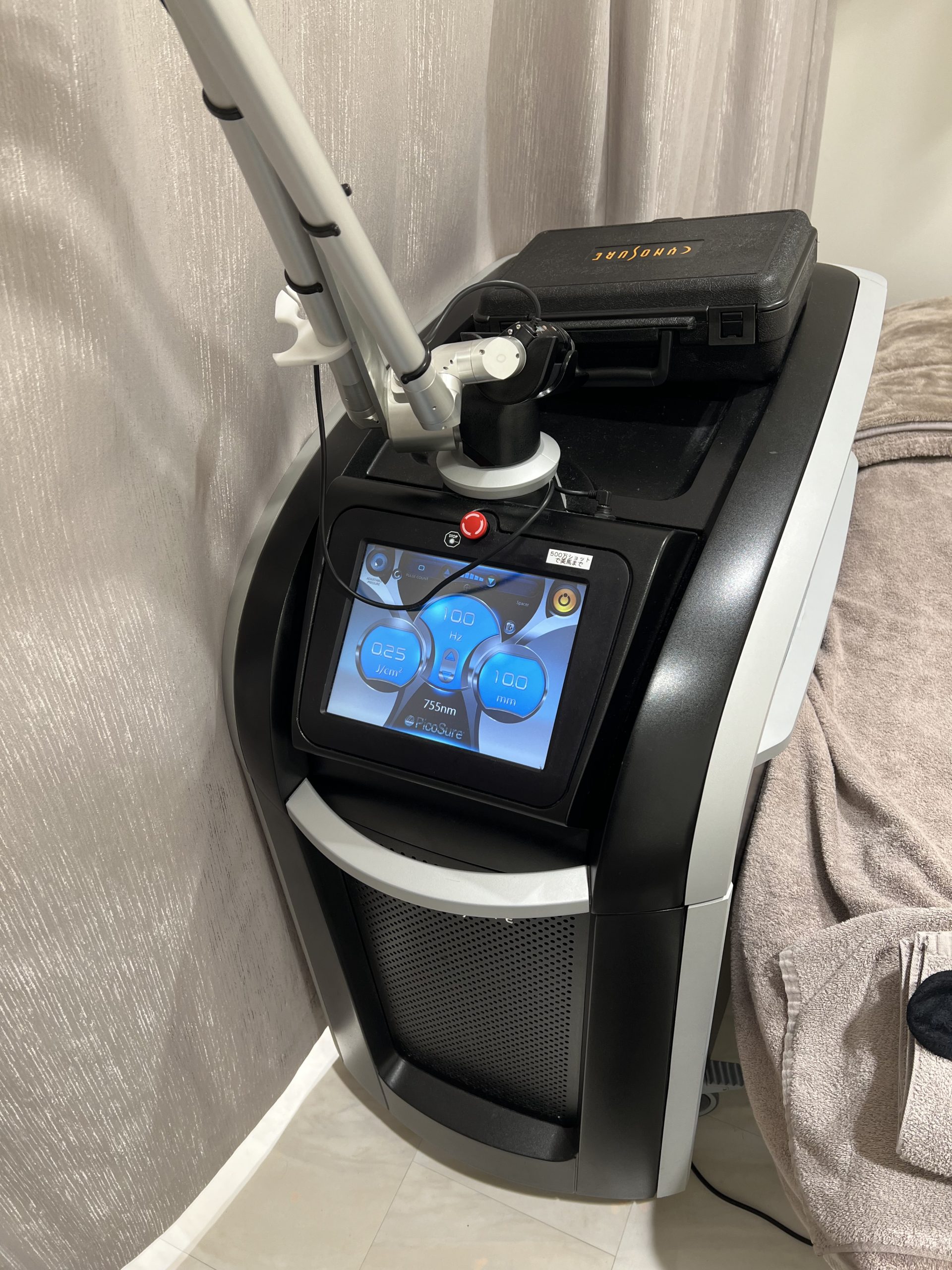
Other treatments like topical depigmenting agents (such as hydroquinone), chemical peels, or other types of lasers (like Q-switched lasers) may also be used depending on the severity of the condition and the patient’s skin type.