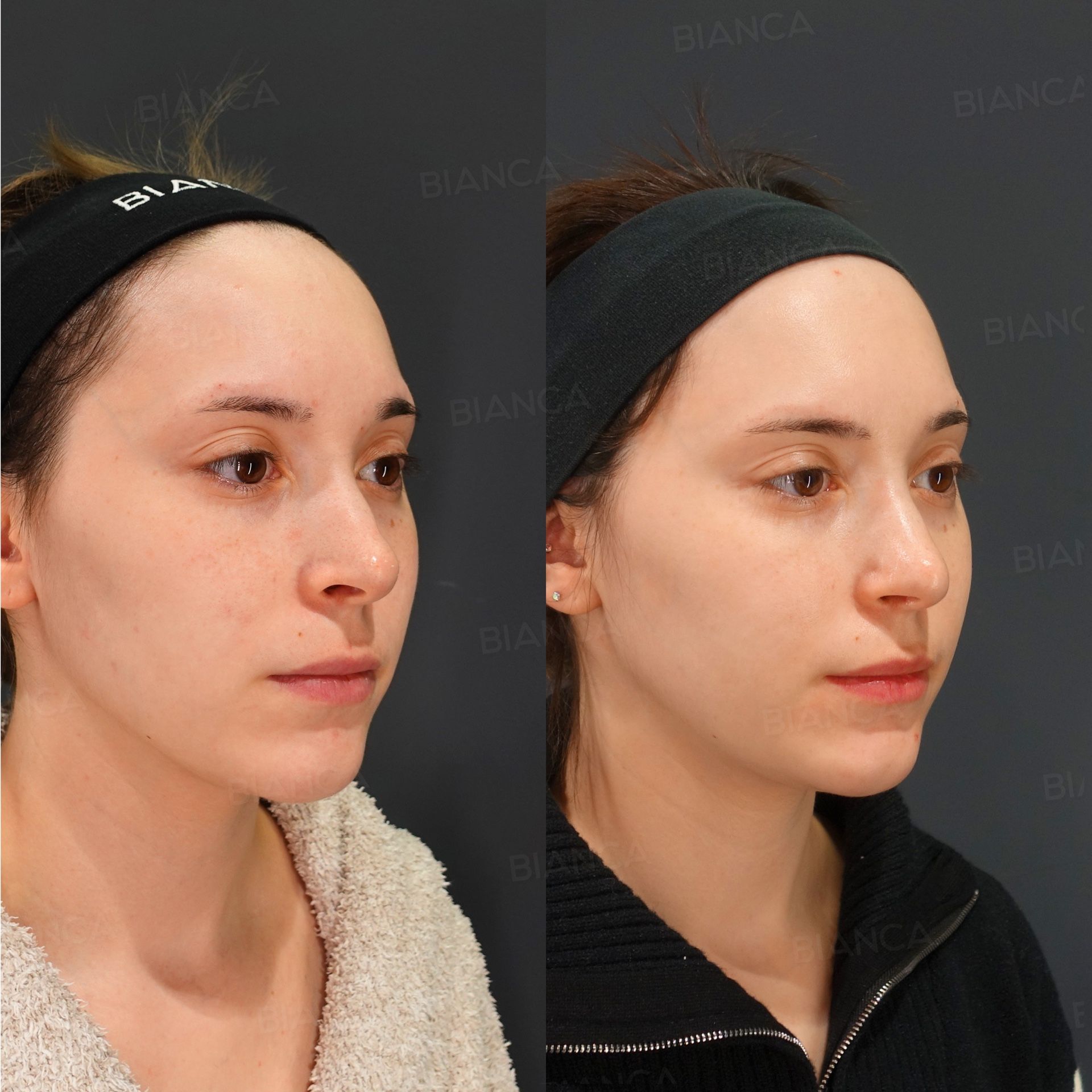
Cutting and narrowing the nasal bones produces swelling of the middle face and dark bruising of both lower lids for about two weeks, and a splint protects the nose at first. Nasal blockage, crusting and watery eyes are usual early, and vision can be blurred briefly while the lids are swollen. Bleeding and infection are uncommon. The bones may heal with a small step, ridge or slight asymmetry, and revision is sometimes chosen after the swelling has fully gone.
Work on the tip cartilages keeps that part of the nose swollen and stiff longer than the rest, commonly six months to a year before the outline is final. The tip is numb or oversensitive for months. Sutures and cartilage can become palpable or visible as the skin thins over them, the tip may rotate or drop with healing, and small differences between the nostrils are common. Additional correction is needed in a proportion of cases.
The rim graft depends on a new blood supply to survive, so part or all of it can fail, leaving a patch of different color or texture at the nostril rim. The donor site on the ear leaves a scar and a small change in ear shape, and cartilage may warp or be felt as an edge over time. Swelling at the rim lasts months, the two nostrils can differ, and revision is possible.