
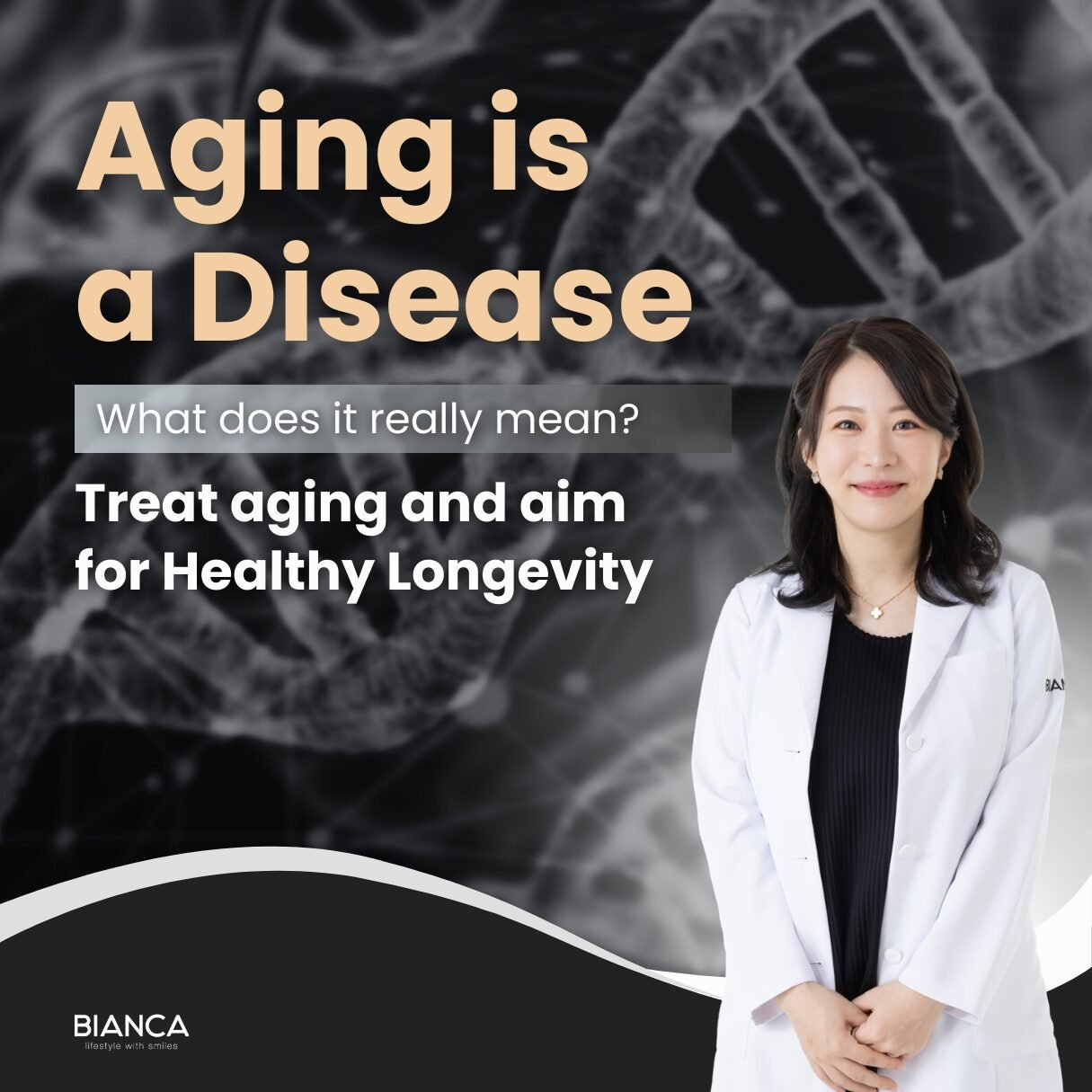
The idea that “aging is a disease” is gaining attention in the global medical community.
Aging has long been accepted as a natural and unavoidable process, but recent research suggests that it is actually a major cause of functional decline and disease—and is increasingly being viewed as something that can be treated and prevented.
In fact, discussions have taken place within the WHO about including aging in disease classifications. With the development of cutting-edge approaches such as gene editing and stem cell therapy, a new field called longevity medicine is opening up possibilities for healthy aging.
“Aging Is a Disease” Is Becoming a Global Standard
Until recently, aging was seen as a natural phenomenon that could not be avoided. However, as aging research advances and its causes and potential treatments become clearer, the global perception is shifting toward viewing aging as a disease.
Aging contributes to physical decline and the development of various illnesses, which means it should be prevented and treated. Conditions such as dementia, cancer, and heart attacks are closely linked to aging. For this reason, the WHO has even considered adding aging to its disease classification system.
Although aging was not officially included in the 2022 revision, there is strong global momentum toward defining aging as a disease in the future.
If something is considered a disease, it means it can be treated. Aging is increasingly being viewed as a treatable condition, with prevention and therapy becoming possible. Advances in gene editing and stem cell technology are among the reasons why aging is now seen as something that can potentially be reversed or slowed.
The Epigenetic Clock Test as an Indicator of Aging
Recently, a distinction has begun to be made between aging and getting older.
Chronological aging simply refers to the passage of time since birth, whereas aging refers to the gradual decline in physical function that occurs with time.
At BIANCA CLINIC, we offer the Epigenetic Clock Test, which measures how much your body has actually aged. While everyone ages at the same rate chronologically, biological aging speed differs from person to person.
By calculating your biological age and comparing it with your actual age, we can assess how quickly your body is aging. The development of highly accurate epigenetic testing has had a major impact on aging research and clinical practice.
Longevity Means Living Long — and Living Well
Living longer does not necessarily mean living healthier. If you suffer from chronic illness or physical limitations, it can be difficult to truly enjoy life.
As the concept of “aging as a disease” becomes more widespread, attention is shifting to longevity. Longevity refers to living a long, healthy, and enjoyable life.
Rather than enduring old age, the goal is to remain independent, enjoy food, travel, and maintain an active lifestyle. Aging is increasingly being seen not as something negative, but as something we can face positively and manage proactively.
The 10 Stages of Longevity
According to Phil Newman, Editor-in-Chief of Longevity Technology, aging treatments can be categorized into the following ten stages:
The 10 Stages of Longevity
- Lifestyle management – Preventing or slowing aging-related diseases through healthy habits
- Consumer diagnostics – Using lifestyle data and questionnaires to guide interventions
- Longevity supplements – Supporting cellular function with metabolic supplements
- Longevity clinics – Specialized diagnostics and lifestyle guidance
- Management of aging-related diseases – Current standard medical care
- Preventive treatment of aging diseases – Controlling aging mechanisms to prevent disease
- Targeted reversal of specific aging conditions – Organ- or tissue-specific interventions
- Systemic reversal of aging – Treating aging damage across the entire body
- Organ and biological preservation – Repairing or maintaining damaged organs beyond lifespan limits
- Preservation of body and consciousness – Storing the body or mind until future treatments become available
As these stages advance, treatments become more complex and more costly. Some are already available, while others remain theoretical.
Longevity Medicine at BIANCA CLINIC
At BIANCA CLINIC, we provide aging treatments that fall under the category of a longevity clinic.
We use the latest Epigenetic Clock Test to measure biological age and design medical strategies to improve internal health.
We also offer treatments such as:
- Peptide therapy
- Hormone replacement therapy
- Orthomolecular nutrition therapy
These approaches aim to restore health from the inside out. If you are interested in cutting-edge aging care or want to actively prevent aging, we welcome you to start with a consultation.