



GOURI downtime may include temporary redness, swelling, puffiness, bruising, and itching after treatment.
Wheals or mild edema may also occur.
These symptoms often begin to settle within several hours to approximately two days.
Recovery varies from person to person, however, and bruising may remain visible longer than redness or swelling.
International patients often ask us how GOURI might fit into their plans:
“Can I go back to work the next day?” or “Will swelling show in my travel photos?”
It is helpful to remember that feeling well enough to resume your usual routine and having no visible signs of treatment are not always the same thing.
In this article, we explain what to expect during GOURI downtime and how to plan your treatment around work, a trip to Tokyo, or an important event.
How Long Is GOURI Downtime?
There is no universal number of days for GOURI downtime.
Redness may settle relatively quickly, for example, while a bruise can remain visible for longer.
The treatment area matters, too.
So do the amount injected, injection technique, your skin, and simply how prone you are to swelling or bruising.
Redness, Swelling, and Puffiness
Some redness or puffiness around the treated area can appear after GOURI injections.
Mild swelling or edema is also possible.
In our experience at BIANCA CLINIC, these reactions often settle over several hours to approximately two days.
Some people notice very little swelling. Others look slightly puffy for a short time, even though they otherwise feel completely fine.
This does not automatically translate into two days spent at home.
If the reaction is mild, normal daily activities may still be comfortable.
What matters more is how visible the swelling is to you and what you have planned during that time.
Mavijosje
Bruising is less predictable.
A needle or cannula can occasionally catch a small blood vessel, leaving discoloration around the injection area.
By the time a bruise becomes noticeable, the initial redness or swelling may already be improving.
That is why we pay particular attention to bruising when someone tells us, “I have an important meeting later this week,” or “I’m having professional photos taken.”
There is no reliable way to promise that a bruise will disappear by a particular day.
If your calendar includes something you cannot move—a wedding, filming, photography, or a major work event
—tell us during your consultation.
It can make a difference when choosing your treatment date.
Lumps, Nodules, and Temporary Unevenness
A small bump immediately after an injection is not automatically a nodule.
Localized swelling, a wheal, or puffiness can temporarily make the skin look or feel uneven.
These early changes often settle along with the other post-injection reactions.
A lump that stays, becomes more noticeable, turns increasingly red, or starts to hurt is a different situation and should be checked by a physician.
This is especially important for international clients who may already be home when they notice something unusual.
Rather than trying to match what you see to photographs online, contact the clinic that performed your treatment.
GOURI Recovery Timeline: What to Expect After Treatment
“Short downtime” sounds reassuring, but it is not particularly useful when you are deciding whether to book dinner that evening or a meeting the next morning.
A timeline gives you a better sense of what those first few days may actually look like.
Keep in mind that this is a general guide rather than a promise of how your own recovery will progress.
Immediately After Treatment
Right after GOURI, injection marks may be visible. The area can also look a little red, swollen, or puffy.
You may otherwise feel completely normal.
Many clients are comfortable walking back to their hotel or carrying on with light activities after leaving the clinic.
Appearance is the bigger consideration at this point.
If you are visiting Tokyo, we would not pack your treatment day with plans for which looking completely untouched matters to you.
An important dinner, a professional photo shoot, or a major meeting immediately afterward can make even mild swelling feel more inconvenient than it otherwise would.
24–48 Hours After Treatment
This is when redness, swelling, and puffiness often start becoming less obvious.
At BIANCA CLINIC, many temporary reactions settle noticeably during the first one to two days.
Bruising does not necessarily follow the same schedule.
You might feel ready for a normal workday while still seeing a small bruise in the mirror.
Ai dallim ka rëndësi.
For someone working from a laptop, this may barely affect the day at all.
For someone giving a presentation, meeting clients face-to-face, filming content, or appearing in photographs, the same amount of visible downtime may feel much more significant.
Several Days After Treatment
After several days, the early redness and swelling will often have improved considerably.
A bruise, if one developed, may still be noticeable.
More important than any exact day count is the direction things are moving.
Symptoms should generally be settling rather than getting worse.
Increasing redness, swelling, pain, or another change that concerns you is a reason to contact your treating physician.
And when arranging a trip or work schedule, give yourself some breathing room.
Skin does not recover according to a perfectly fixed calendar.
A Real GOURI Cases at BIANCA CLINIC
At BIANCA CLINIC, GOURI can be used not only on the face but also on the backs of the hands, where changes in firmness and volume may become more noticeable with age.
Below are three GOURI cases treated on the backs of the hands at our clinic.
To give you a clearer idea of what to expect after treatment, we have included two cases photographed immediately after treatment and one photographed one month later.
Case 1 | Before → Immediately After Treatment
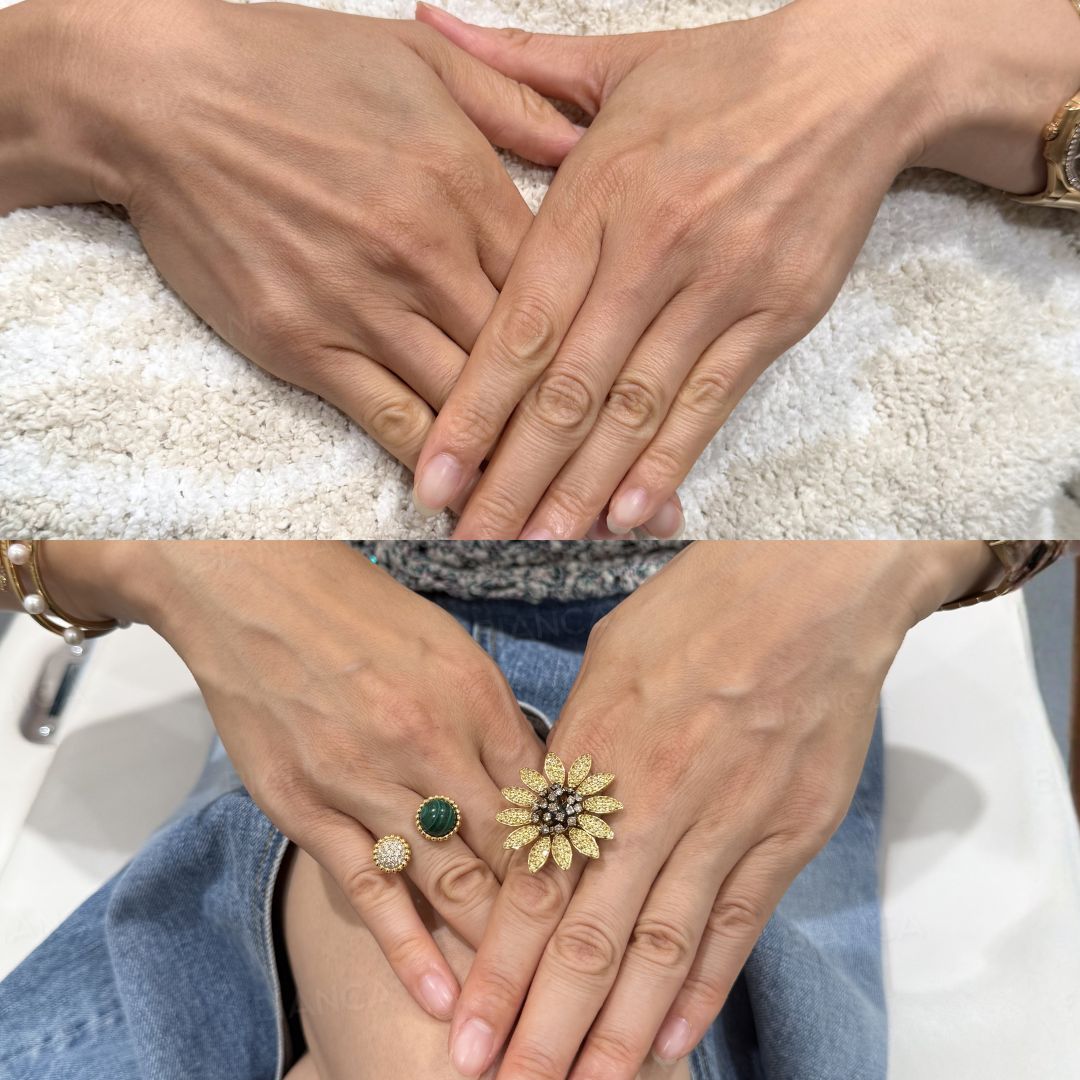
Photos: Top: Before / Bottom: Immediately after treatment
Cost: 2 syringes: ¥219,500 / Procedure fee: ¥25,500 per session / Cannula fee: ¥2,600
Possible Side Effects and Risks: Redness, swelling, edema, bruising, wheals, puffiness, itching, and other temporary reactions
This case involved two syringes of GOURI on the backs of the hands.
Immediately after treatment, the hands appear fuller, with the skin surface looking smoother and veins less prominent than before treatment.
Temporary redness, swelling, or puffiness may occur immediately after GOURI, and the degree of these reactions varies from person to person.
Case 2 | Before → Immediately After Treatment
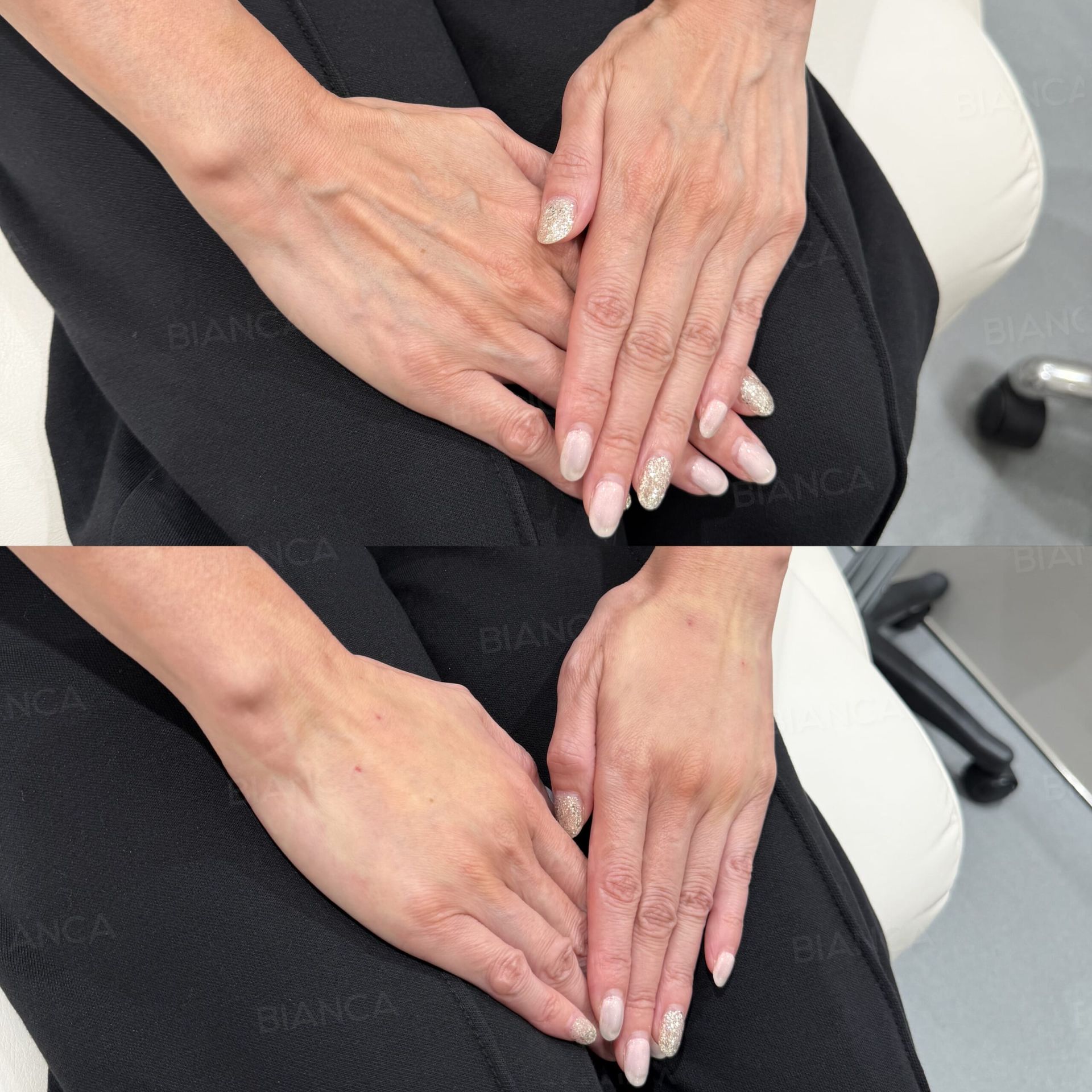
Photos: Top: Before / Bottom: Immediately after treatment
Cost: 2 syringes: ¥209,000
Possible Side Effects and Risks: Redness, swelling, edema, bruising, wheals, puffiness, itching, and other temporary reactions
This case also involved two syringes of GOURI on the backs of the hands.
In the immediate post-treatment photo, the hands have a softer appearance, and the contours created by the bones and veins appear less pronounced than before treatment.
Even when photos are taken at the same “immediately after” stage, visible changes and skin reactions can vary.
These images can help give you a general idea of how the hands may look shortly after treatment.
Case 3 | Before → One Month After Treatment
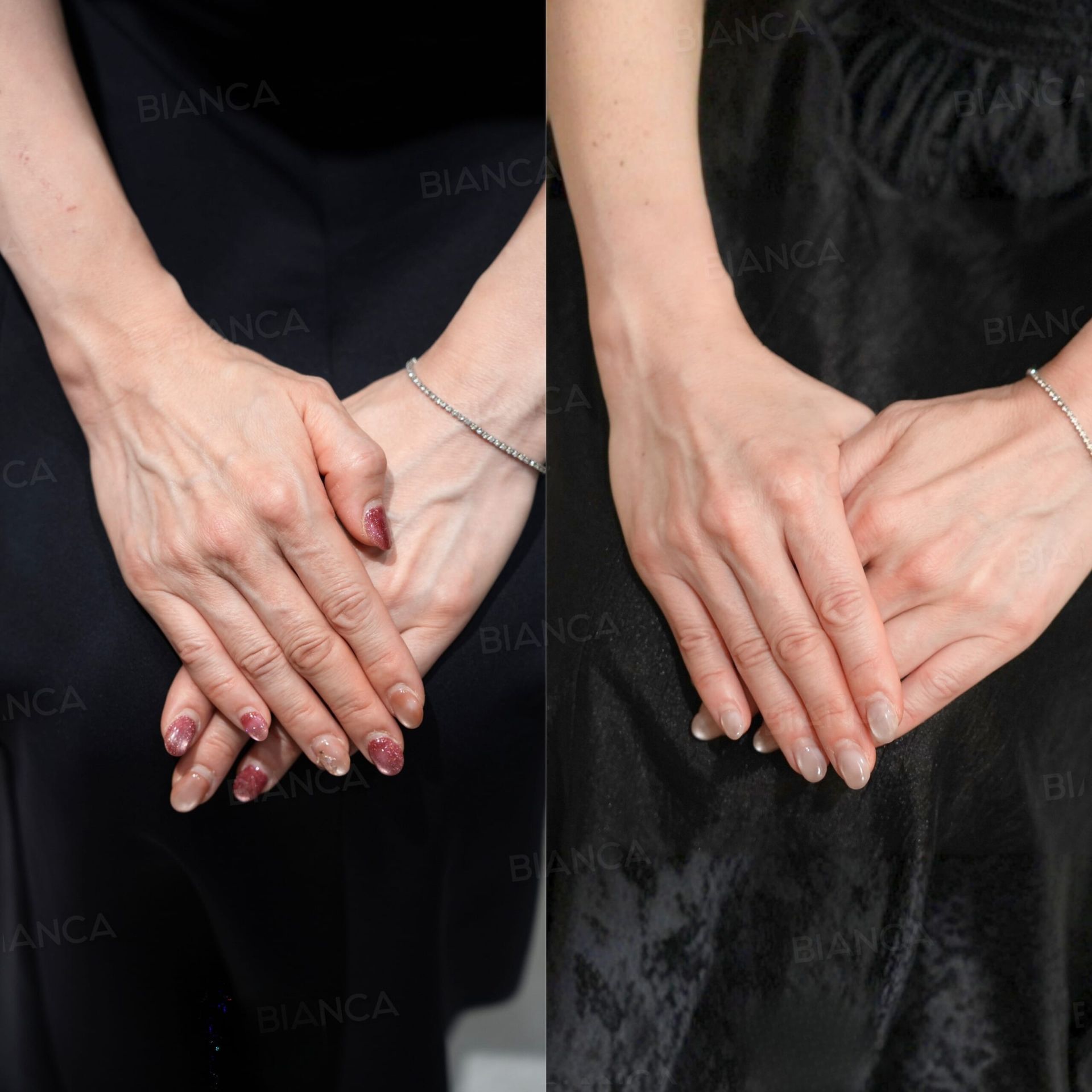
Photos: Left: Before / Right: One month after treatment
Cost: 2 syringes: ¥209,000
Possible Side Effects and Risks: Redness, swelling, edema, bruising, wheals, puffiness, itching, and other temporary reactions
This case shows the backs of the hands one month after treatment with two syringes of GOURI.
Compared with the before photo, the hands appear smoother and fuller overall, with less noticeable unevenness.
Unlike the first two cases, this image shows the appearance after some time has passed following treatment.
As these cases illustrate, the appearance and recovery process after GOURI can vary from person to person.
It is also important to distinguish between photos taken immediately after treatment and those taken one month later, as they show different stages of the treatment process.
Clinical photos can be helpful when considering what to expect, but they do not guarantee that you will experience the same recovery or results.
The degree and duration of redness, swelling, and bruising also vary.
For a broader guide to GOURI downtime, refer to the recovery timeline above.
Does GOURI Require Fewer Injection Points? How BIANCA CLINIC Minimizes Downtime
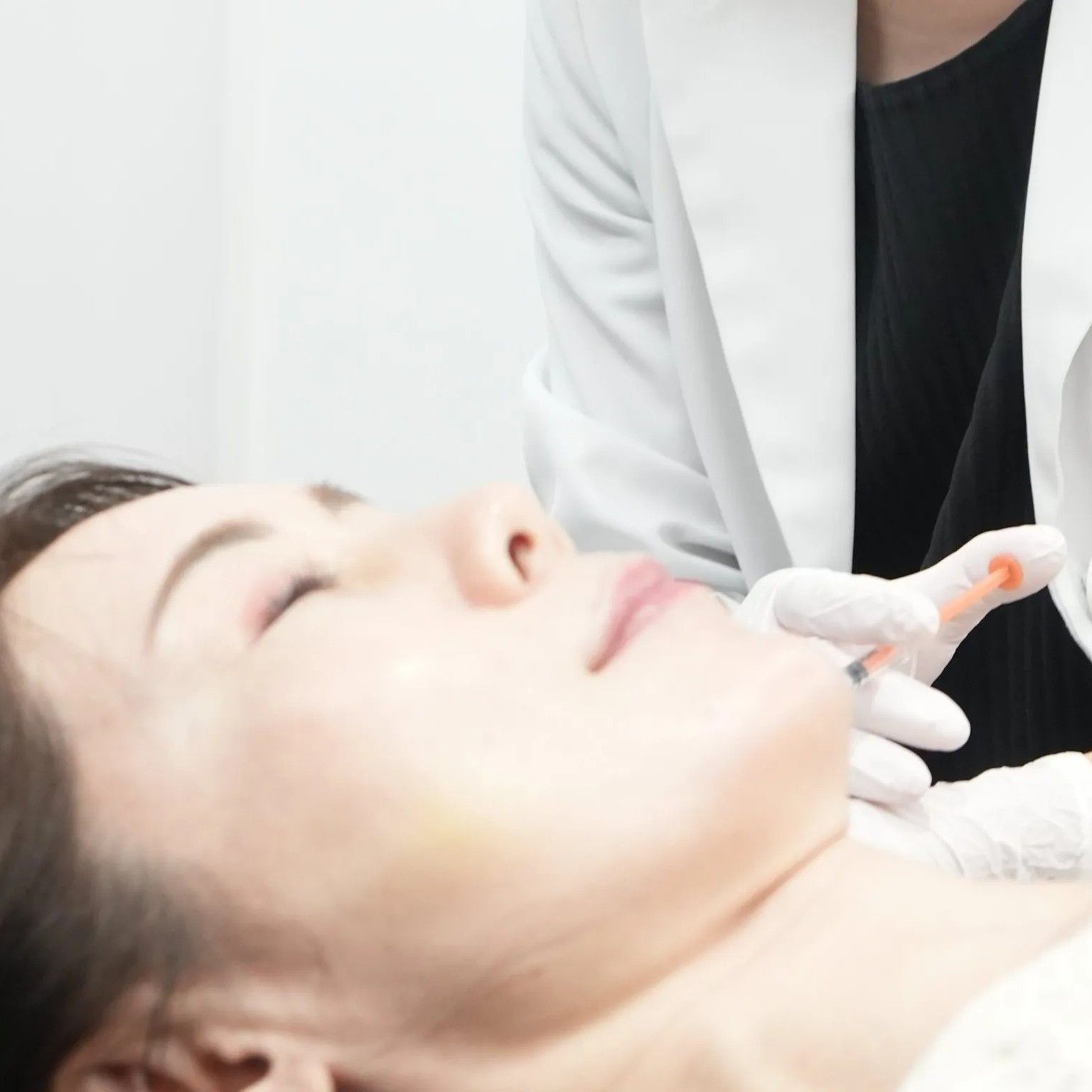
GOURI behaves differently from injectable treatments that rely on many small deposits placed across an entire treatment area.
Its liquid PCL formulation disperses relatively easily after injection.
That can mean fewer puncture points are needed, depending on the treatment plan.
Avoiding unnecessary punctures may also reduce some of the burden on the skin associated with repeated needle entry.
It does not make the treatment downtime-free.
Redness, swelling, and bruising are still possible.
Our physicians decide how and where to inject after assessing the treatment area, skin condition, anatomy, and individual goals.
Needle or cannula selection is also adapted to the situation rather than using exactly the same approach for everyone.
Local anesthesia is included with GOURI treatment.
If discomfort is a particular concern, additional anesthesia options can be discussed during your consultation.
The aim is not “zero downtime.”
It is thoughtful injection planning that takes your anatomy, concerns, comfort, and schedule into account.
How Should You Plan Work, Travel, and Important Events After GOURI?
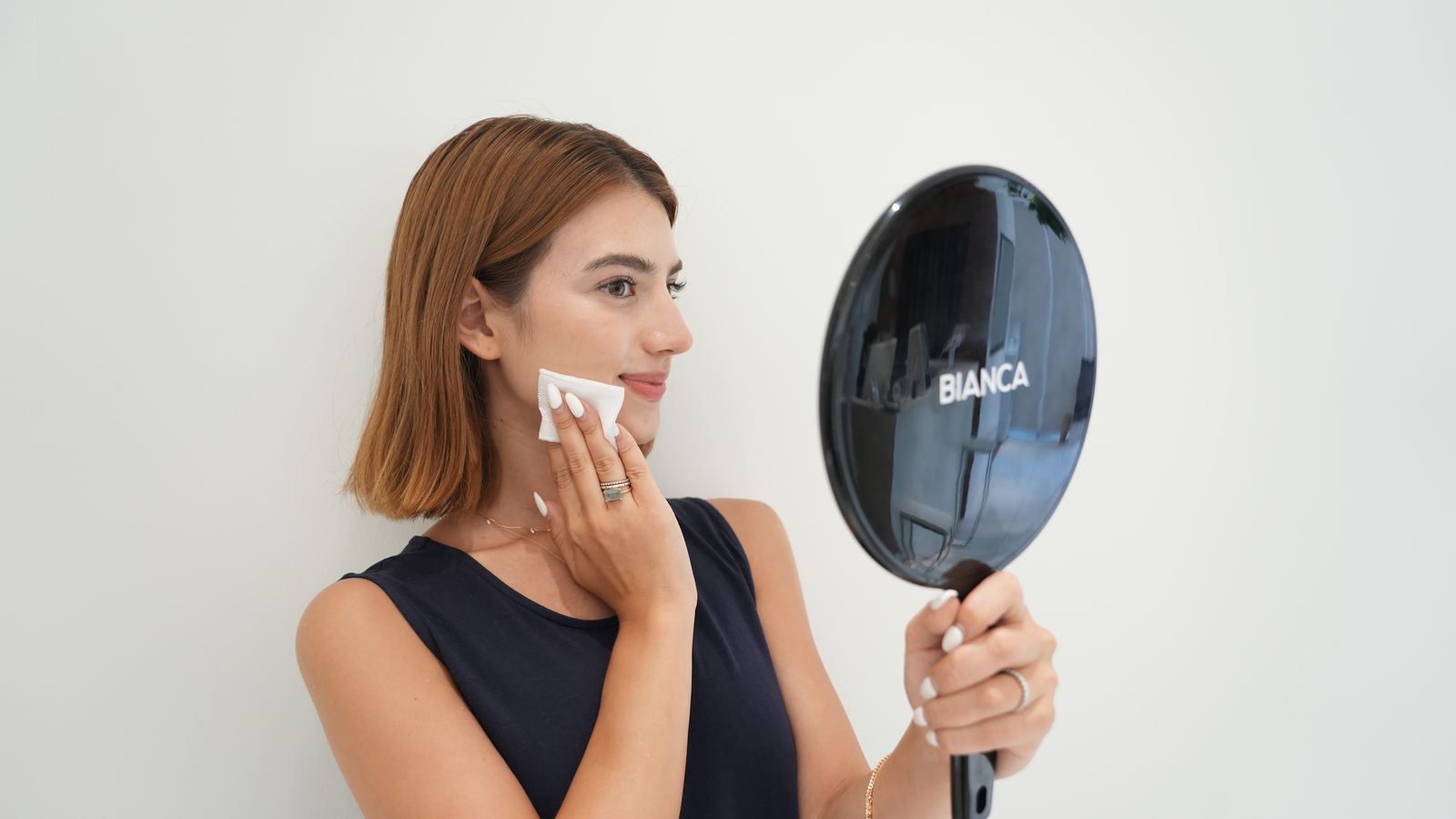
For international clients, downtime is often a scheduling question.
A client may be perfectly comfortable walking around Tokyo after treatment but still not want mild swelling in every vacation photo.
Someone else may not care about a little puffiness but needs to look camera-ready for work the following morning.
That is why your calendar matters when planning GOURI.
Can I Go Back to Work the Day After GOURI?
Possibly.
If the redness and swelling are mild and you feel well, returning to work the next day may be realistic.
What does “work” look like for you, though?
A day of remote work is quite different from meeting clients, standing onstage, filming, or having your photograph taken.
Even when you feel completely normal, a little swelling or bruising may still be visible.
This comes up often in consultation.
We usually separate two questions: “Will I feel well enough to work?” and “Will I be comfortable with how I look at work?” The answers are not always the same.
When Is the Best Time to Have GOURI During a Trip to Tokyo?
There are pros and cons to both ends of the trip.
Having GOURI earlier gives you more time in Tokyo afterward.
If something concerns you, an in-person follow-up is also easier to arrange.
The trade-off is that swelling or bruising could show in sightseeing photos or affect social plans.
Waiting until the end protects more of your sightseeing schedule, but your window for follow-up in Japan becomes shorter.
Neither option is automatically right for everyone.
When you come for your consultation, let us know when you are flying home and what you have planned in between. We can take that schedule into account when discussing treatment.
How Far in Advance Should I Schedule GOURI Before a Wedding or Important Event?
A wedding is different from an ordinary Tuesday at the office.
If you need to look completely camera-ready, planning around the typical one-to-two-day period for redness and swelling alone does not leave room for the possibility of bruising.
This is why we avoid giving every client the same “book it X days before” answer.
Your event, your tolerance for visible changes, and your own recovery tendencies all matter.
Bring the date to your consultation.
If even a small bruise would bother you, say so.
That gives your physician much more useful information for planning than simply asking how many days of downtime GOURI has.
When Should You Contact a Doctor After GOURI?
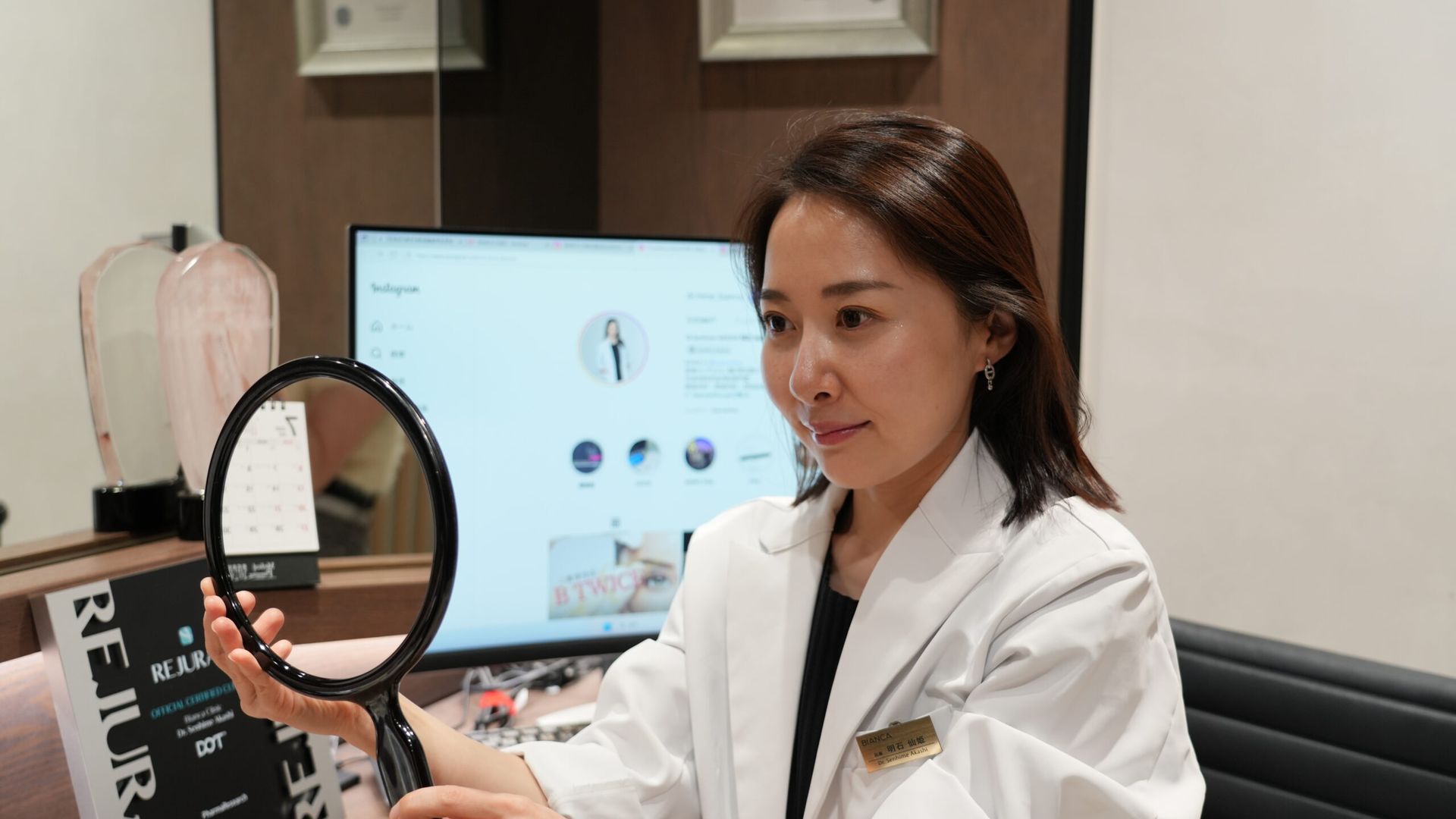
Some redness, swelling, edema, puffiness, bruising, wheals, or itching can be part of the temporary response after GOURI.
These reactions should generally become less noticeable with time.
Contact your treating physician if you notice:
- Swelling, redness, or discomfort that is getting worse rather than better
- Significant or unusual pain
- A lump or nodule that persists or becomes larger
- Marked changes in skin color
- Possible signs of infection
- Signs of a possible allergic reaction
- Anything that makes you unsure whether your recovery is progressing normally
If you will be leaving Japan soon after treatment, ask how to contact the clinic once you are home.
It is much easier to make that plan before your flight than when you already have a concern.
Every GOURI treatment plan at BIANCA CLINIC starts with a physician assessment.
We look at treatment suitability, the area being treated, injection technique, and expected downtime rather than applying one standard protocol to everyone.
Treatment is supervised by Dr. Senhime Akashi, a board-certified internal medicine specialist with broad experience in aesthetic medicine who also serves as a KOL for GOURI and REJURAN®.
Frequently Asked Questions About GOURI Downtime
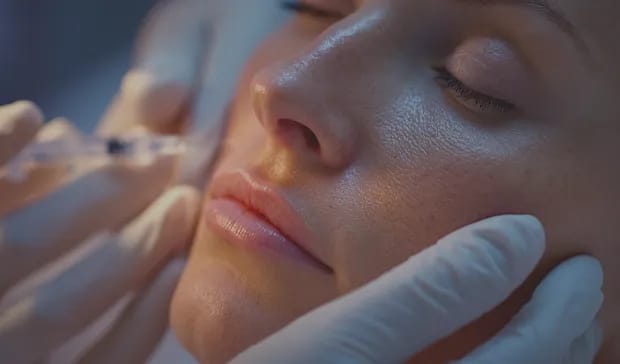
Many people considering GOURI have questions about what to expect during downtime and how treatment may affect work or travel.
Here, we answer common questions about post-treatment activities, including wearing makeup, exercising, and flying after GOURI.
Can I Wear Makeup After GOURI?
When you can comfortably return to makeup depends on the injection sites and how your skin looks after treatment.
The practical issue is not simply the makeup itself.
Applying and removing cosmetics involves touching—and sometimes rubbing—freshly treated skin.
Follow the aftercare instructions you receive from BIANCA CLINIC rather than borrowing a timeline from another clinic.
Need makeup for work or plans shortly afterward? Mention that during your consultation.
It is useful information when deciding when to schedule treatment.
Can I Exercise After GOURI?
Strenuous exercise may need to wait immediately after an injectable treatment.
A workout that raises your body temperature and blood flow significantly can make swelling or bruising more noticeable in some people.
The appropriate timing depends on the treatment area and how you are doing afterward, so follow your physician’s aftercare instructions.
This is also worth mentioning if your Tokyo itinerary is active.
Gym sessions, running, hiking, or a full day of physically demanding sightseeing can all be factored into your treatment schedule.
Can I Fly After GOURI Treatment?
There is no single no-fly period that applies to everyone after GOURI.
Your physician will consider the area treated, your medical history, general condition, treatment details, and travel schedule.
If you are visiting Japan from overseas, bring your flight date and time to your consultation.
One practical consideration is follow-up.
Treatment immediately before your flight leaves little time for an in-person assessment at BIANCA CLINIC if something unexpected comes up.
Your departure date is therefore part of the treatment-planning conversation, not an afterthought.
How Long Should I Wait Before Having Another Skin Treatment?
BIANCA CLINIC generally advises leaving about one month between GOURI and another skin treatment.
That timing can change depending on what you want to have done next, how your skin has recovered, and your broader treatment plan.
This is particularly relevant for medical tourists trying to fit several treatments into one stay.
Booking each procedure independently may not give your skin the appropriate interval between treatments.
Tell your physician everything you are considering so the order and timing can be planned together.
Can I Have GOURI If I Cannot Take Time Off Work?
Not being able to take time off does not automatically rule out GOURI.
Some clients with mild redness or swelling return to their normal routine relatively quickly.
But injection marks, bruising, puffiness, or redness can still be visible even when you feel fine.
Think about what your working day actually involves.
Remote meetings with the camera off are one thing; face-to-face appointments or a day of filming are another.
If taking leave is difficult, tell us.
Your work schedule and how comfortable you are with visible downtime are both useful when choosing a treatment date.
Përfundim
GOURI downtime is usually less about being unable to carry on with daily life and more about how long temporary changes remain visible.
Redness, swelling, edema, puffiness, bruising, wheals, and itching can occur after treatment.
At BIANCA CLINIC, redness and swelling often become less noticeable within several hours to around two days.
Bruising can stay visible longer, and recovery varies from person to person.
GOURI’s liquid PCL formulation disperses after injection, so numerous puncture points may not always be necessary.
That does not eliminate downtime.
Careful physician assessment and an individualized injection plan still matter.
If you are planning GOURI while visiting Tokyo, bring your real schedule into the conversation
—your flight home, work commitments, sightseeing plans, important events, and how comfortable you are with temporary visible changes.
For treatment areas, suitability, clinical cases, pricing, and further details, please visit the BIANCA CLINIC GOURI treatment page.